
Political Shockwave! UK Prime Minister Starmer Deep in Governance Crisis, Leadership Change Expectations Severely Impact Financial Markets

Source: Global Market Report
On June 19 local time, a sudden major upheaval hit British politics, as Prime Minister Starmer faced the most severe political crisis since taking office. Multiple factors such as a cabinet coup, political faction realignments, and dramatic changes in market expectations combined, triggering sharp volatility in UK financial markets and marking a critical turning point for the country’s political and economic trajectory.
According to CCTV International News citing The Times, several British cabinet ministers planned to meet with Starmer on the afternoon of June 19, demanding with strong resolve that he set a timetable for resignation. Some cabinet members directly told Starmer, "Your time is up," making the Labour Party’s internal push for leadership change both public and heated.
Political turmoil quickly spread to the financial markets, leading to chain reactions. Data shows that at the start of the European session, UK 10-year government bonds experienced heavy selloff, with yields gapping up more than 6 basis points at the open, rising about 9 basis points overall during the day, closing at 4.8414%, and remaining elevated. In the currency market, the GBP/USD exchange rate fluctuated significantly during the day, dropping as low as 1.3163, the lowest since late March this year, then rebounding slightly to close at 1.3233.
Forecast market data directly reflect expectations of upheaval in UK politics. According to prediction market Polymarket, as of the week of June 19, the market sees the probability of the UK appointing a new prime minister this year as very high, with just a 3.5% probability that there will not be a new prime minister, suggesting traders widely expect a leadership change. Peel Hunt chief economist Kallum Pickering warned that the UK financial market as a whole faces downside risks; if the Labour Party implements a left-leaning policy agenda without a mandate from a new general election, it could further trigger negative volatility in the UK bond and forex markets.
The key event intensifying UK political instability was the parliamentary by-election results. According to Xinhua News Agency, on June 19, Andy Burnham, Mayor of Greater Manchester, won the parliamentary by-election for the Macclesfield constituency in North West England, with a turnout rate as high as 54.8%. This victory carried nationwide political significance and was a key milestone for the Labour Party’s political landscape in recent times.
After this by-election victory, Burnham will return to the UK House of Commons, officially gaining core eligibility to compete for Labour Party leadership and contend for the prime ministership. This marks Burnham’s return to parliamentary elections after several years. Against the backdrop of falling Labour support and increasing doubts over Starmer’s leadership, Burnham’s sweeping victory has further consolidated his core influence within the Labour Party, making him the top favorite to succeed Starmer. Many commentators observed that this by-election result removed key obstacles to Burnham's bid for prime minister, significantly heightening market expectations for a Labour leadership change ahead of schedule.
According to Labour Party rules, Burnham needs the backing of 81 Labour MPs in the Commons, including himself, to formally launch a leadership challenge. Facing internal party turmoil and calls for new leadership, Starmer publicly responded. According to CCTV News, on June 19, Starmer stated clearly that if there is a leadership challenge within Labour, he will actively participate in the contest and will not resign as prime minister, emphasizing that no substantial leadership challenge has occurred within the party as of yet.
Starmer stated that his current main focus is fulfilling his prime ministerial duties and serving the nation’s development, with many key government tasks still underway. Regarding Burnham's by-election victory, Starmer has already congratulated him via social media and said the two will initiate communication going forward.
According to public records, 55-year-old Burnham once served as the UK Health Secretary, unsuccessfully ran for Labour Party leadership twice in 2010 and 2015, and became Mayor of Greater Manchester after leaving Parliament in 2017. As mayor, he cultivated deep grassroots support in traditional Labour constituencies in the North and gained broad national recognition for publicly challenging Conservative government policies during the pandemic.
The focus of political and market opinion in the UK has now shifted, with attention no longer on whether Starmer can complete a full term, but on how the Labour Party will enter the “post-Starmer era.” Analyst Kallum Pickering noted that, with Parliament adjourning on Friday, Burnham is expected to be sworn in the following Monday, and uncertainties remain over the near-term timeline of Labour’s internal leadership contest.
The core market concern centers on policy changes following any Labour leadership shakeup. Investors are especially focused on whether a Burnham-led Labour and government would adjust existing fiscal, tax, and economic reform policies, thus impacting UK capital market trends. In response to market concerns over fiscal policy, Burnham has made it clear that if successfully in office, he will maintain the current government’s debt cap and will not alter it arbitrarily, in an effort to steady market sentiment.
Disclaimer: The content of this article solely reflects the author's opinion and does not represent the platform in any capacity. This article is not intended to serve as a reference for making investment decisions.
You may also like
Ripple’s Swell conference returns to New York this fall with its biggest event yet
A Market in Repair
The Weak Hands Are Gone: 5 Altcoins Primed to Explode as Fear Turns Into FOMO This Weekend

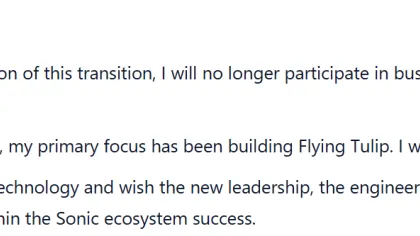
S token drops 5% as 3 former execs resign from Sonic Labs board
Trending news
MoreCrypto prices
More


