
AI faith faces the toughest challenge of the year! Philadelphia Semiconductor Index plunges 7.87%, Micron and SanDisk drop over 13%, everyone's attention is focused on one thing

On June 23 Eastern Time, the US AI and semiconductor sectors on the US stock market suffered an unexpected and fierce sell-off. The Philadelphia Semiconductor Index plunged 7.87% in one day, the Nasdaq fell 2.21% and broke below its one-week low, and the market panic indicator VIX jumped more than 12%—this was not a normal profit-taking, but a concentrated questioning of the "AI invincibility" narrative of the past year by capital.
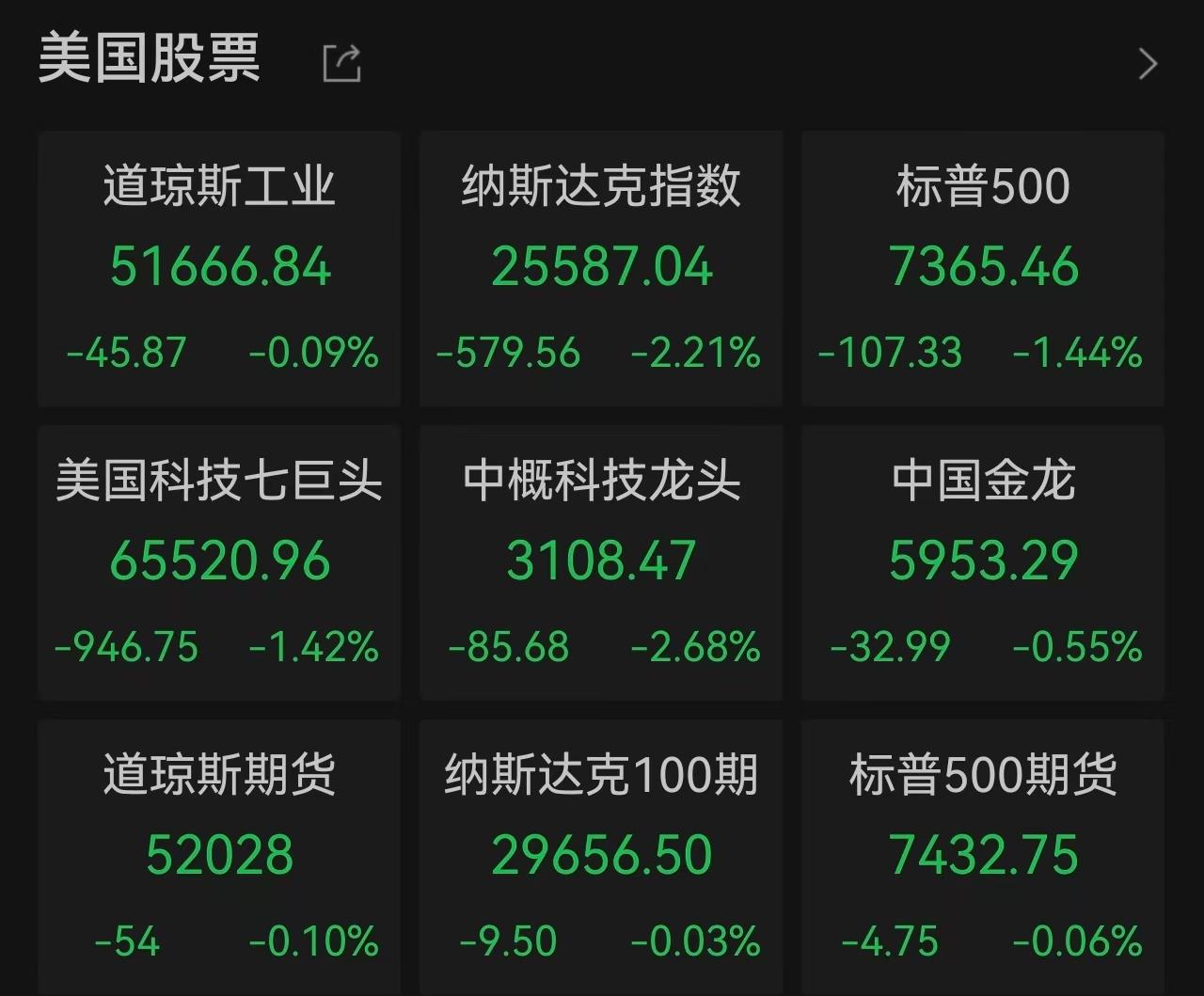
The trading data of the day was enough to make any investor heavily invested in tech stocks take a deep breath. Among the three major indices, the Dow was relatively resilient, edging down 0.09% to close at 51,666.84 points; but the tech-weighted Nasdaq tumbled 579.56 points, or 2.21%, to 25,587.04, while the Nasdaq 100 fell even more, down 3.3%; the S&P 500 dropped 1.44% to 7,365.46. The real shock happened in semiconductors—the Philadelphia Semiconductor Index (SOX) plummeted 7.87% to 13,482.51 points, and the VanEck Semiconductor ETF (SMH) also sank 7.01%, with nearly all component stocks slaughtered.
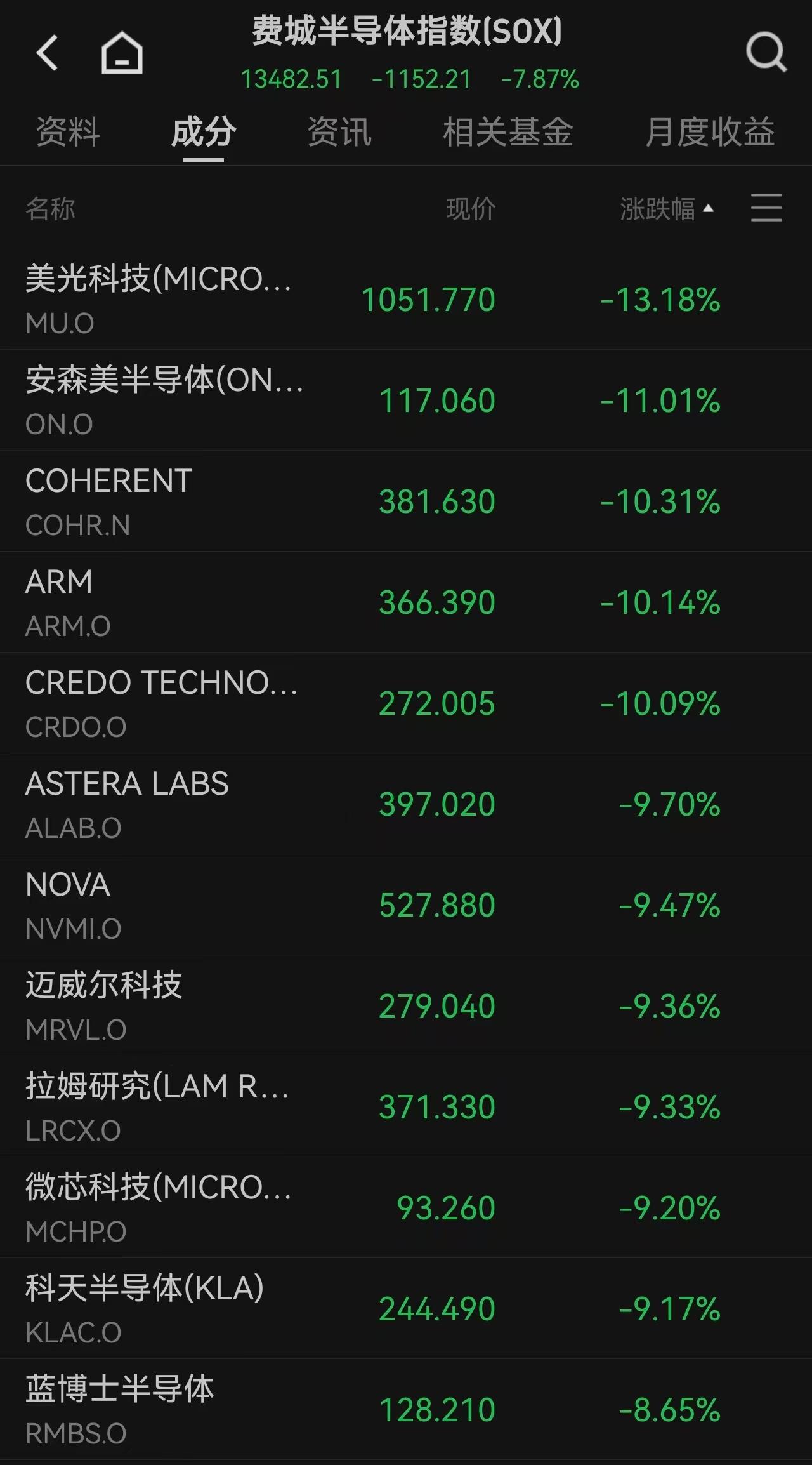
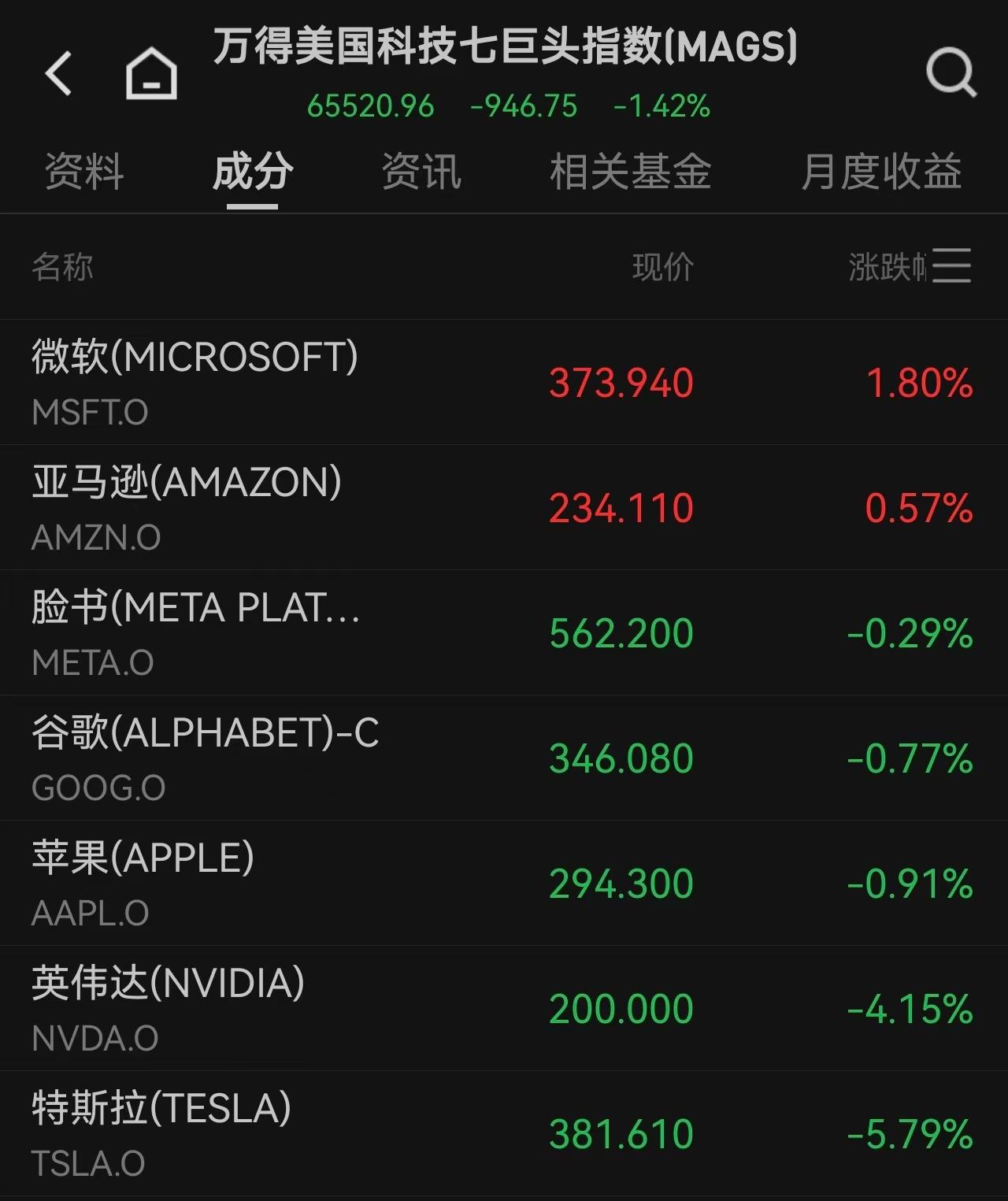
The biggest losers were, without exception, this year's core AI beneficiaries: Micron Technology plunged 13.18%, SanDisk tumbled 13.64%, ON Semiconductor dropped 11.01%, ARM fell 10.14%, Credo and Applied Optoelectronics both lost over 10%, Marvell Technology fell 9.36%, Qualcomm dropped 8.01%, ASML almost fell 8%, Intel fell 6.14%, and AMD fell 5.76%. The memory chips and optical communication subchains were almost indiscriminately "washed" by the market. Even among large tech stocks, very few were spared—Tesla plunged 5.79%, Nvidia dropped 4.15% (its market cap slipping below the US$5 trillion threshold), Apple lost 0.91%, and Alphabet A fell 1.03%; the only gainers were Microsoft (+1.80%) and Amazon (+0.57%), as well as IBM, which soared 5.04% after J.P. Morgan upgraded its rating to "Overweight."
A striking structural signal: Capital isn't leaving the stock market, but is rapidly rotating between sectors. Defensive stocks rallied collectively—Johnson & Johnson rose 3.37%, Procter & Gamble was up 2.13%, Walmart rose 1.91%, the regional banking ETF gained 2.55%, and the healthcare ETF followed suit. This clearly indicates that the sell-off is not a liquidity-driven total collapse, but a targeted de-risking of high-valuation tech/semiconductors.
Why now? The resonance of three pressures
Pinning this plunge on a single reason would be one-sided. Judging from interviews with top Wall Street strategists and cross-verification of market data, at least three forces resonated downward on the same day.
First, and most directly—the "moment of reckoning" for the AI investment thesis has arrived. Over the past year, large cloud players like Microsoft, Google, Meta, and Amazon have supported several hundred billion dollars of capital expenditures for AI infrastructure with debt and huge cash flows. The market had previously bought into this wholesale, reasoning that "it’s a land-grab for the infrastructure underpinning a new tech revolution." But as Globalt senior portfolio manager Thomas Martin put it, "Recent news around AI is causing the market to question—are such massive capex spends justified? Is semiconductor capacity expanding too quickly?" On Monday, Google plunged 5% after several high-profile AI personnel left, with concerns over its AI competitiveness unresolved; Goldman Sachs explicitly warned that if any big tech company is the first to cut AI spending, the entire AI sector’s valuation logic will face an overhaul.
Second, a swift shift in Fed expectations has raised the discount hurdle for high-valuation assets. According to LSEG data, traders are now increasingly betting on a second Fed rate hike this year, whereas just two weeks ago the market only priced in a single 25 basis-point hike. Bank of America Securities went further, projecting "a cumulative 75 basis points hike between September and December 2026." New Fed Chairman Kevin Walsh may be interpreted as signaling a more hawkish stance, and with Thursday’s upcoming PCE—the Fed’s favorite inflation indicator—investors are no longer relaxed about long-duration growth stocks. One consequence: a strong US dollar. The dollar index rose 0.4% on the day, hitting a high of 101.43, its highest since the end of November last year, further pressuring dollar-denominated risk assets and multinational tech companies’ overseas revenue expectations.
Third, the fading of geopolitical premiums triggered a chain reaction, indirectly weakening the "risk-off→tech" capital flow. US-Iran talks made progress, with the US announcing a 60-day sanctions waiver for Iran, and Oman coordinating the opening of a temporary route through the Strait of Hormuz with no transit fees—oil supply expectations loosened sharply, WTI fell to around $73/barrel, and Brent dropped to near $77. Lower oil prices would typically be positive, but it also means some commodity longs previously supported by "geo-tensions + inflation hedge" logic were unwound, gold broke below the $4,100/oz barrier (COMEX gold dropped about 1.75%–1.92% to near $4,129), and silver plunged over 6%—commodities and tech stocks both weakening on the same day highlights a deeper commonality: a broad contraction in risk appetite amid liquidity expectation convergence.
One cannot ignore technical factors: As pointed out by Morgan Stanley portfolio manager Andrew Slimmon and Goldman Sachs strategist Chris Hussey, most of the stocks falling sharply have still logged double-digit gains year-to-date, with a crowd of momentum traders and retail investors piling in—the trade had become "too crowded"—and crowding itself is a vulnerability that doesn’t need much of a trigger to spark a cascade of stop-losses. Jose Torres of Winning Securities also noted that the epicenter of volatility happened to be among memory suppliers, a subsegment that’s had one of the strongest runs this year.
Wall Street is divided: Is this "bubble trimming" or a turning point?
It’s worth noting that when confronted with the same batch of plunging numbers, mainstream Wall Street views hadn’t descended into a panic—the very division shows the market is searching for new pricing anchors, not simply running for the exits.
Bulls see it as a needed healthy correction. Marija Veitmane, head of global markets equity research at State Street Global Markets, stated unequivocally that the tech sector has been the core direction for institutional buying this year, with large accumulated profits, and "some pullback and profit-taking at this stage is normal and does not mean a reversal of the AI industry trend." Morgan Stanley’s Slimmon also emphasized: "I don’t think valuations are expensive for these companies, but related trades have gotten too crowded...this adjustment is actually healthy." Goldman Sachs' Hussey outright called it "trimming the bubble," not a fundamental re-assessment of AI infrastructure investment logic. Senior strategist Louis Navellier was more direct—he called Micron’s report "the finale of a stunning earnings season," and believes every dip should be seen as a buying opportunity.
The more cautious side doesn’t deny AI’s long-term trend, but warns of the "valuation–liquidity–CAPEX sustainability" triangle. RBC BlueBay strategy head Mike Bell pointed out that when tech stocks rise too fast and leverage plus retail participation soars, it doesn’t take much by way of negative catalysts to trigger corrections; "the current environment is a concentrated display of this vulnerability." Even more defensive views argue that with Fed policy turning and liquidity tightening at the margin, the valuation center of high-growth stocks faces a systemic downward shift, and differentiation within the AI sector will accelerate: subsegments with real earning power and clear supply-demand, such as high-end GPUs and advanced foundry nodes, will remain resilient, while pure concept names lacking fundamentals—including some small and mid-cap memory and optical communications high-beta stocks—will stay under pressure.
Chain reaction: Asia leads, commodities fall in step, China ADRs under pressure
This round of selling wasn't isolated to US stocks. Asia's markets suffered a major sell-off in the previous session—core AI beneficiary SK hynix plunged over 12%, the Nikkei 225 Index tumbled 3.55%, ending an eight-day winning streak. The sharp US selloff in after-hours trading was in a sense Western capital "ratifying" the mood in Asia time zones.
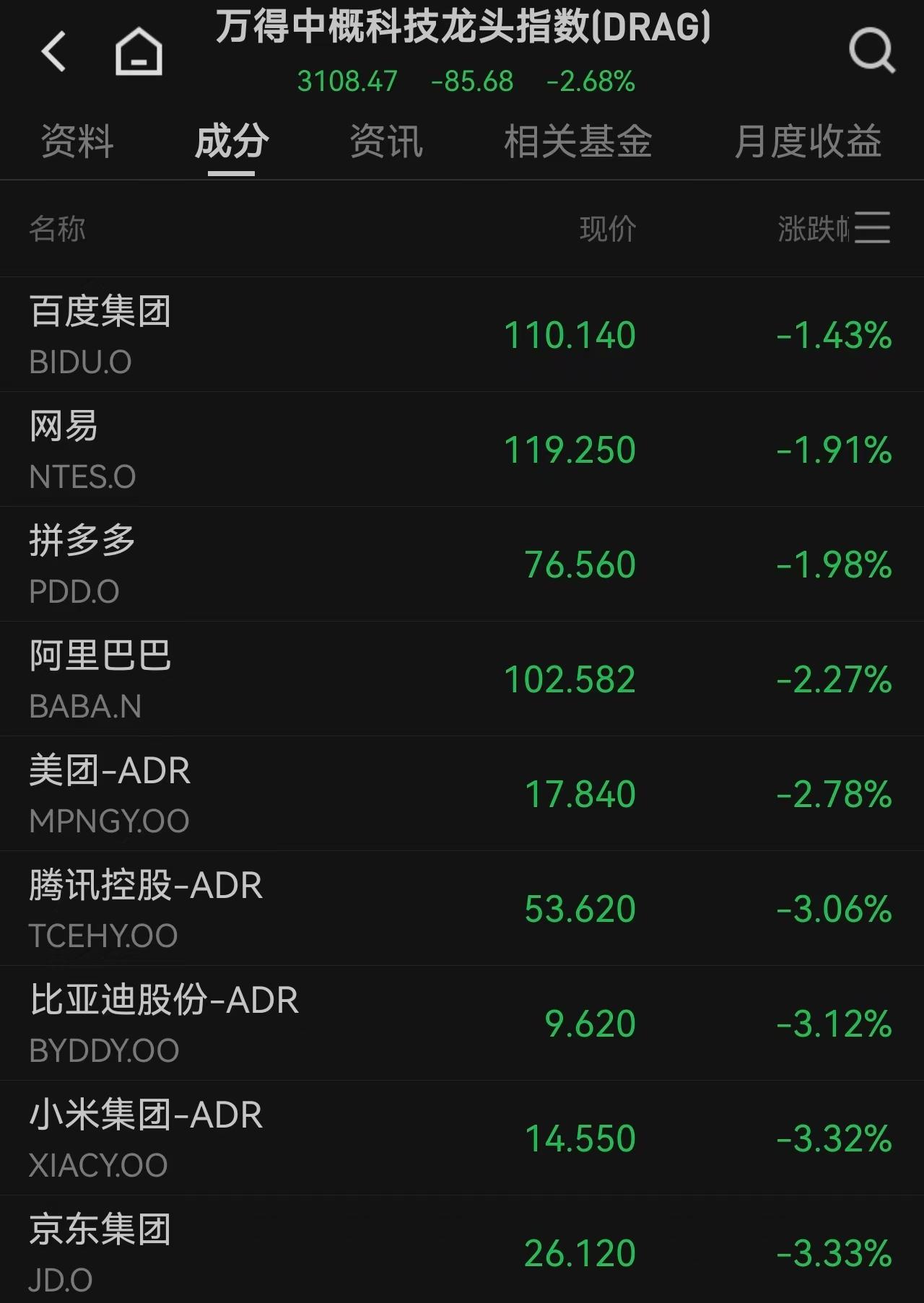
Chinese ADRs were also hit, with the Nasdaq Golden Dragon China Index down 0.55%, and the Wind China Tech Leaders Index down 2.68%. Bilibili dropped 4.77%, Xpeng fell 4.42%, JD.com lost 3.33%, Tencent ADR fell 3.06%, and Alibaba declined 2.22%. This reflects both the drag from global risk-off beta, and stock-specific sentiment spillovers—Canadian Solar Solar fell over 8%, Pony.ai nearly 7%, showing that even China ADR subsectors with marginal AI connection were swept up in this risk-off wave.
All eyes on one event: Micron’s earnings report
If there’s a single "judgment day" for this sell-off, it’s the Micron Technology quarterly earnings report due after the US close on Wednesday. Bloomberg has called it a key litmus test for whether "AI infrastructure demand can sustain this year’s gains;" analysts widely believe its guidance will provide the most important clues about the outlook for memory chips and the whole AI chip chain after a major rally.
The logic is simple: Micron is one of the most direct beneficiaries of surging AI memory needs (HBM high-bandwidth memory is a must for AI training clusters), and also took the hardest hit today. If earnings top expectations with strong guidance, the 13% plunge may actually trigger short covering and bargain buying—a scenario foreseen by the likes of Navellier. But if the results or guidance disappoint, today is just a "preview" rather than "endgame," and the SOX index may well be set to test its next technical support.
At the same time, Thursday’s PCE data is another inflection point. If the inflation reading is hotter than expected, reinforcing "hike not cut," the tech valuation discount might elongate; conversely, any sign of softening could swing the pendulum back from defense to growth.
Disclaimer: The content of this article solely reflects the author's opinion and does not represent the platform in any capacity. This article is not intended to serve as a reference for making investment decisions.
You may also like
Aave Proposes Cross-Chain sGHO Stablecoin Expansion
BlackBerry stock surges 23% as QNX software powers AI and robotics
Ethereum Outlook Weakens as Key Support Faces Pressure
Analyst Diana said $XRP’s path to $50 depends on demand consistently outpacing supply
Trending news
MoreCrypto prices
More


