
Approaching a 40-year low! Yen drops toward 162, will Japan and the US intervene jointly?

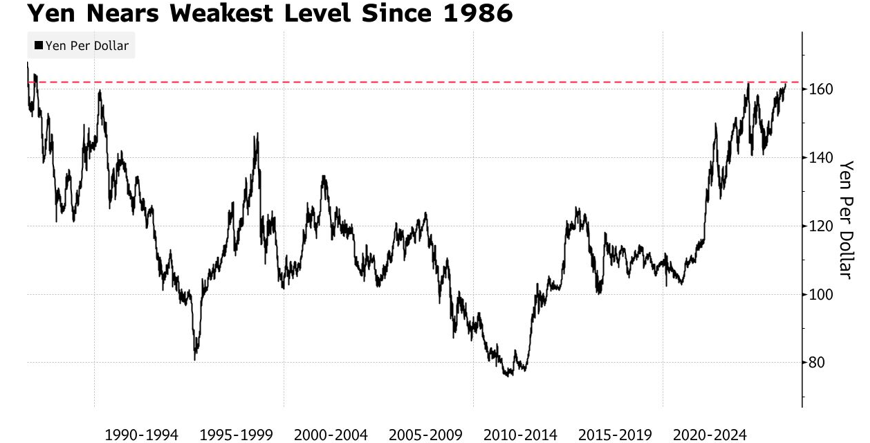
On June 25, the yen once depreciated to 161.93 during intraday trading, approaching the 2024 high of 161.95 and the lowest level since 1986, only a step away from the 162 mark. Currently, the yen is trading near 161.60, and the effects of the record 11.73 trillion yen (about $73 billion) one-sided intervention by Japanese authorities since the end of April have been completely erased by the market.
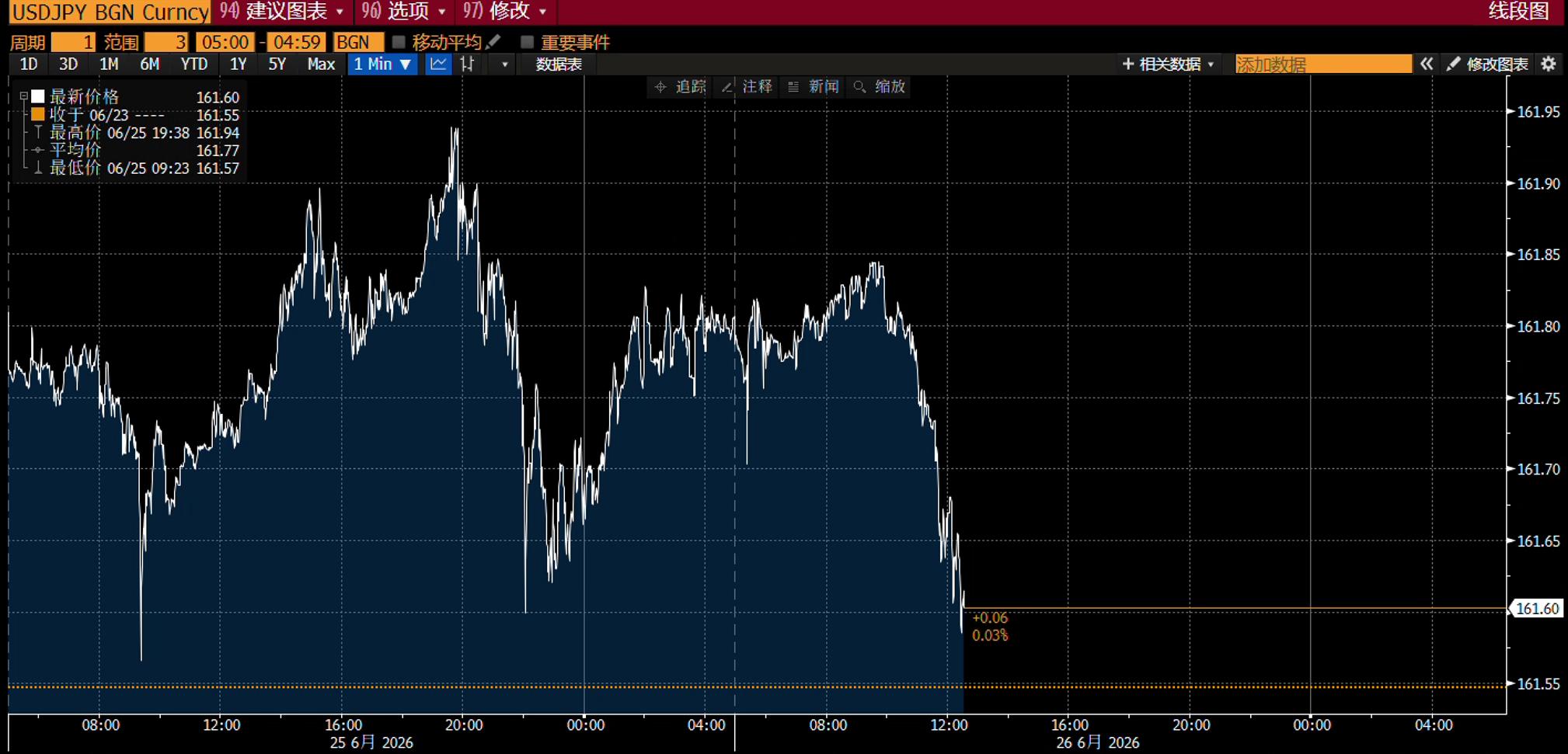
Although the Bank of Japan (BoJ) raised interest rates by 25 basis points to 1% in mid-June and the Ministry of Finance continues to issue verbal intervention signals, the market has not changed its previous pessimistic expectations. The yen remains weak, and the exchange rate has fallen further compared to before the intervention.
With the yen exchange rate approaching unilateral loss of control and nearing a 40-year low, the frequency of joint statements from US and Japanese officials has increased significantly. The emergency call between Japanese Finance Minister Katayama Satsuki and US Treasury Secretary Bellent has further strengthened market expectations for joint US-Japan intervention. The focus has shifted from whether to intervene to whether there will be coordinated US-Japan action. Moreover, previous measures such as the US Treasury's review of Japanese exchange rates at the end of January, or Japan's unilateral intervention, have only achieved short-term effects.
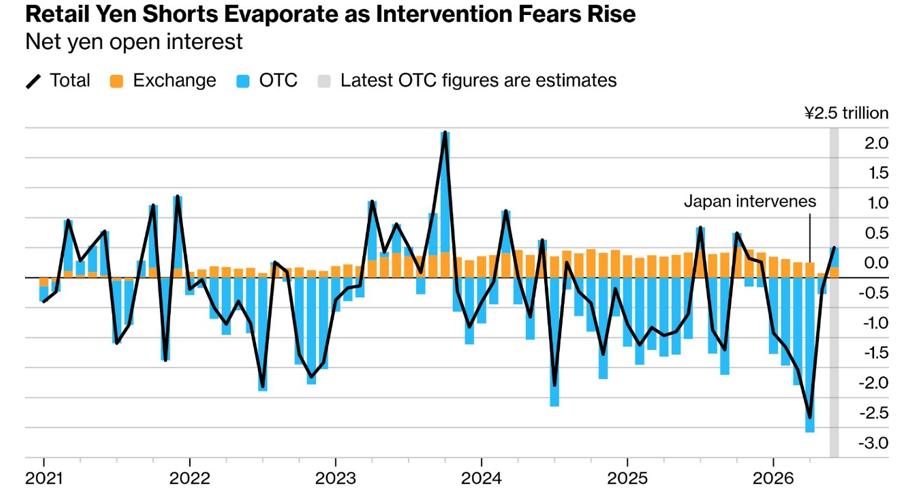
Currently, the yen is fluctuating near 161.70, and the yen's short-term implied volatility has surged sharply. On one hand, Japan’s large retail forex trader community is beginning to bet on the strength and timing of intervention, building contrarian positions to speculate on the potential for intervention, with support for a yen rebound reaching the highest level in more than a month.
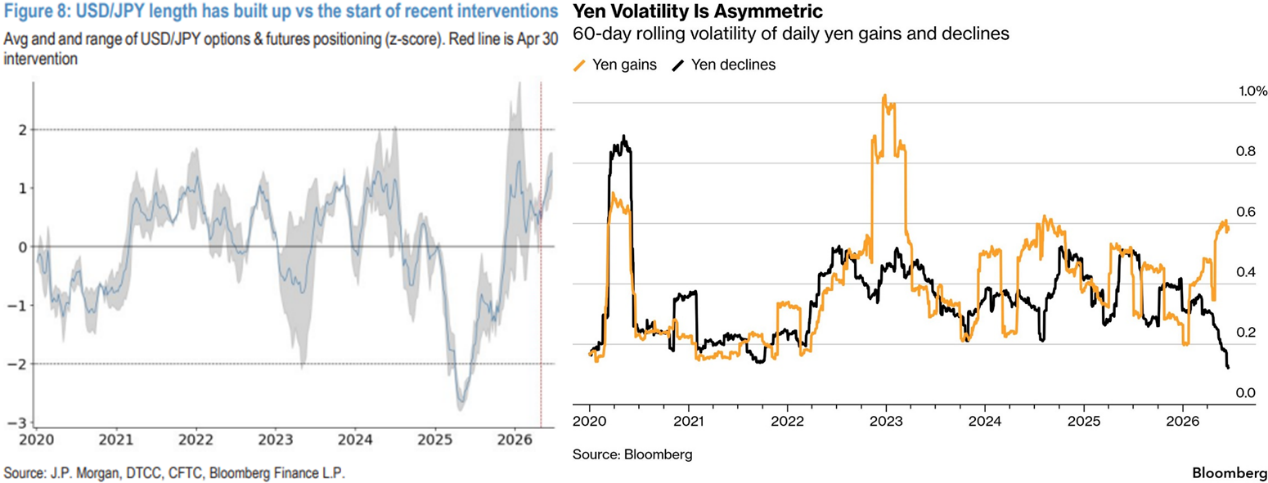
On the other hand, professional leveraged funds and asset management companies are still increasing short positions, with speculative yen short positions rising to their highest levels in years. Moreover, current long positions in USD/JPY have surpassed the level seen at BoJ's first forex intervention on April 30 (+1.3 standard deviations) and have reached +1.4 standard deviations. Option flows also indicate roughly +0.9 standard deviations in long positions, with the average about +1.2 standard deviations. This level is significantly higher than the +0.5 standard deviation at the time of the first intervention on April 30, increasing the risk of short covering triggered by intervention.
Given the market impact of bilateral coordinated intervention by the US and Japan, both in terms of intensity and duration, it is significantly stronger than unilateral intervention. This means that if the Japanese Ministry of Finance suddenly intervenes during periods of thin liquidity (such as the US East Coast market close or a global holiday), with cooperation from the US side, the current extremely crowded yen short positions will face massive short covering pressure. This panic-induced stampede could trigger intense two-way exchange rate swings, or even cause an epic short squeeze storm in the market.
What is the likelihood of coordinated intervention by the US and Japan?
Disclaimer: The content of this article solely reflects the author's opinion and does not represent the platform in any capacity. This article is not intended to serve as a reference for making investment decisions.
You may also like
USDT gets a Brazil payment route to 170 million people by making crypto disappear
Bitcoin at Risk of a $42K Drop? Top Miner’s Model Raises Red Flags

BlackRock’s Bitcoin ETF sheds $265M in single outflow event
Trending news
MoreCrypto prices
More


