
Europe Faces the Most Severe Heatwave in History, Air Conditioners Sold Out, Midea PortaSlit's Second-Hand Price Surpasses New Units

The harshest heatwave in European history is triggering a surge in air conditioner purchases.
On June 27, eastern Germany recorded a temperature of 41.5°C, breaking the nation’s all-time meteorological record for the second consecutive day; Czechia hit 40.6°C on the same day, also breaking its national record.
Under the double pressure of the “heat dome” effect and the global climate crisis, Europe is experiencing the most intense summer since records began. Over 100 million Europeans are enduring temperatures above 35°C; the number of drowning deaths in France caused by cooling off has soared to 55. Many countries have suspended classes in schools, hospitals are overloaded, and rail and flight cancellations are widespread.
Against this backdrop, domestic air conditioners—long regarded as “non-essential” by Europeans—are being snapped up at an unprecedented speed. Orders for Asian manufacturers such as Samsung, Midea, Mitsubishi Electric, and others are surging.
Among them, Midea’s PortaSplit mobile split air conditioner, specially designed for Europe, has sold out in many countries, with second-hand prices reaching 2-3 times the original price.
"Current infrastructure is built for a climate that no longer exists"
European architecture has traditionally focused on winter insulation—thick walls, high sealing, and maximal daylighting—but under sustained heat, these features have turned into traps for “thermal cycling.”
Previously, the UK Climate Change Committee highlighted Europe’s predicament in one sentence: "Existing infrastructure was built for a climate that no longer exists."
French Housing Minister Jean Brun bluntly stated that one-third of homes in France are “like thermos flasks”; almost 80% of Parisian apartments are topped with zinc roofs, turning them into ovens in summer. In Germany, summer daylight lasts 15 to 16 hours; buildings absorb heat during the day, release it at night, stacking up further heat the next day. At Europe’s largest new energy exhibition, just concluded in Munich, the vast hall was not equipped with air conditioning—over 100,000 visitors had to fan themselves with brochures. While future energy solutions like integrated solar-storage-charging systems were on display at the booths, the most primitive cooling attempts were underway beneath, forming a stark contrast.
In Europe, installing ACs presents yet another nearly insurmountable hurdle. Older buildings usually lack dedicated ducts, and heritage protection regulations severely restrict external modifications. As a result, installing a traditional split AC can easily cost over 1,000 euros. Additionally, the high operating costs are a deterrent. In Berlin, for example, electricity costs about 0.4 euro/kWh; if the AC runs 8 hours a day, the monthly bill will rise by 100 to 150 euros. In the past, mild summers “no-AC” became an architectural norm and a social consensus, but now, climate reality has changed this completely.
According to analysis by the World Weather Attribution (WWA), the earth’s temperature has risen by 1.1°C in the past 50 years. Heatwaves of the same magnitude would have been 2°C cooler in 2003 and 3.5°C cooler in 1976 than today. Now, the probability of oppressive nighttime temperatures is about 100 times higher than in 2003. Even more dangerous is the combination of high heat and humidity: In 45% of 850 European cities with over 50,000 residents, people are experiencing the worst wet-heat conditions on record, causing the human body’s sweating and heat dissipation mechanisms to fail entirely. The World Meteorological Organization points out that Europe’s rate of warming is more than double the global average.
Orders Surge, Stock Prices Rise in Unison
According to the International Energy Agency (IEA), only about 20% of European households currently own air conditioners, far below nearly 90% in the United States. In Southern Europe, ownership is about 50% in Italy and 40% in Spain, while most parts of Northwestern Europe are even lower. But change is accelerating—Germany’s AC ownership rate grew by 6 percentage points between 2023 and 2024. Research from Oxford and Bristol universities reports that eight of the top ten countries globally with the greatest increase in “required cooling days” are in Northwestern Europe, including Switzerland, the UK, and Norway.
This round of extreme heatwaves has pushed market demand to new heights. Samsung Electronics said its core markets in Italy, Spain, France, and others achieved double-digit growth in the first half of 2026 and “expects demand to continue throughout the cooling season.” Midea’s disclosed data shows German online sales soared by 37% year-on-year in May, while shipments to Spain and France rocketed by 108%. Mitsubishi Electric also reported surging demand in France, Spain, Britain, and Germany. LG Electronics revealed that its AC production lines in Korea have been running at full capacity since April. IEA efficiency chief Merve describes the typical scene of Europeans buying portable ACs as “panic buying during scorching weekends”—people grab the first unit they can and make do for the next decade.
Capital markets swiftly priced in this trend. On June 25, Milan-listed climate control company Ariston rose 2.3%, French building materials giant Saint-Gobain gained 2.2%, Swedish heat pump manufacturer NIBE was up 0.7%, and global refrigeration wholesale leader Beijer Ref climbed 1.3%, all extending gains from the previous session.
Meanwhile, the surge in cooling demand is placing intense pressure on Europe’s power grids. During the heatwave, tens of thousands of French households lost power, and some nuclear units were forced to reduce output due to high temperatures; UK grid operators urgently spent about $13 million to purchase extra electricity. The UK Climate Change Committee has recommended that all hospitals implement safe temperature control by 2035, all nursing homes by 2040, and all schools and prisons by 2050. Clearly, Europe's catch-up in cooling infrastructure will be measured in decades.
Phenomenal Single Product: Midea PortaSplit, a Hit AC “Built Around Regulation Loopholes”
Amid this buying frenzy, Midea’s PortaSplit is undoubtedly the most talked-about single product.
Its pricing isn’t exactly cheap—900 euros (about 6,000 RMB) for the cooling-only version, 1,200 euros (about 9,000 RMB) for the cooling-heating version—but it directly solves the core headache that has plagued Europeans for decades: how to install a real AC unit at home without drilling, without violating regulations, and without hiring expensive workers.
Previously, portable ACs available to European consumers were bulky, inefficient mono-block units. These usually have a thick exhaust hose hanging out a window, which leaves a gap where hot air flows right back inside. If you want to install a high-efficiency traditional split AC, you must contend with a dense web of regulations: in Spain, installing an external unit is considered a façade alteration that requires approval from 3/5 of the building’s owners; in Italy, only licensed professionals may install ACs, and unauthorized installation can be fined up to 100,000 euros; France stipulates that any equipment with over 2kg of refrigerant must be inspected by a specialist; Germany strictly requires nighttime noise to be under 35 decibels; Switzerland requires a minimum A++ efficiency rating.
Faced with these obstacles, the PortaSplit manages to “thread the needle” through each rule. Its external unit is fixed with a window bracket, which installs tool-free and without drilling, so it is officially classified as “an appliance placed on a rack,” neatly sidestepping façade alteration bans. Its refrigerant charge is exactly 1.99kg, perfectly under France’s 2kg limit; silent mode noise is 35 decibels, right at Germany’s threshold; a SEER of 6.1 just meets Switzerland’s A++ minimum (6.1–8.5). On Chinese social media, this kind of meticulous design is jokingly called “bug exploiting,” with users quipping: “Midea’s export, legal, and design teams all deserve a group year-end bonus.”
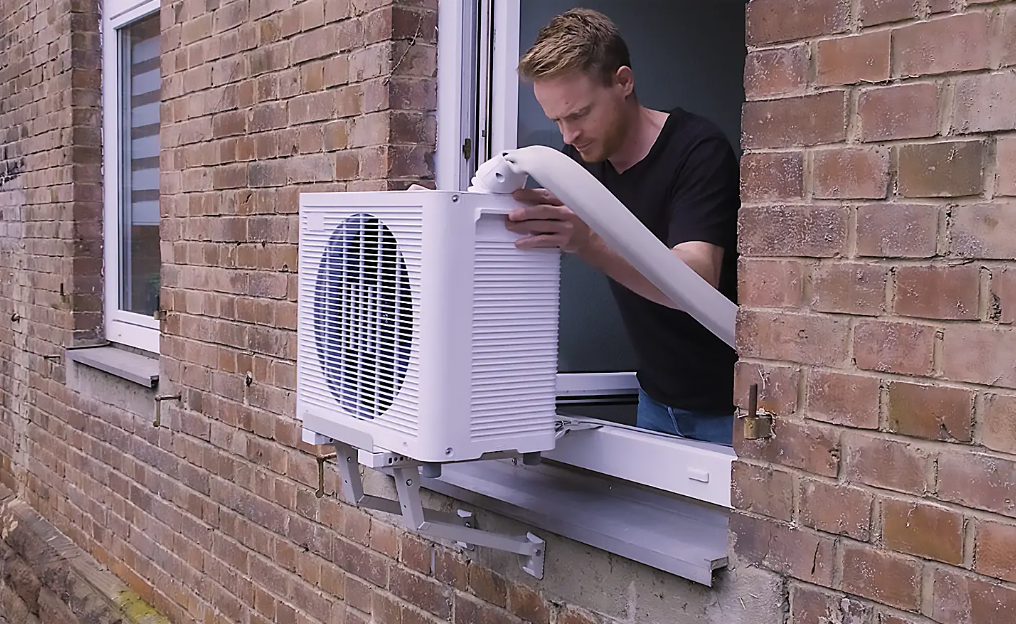
As far as product itself, PortaSplit maintains the core advantage of having a separate compressor, with much better indoor noise control and energy efficiency than traditional portable ACs. It’s also equipped with air-source heat pump technology, doubling as a heating solution in winter—referred to as the first “DIY heat pump” by the industry.
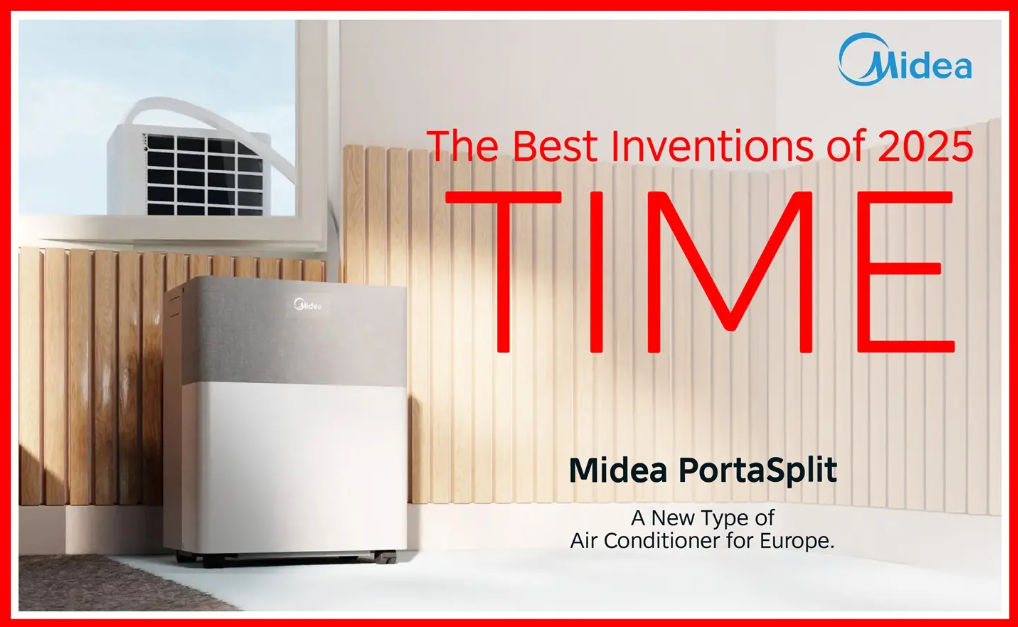
Launched first in Germany, the product sold out two summers in a row before swiftly expanding to France, Italy, the Netherlands, Hungary, and multiple Nordic countries. In 2025, PortaSplit was named in Time magazine’s list of “Best Inventions in the World.” As the award citation says, in countries where installation costs can reach thousands of euros, it offers a “cheap, quiet alternative,” making ACs “no longer a crazy idea” across the Atlantic.
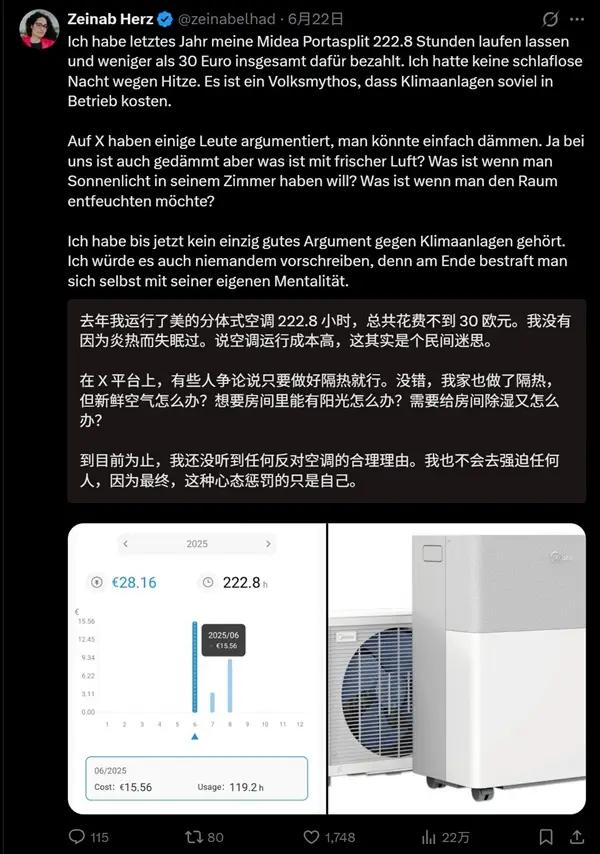
On overseas social platforms, some lament that “this is the most successful investment of my life”; some post their electricity bills—after over 200 hours of operation, the bill was less than 30 euros; others make widely circulated memes with just one line: “Why haven’t you bought a Midea AC yet?”
Disclaimer: The content of this article solely reflects the author's opinion and does not represent the platform in any capacity. This article is not intended to serve as a reference for making investment decisions.
You may also like
This ‘Financial Supernova’ Signal Is Back: Are These 5 Altcoins Worth Buying Before the Summer Rally Begins?

dogwifhat jumps 16% – but massive resistance stands in WIF’s path to more gains
Bitcoin unspent transaction outputs signal capitulation underway: analyst
Trending news
MoreCrypto prices
More


