
Easing Middle East tensions suppress safe-haven demand, gold remains in a volatile adjustment

Huitong Network, June 29 —— Gold (XAU/USD) fell back to around $4,060 during the Asian session on Monday, mainly affected by the US and Iran agreeing to pause hostilities and plan to restart negotiations, leading to a temporary cooling in market risk aversion demand. At the same time, persistent hawkish expectations from the Federal Reserve continue to suppress the performance of non-yielding assets, putting pressure on gold prices. However, geopolitical risks in the Middle East remain, and with US Non-Farm Payroll data about to be released, market sentiment has turned more cautious. In the short term, gold has entered a phase of consolidation at high levels.
Gold prices came under mild pressure during the Asian trading session on Monday, retreating to

From a geopolitical perspective, the US and Iran have agreed to pause recent military confrontations in the Gulf region and plan a new round of talks in Qatar. In the previous days, escalating tensions around the Strait of Hormuz led to significant market concerns over global oil transport security and inflation outlooks, once pushing gold sharply higher. However, as both sides enter a negotiation window, risk aversion in the market has cooled, some funds have flowed out of safe-haven assets, and this has exerted short-term pressure on gold prices.
However, the market still remains cautious in its judgment of the situation. Iran has emphasized that the passage arrangement for the Strait of Hormuz remains under its control and warned that any attempt to bypass established routes could trigger new tensions. This means the current so-called "cooling down" is more of a temporary relaxation rather than a structural resolution, so geopolitical risks still have high volatility potential.
From a macro policy perspective, the Federal Reserve's interest rate path remains one of the main factors suppressing gold. Market expectations for future rate hikes have edged up; according to market surveys, traders now price the probability of a rate hike in September at nearly
Logically, if geopolitical conflicts reignite, energy prices could rise further and strengthen inflation expectations, in turn supporting rate hike expectations. This “inflation → rate hikes → suppression of gold” transmission chain creates a complex tug-of-war for gold between risk aversion and rate pressures. The key data point currently in focus is the US Non-Farm Payrolls (NFP) report released this Thursday. The market expects the addition of approximately
Overall, gold is currently in a typical "retreat of high risk premium + suppression by rate expectations" dual structure, with short-term fluctuations driven more alternately by geopolitical news and US macro data.
From a daily chart perspective, after sustained surges, gold has entered a clear high-level consolidation and correction phase, with prices
For support below, first watch the
From the 4-hour chart perspective, after the surge, gold entered a pullback structure. The short-term moving averages are flattening and showing early signs of turning, indicating the upward momentum is gradually weakening. Momentum indicators are in a neutral to slightly weak zone, reflecting consolidation rather than a trend reversal. If prices consolidate above $4,000, there remains potential for a choppy rebound; but if this level breaks down, the short-term pullback could extend further.
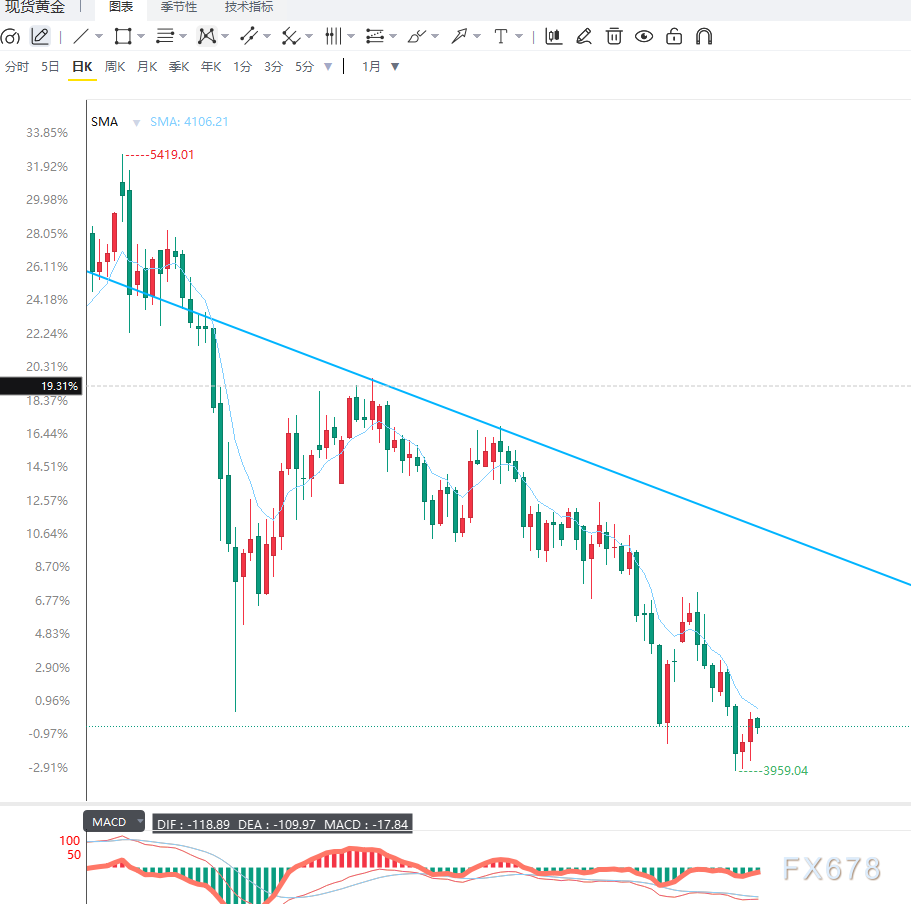
Overall, gold's current pullback is mainly driven by a temporary drop in geopolitical risk premiums and hawkish Federal Reserve expectations. Negotiations between the US and Iran have lowered short-term risk aversion demand, but the Middle East situation is not fundamentally stable, preserving potential support for gold.
From a medium-term perspective, gold remains in a "high-level consolidation + policy expectations dominance" complicated environment, with no clear trend in either direction. In the short term, focus on the validity of the $4,000 support and the performance of US Non-Farm Payroll data—these two variables will be the key triggers determining gold’s next direction.
Disclaimer: The content of this article solely reflects the author's opinion and does not represent the platform in any capacity. This article is not intended to serve as a reference for making investment decisions.
You may also like
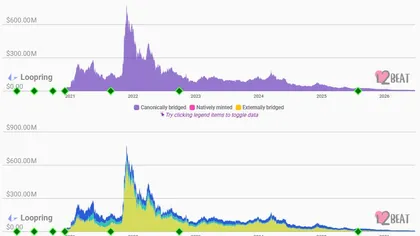
Pioneering zk-rollup Loopring closes DEX, citing lack of adoption
Ansem’s ANSEM Token Holdings Top $71 Million as Price Rallies
Trending news
MoreCrypto prices
More


