
Volkswagen's four factories in Germany are temporarily safe as the supervisory board has not approved the plan to lay off 100,000 employees


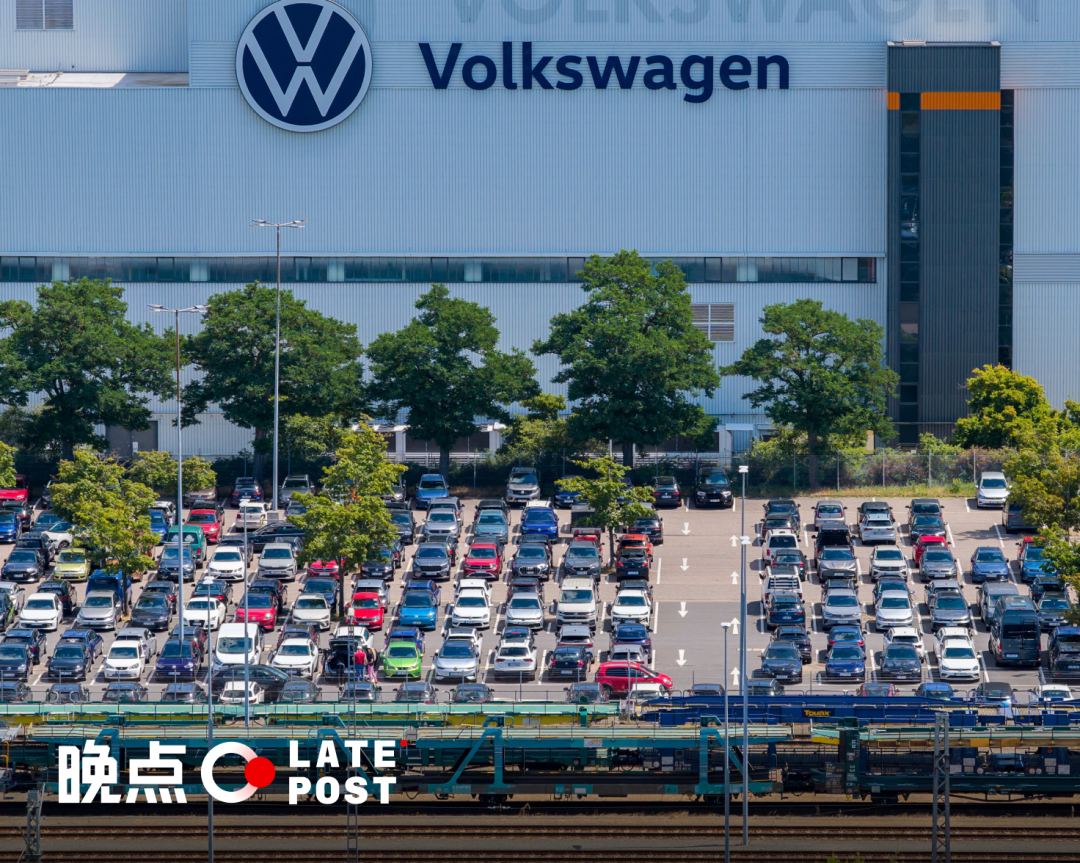
Volkswagen's ultimate goal is to remain profitable even by selling only 8 million cars annually.
Written by丨Zhao Yu
Edited by丨Gong Fangyi
Volkswagen Group plans to cut about 100,000 jobs by 2030, reducing its workforce from around 650,000 to 550,000. If implemented, this restructuring would mark the largest layoff in Volkswagen’s history.
On the afternoon of July 9 (local time), Volkswagen’s supervisory board convened at its Wolfsburg headquarters in Germany to review the restructuring plan. Labor representatives and Lower Saxony state delegates both voted against the proposal. In its official announcement, Volkswagen said the board presented a restructuring plan consisting of 12 measures, but the supervisory board did not make any decisions regarding layoffs or plant closures.
This was first disclosed by Germany’s Manager Magazin. Michael Freitag, deputy editor-in-chief and long-time Volkswagen observer, said on a podcast that currently 6 out of the 9 members of Volkswagen’s board believe “the survival of the company is at risk”; among the interviewed supervisory board members, three-quarters share similar concerns.
Decline in the Chinese Market Drags Down Performance, Cost Reduction Becomes Imperative
In 2024, Volkswagen first decided to cut 35,000 jobs; following this, Audi, Porsche, and its software subsidiary Cariad also planned staff reductions, raising the total to 50,000. Now, with plans to cut 100,000 jobs, management aims to slash another 50,000 positions.
China has long been Volkswagen’s largest single market: in 2019, Volkswagen’s China sales peaked at 4.23 million vehicles, accounting for nearly 40% of the group’s global sales that year. Since then, sales have fallen year on year, with only 2.69 million sold in China in 2025—a year-on-year drop of 8%, and a decrease of more than one-third from the peak.
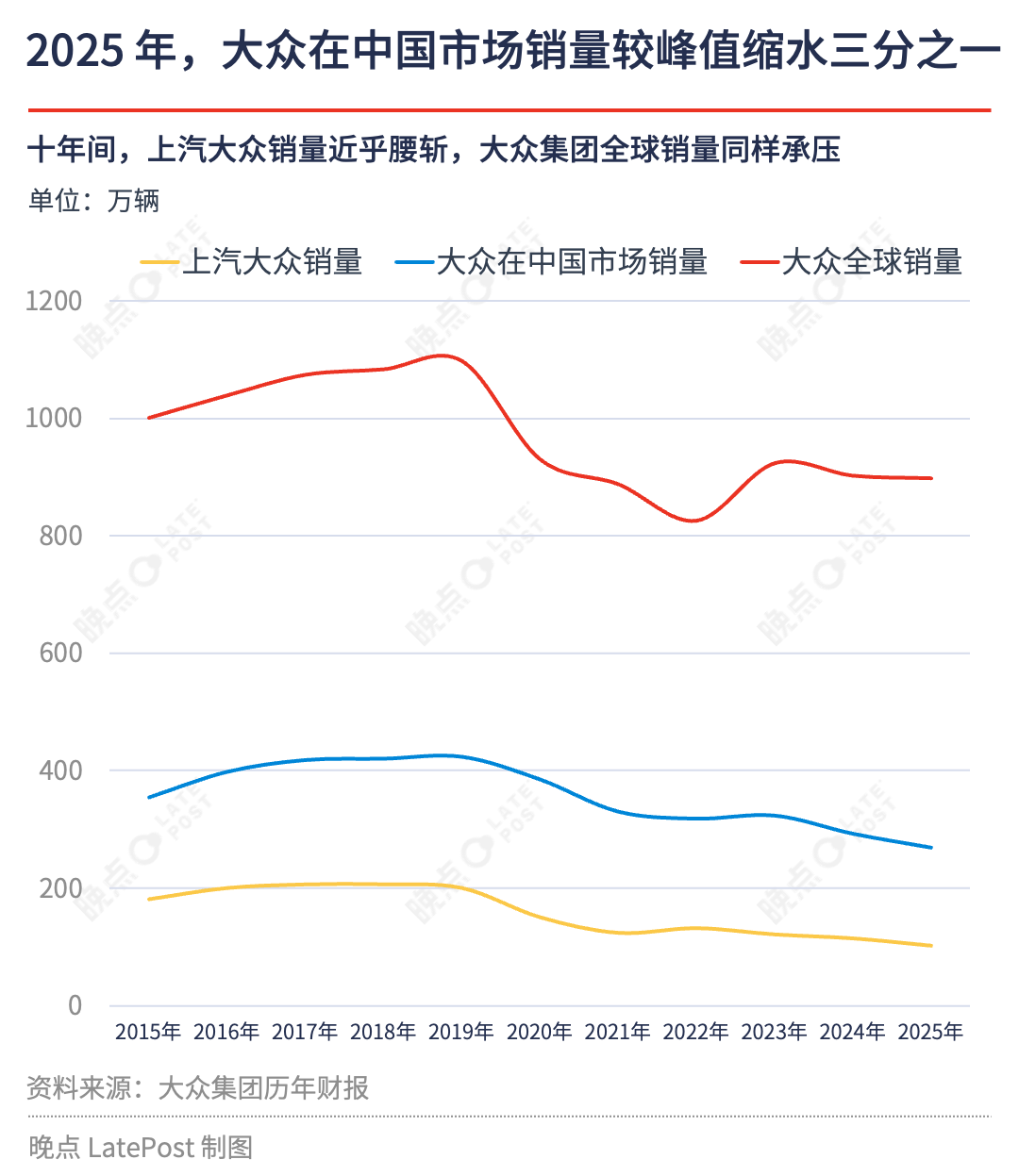
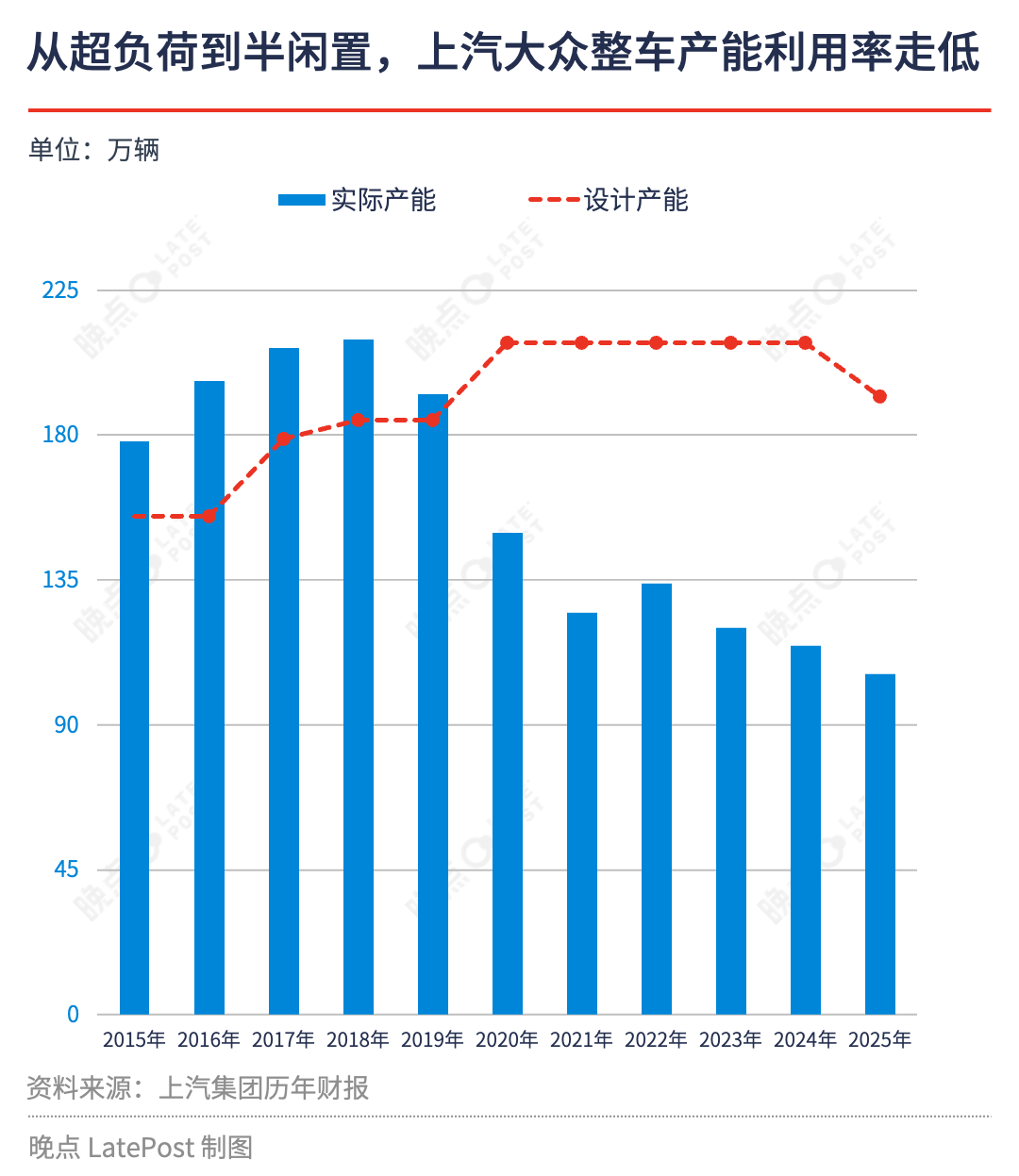
As one of Volkswagen’s two joint ventures in China, SAIC Volkswagen has followed this downward trend: annual sales exceeded 2 million in both 2017 and 2018, leading the passenger vehicle brand sales chart in China. By 2025, however, this will have dropped to 1.02 million units.
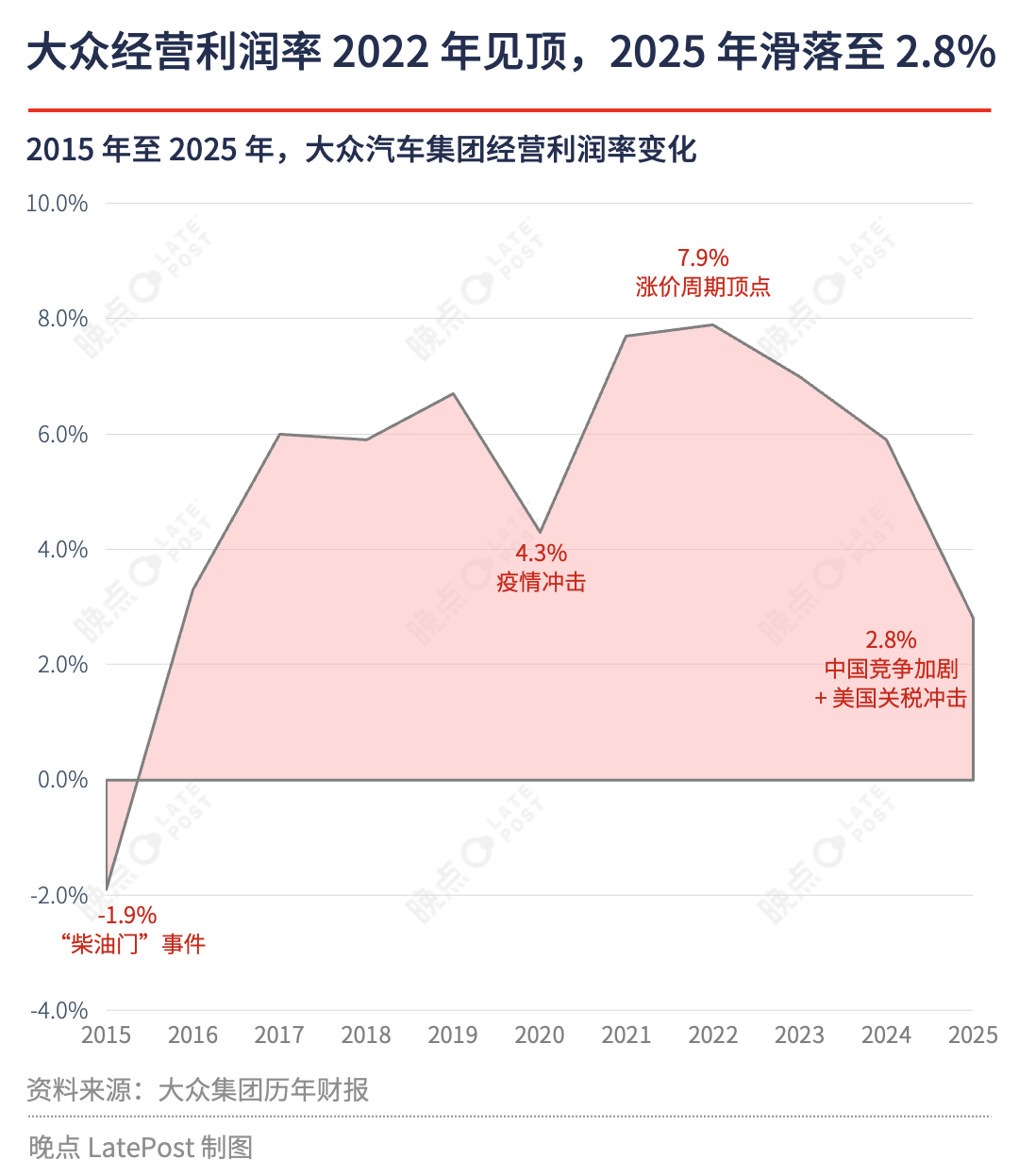
At the group level, in 2022, thanks to global chip shortages and the resulting price surge during the pandemic, Volkswagen’s operating profit margin reached 7.9%. However, as competition in the Chinese market intensified and with U.S. tariffs rising, margins continuously declined to 2.8% in 2025—the lowest since the 2015 “Dieselgate” scandal.
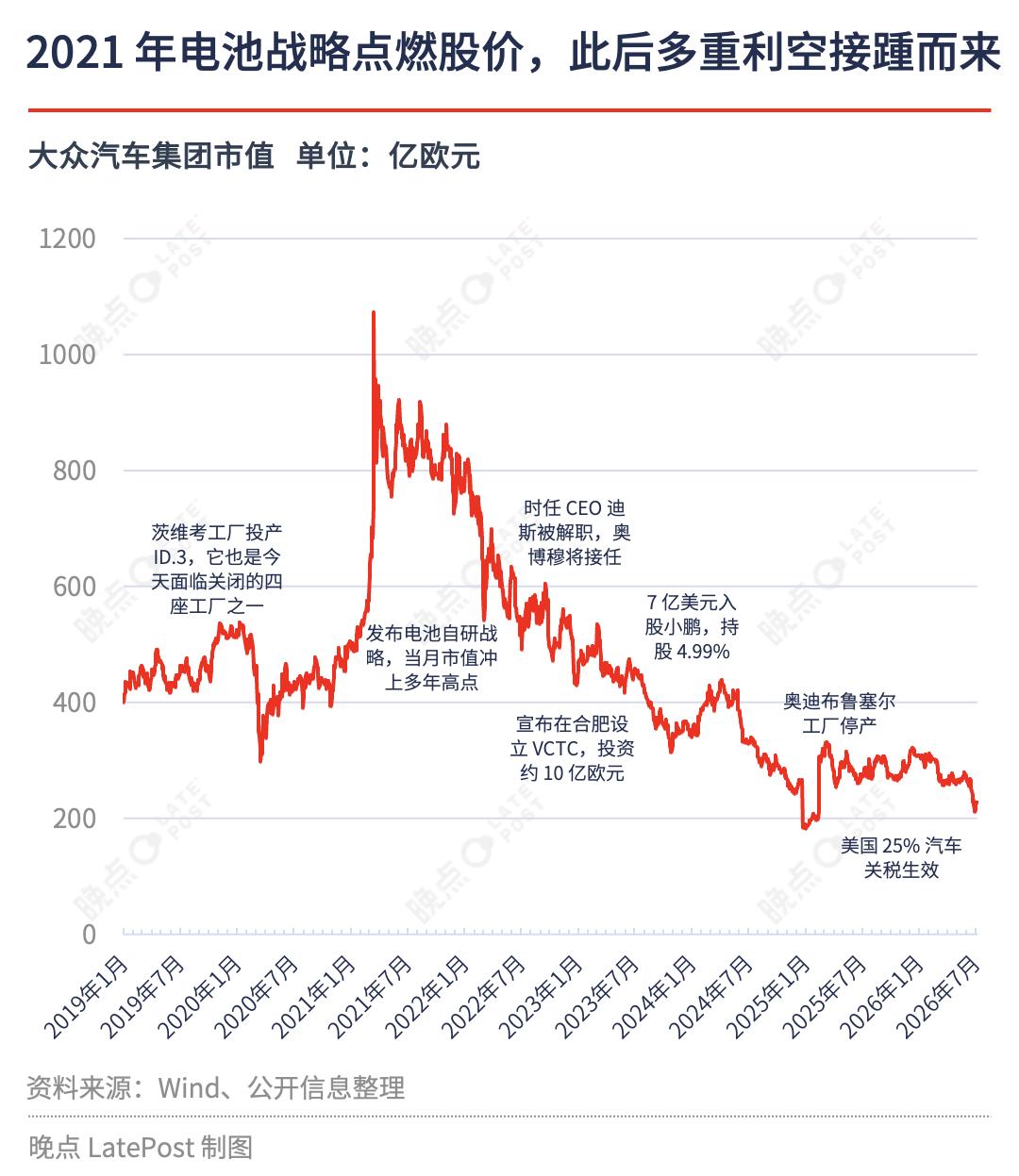
To reverse this decline, Volkswagen began rebuilding its R&D system in China three years ago: not only setting up its independent R&D entity VCTC in Hefei—its largest R&D center outside Germany—but also co-developing intelligent technologies with Chinese firms such as Xpeng and Horizon Robotics.
According to LatePost Auto, VCTC once recruited software engineers from local tech giants like Tencent and Alibaba with high salaries; R&D payments to partners are also significant—Volkswagen pays Xpeng alone hundreds of millions of RMB in each quarter of 2025.
This transformation has also brought frequent personnel changes. A VCTC employee told us that over the past three years, team members have come and gone, department names changed repeatedly in his email box, and even his desk was constantly relocated. After Han Sanchu, former chief software architect of Changan, became CEO of Cariad China, he implemented code competency tests and successively cut employees who failed to meet the standards.
Cariad China’s joint ventures also face various issues. “They set up projects but don’t manage them afterward.” That’s how an engineer from Coresmart Technology—a smart driving JV of Cariad China and Horizon Robotics—described Volkswagen’s R&D cooperation in China. In his opinion, Volkswagen insists on copying German designs in the China market, and its collaborations with local firms are mostly “political projects,” essentially “a big mess.”
Disjointed R&D is not limited to external partners. Volkswagen’s three vehicle manufacturing firms in China sometimes also act independently. Before this year's Beijing Auto Show, Volkswagen China held a new car media appreciation event, planning for FAW-Volkswagen, SAIC-Volkswagen, and Volkswagen (Anhui) to bring their new models—but in the end, only two companies attended (FAW-Volkswagen dropped out last minute). In everyday operations, each enterprise has separate departments and teams, and they rarely step into each other's affairs.
Volkswagen (Anhui), majority-controlled by the group, receives the most resources. Yet this hasn’t resulted in more autonomy: for a long period, despite only 3 of the approximately 180 staff being German, most matters still had to be reported to headquarters in Germany.
The mismatch between production and sales at SAIC Volkswagen is a microcosm of the entire group. Freitag remarked that while planning capacity, management assumed annual group sales would soon reach 14 million vehicles and expanded factories accordingly, pushing capacity to 12 million units. By 2025, annual sales fell short of 9 million.
Volkswagen Group CEO Oliver Blume no longer counts on a sales rebound. Under his leadership, annual capacity was reduced from 12 million to 10 million, with the further target of 9 million, including 500,000 cuts in Europe—where the most expensive production base is Volkswagen’s headquarters in Germany.
Blume’s ultimate goal: continue cutting costs so that Volkswagen Group can be profitable even with only 8 million annual vehicle sales.
Management Plans to Close Plants, Unions and State Government Team Up to Resist
In Germany, every step of Volkswagen’s layoffs and plant closures plays out under the spotlight.
Along with layoffs, four of Volkswagen Group’s vehicle plants in Germany—Emden, Zwickau, Hannover, and Audi’s Neckarsulm—are at risk of closure. These four plants collectively employ about 40,000 people and have annual capacity around 750,000 units. Blume’s reason for closing them is fundamentally the same: low utilization and high production costs.
Layoffs and closures comprise one restructuring plan, internally dubbed “Group Target Picture 2030.” According to Germany’s Der Spiegel, the group board expects existing models at these plants to keep producing until the end of their life cycle: Zwickau and Emden stop production in 2031, Hannover in 2032, and Neckarsulm in 2034. Afterward, plants may be taken over by other brands or closed.
Closures are also accompanied by a sweeping contraction of products and investment: the number of vehicle models will be cut by as much as 50%, the number of optional configurations by as much as 75%; Volkswagen Group’s investment budget between 2027 and 2031 will drop from €180 billion to €135 billion.
At Volkswagen, plant closures are not merely for management to decide.
First is an existing agreement: after talks with unions, management pledged at the end of 2024 that there would be no forced layoffs or factory closures in Germany before the end of 2030. This agreement is now the labor side’s justification for resisting the new round of job cuts.
Management believes this agreement is no longer fit for the current reality. Volkswagen Group CFO Arno Antlitz said after the July 9 meeting that, given today’s economic and geopolitical climate, the cost-cutting under the current deal is not enough, and deeper structural cuts are needed.
Second is Volkswagen Group’s governance structure: the supervisory board has 20 seats, with two held by Lower Saxony’s Prime Minister Olaf Lies and Deputy Prime Minister Julia Willie Hamburg. Counting in employee representatives, this camp holds 12 seats, and in unity, they can veto any decision the supervisory board must approve—including plant closures.
Audi’s Neckarsulm plant is an exception—Lower Saxony does not have seats on the Audi supervisory board. The closure of Audi’s Brussels plant in 2024 was passed at Audi’s board against employee wishes, using the chairman’s double voting rights.
To counter possible vetoes, Volkswagen has a contingency: convening an extraordinary shareholders’ meeting, where the Porsche and Piëch families could use majority voting rights to force through closures. But this risks complex legal battles—under the “Volkswagen Act,” Lower Saxony holds a minority veto, and only in emergencies might a shareholders’ vote be allowed to pass such motions.
Beyond these, Blume intends an even more radical plan: restructuring the holding structure. He hopes to turn subsidiaries into shapes more rapidly eligible for capital markets—such as spinning off Audi or pieces thereof—but more fundamentally, splitting Volkswagen brand and parts plants into separate shareholding companies.
Once done, they would no longer be protected by the “Volkswagen Act,” and the supervisory board would not need a two-thirds majority to close plants.
Volkswagen is simultaneously four things: a listed company where large investors have a voice; an “employee society” where works council chief Daniela Cavallo can currently block closures; a quasi-state firm where Lower Saxony wields a 20% vote and vetoes; and a family company, where the Porsche and Piëch families, via Porsche SE, control 53.3% of ordinary shares and still influence management appointments.
However, according to German investigative outlet CORRECTIV, the Porsche and Piëch families have long been dissatisfied with Volkswagen’s power structure—two family representatives privately agreed, “We can’t accept that since the family holds a majority, we still cannot decide company strategy.”
Blume’s own position is unstable. His Porsche track record earned him wide support, but as the group’s profitability fell from 7.9% to 2.8%, criticism has mounted. He must propose and carry out a plan—at the very least, halt Volkswagen Group’s gradual decline.
Lead Image:Exterior of Volkswagen Group Zwickau factory, Germany; Source: Visual China Group
- FIN -



Disclaimer: The content of this article solely reflects the author's opinion and does not represent the platform in any capacity. This article is not intended to serve as a reference for making investment decisions.
You may also like
LAB crypto crashes 54% – Why an $18.3M insider-linked transfer raises concerns
Peter Schiff Says the Biggest Market Crash Will Not Start With Bitcoin, But Here
Dollar Stablecoins May Increase Currency Run Risk Says IMF
Watch Out: Massive Token Unlocks Coming for 14 Altcoins This Week—Here’s the Day-by-Day, Hour-by-Hour List
Crypto prices
More


