
Middle East Tensions Roil Global Markets: U.S. Stocks Surge Then Retreat, Optical Communication and Storage Sectors Rebound, Chinese Assets Strengthen Against the Trend

On July 20 local time, early trading in the three major U.S. stock indexes gained momentum from a rebound in the semiconductor sector, all turning positive, but fell back in the afternoon after being shaken by escalating tensions in the Middle East, eventually closing lower across the board. On the trading board, the optical communication and storage tracks led the gains against the trend, Chinese concept stocks maintained their recovery, and international oil prices rebounded from lows supported by geopolitical premiums. With the start of a dense earning window for global tech giants this week, global tech stocks are at a critical crossroads of valuation correction and earnings validation, while recurring geopolitical conflict has further magnified short-term market volatility.
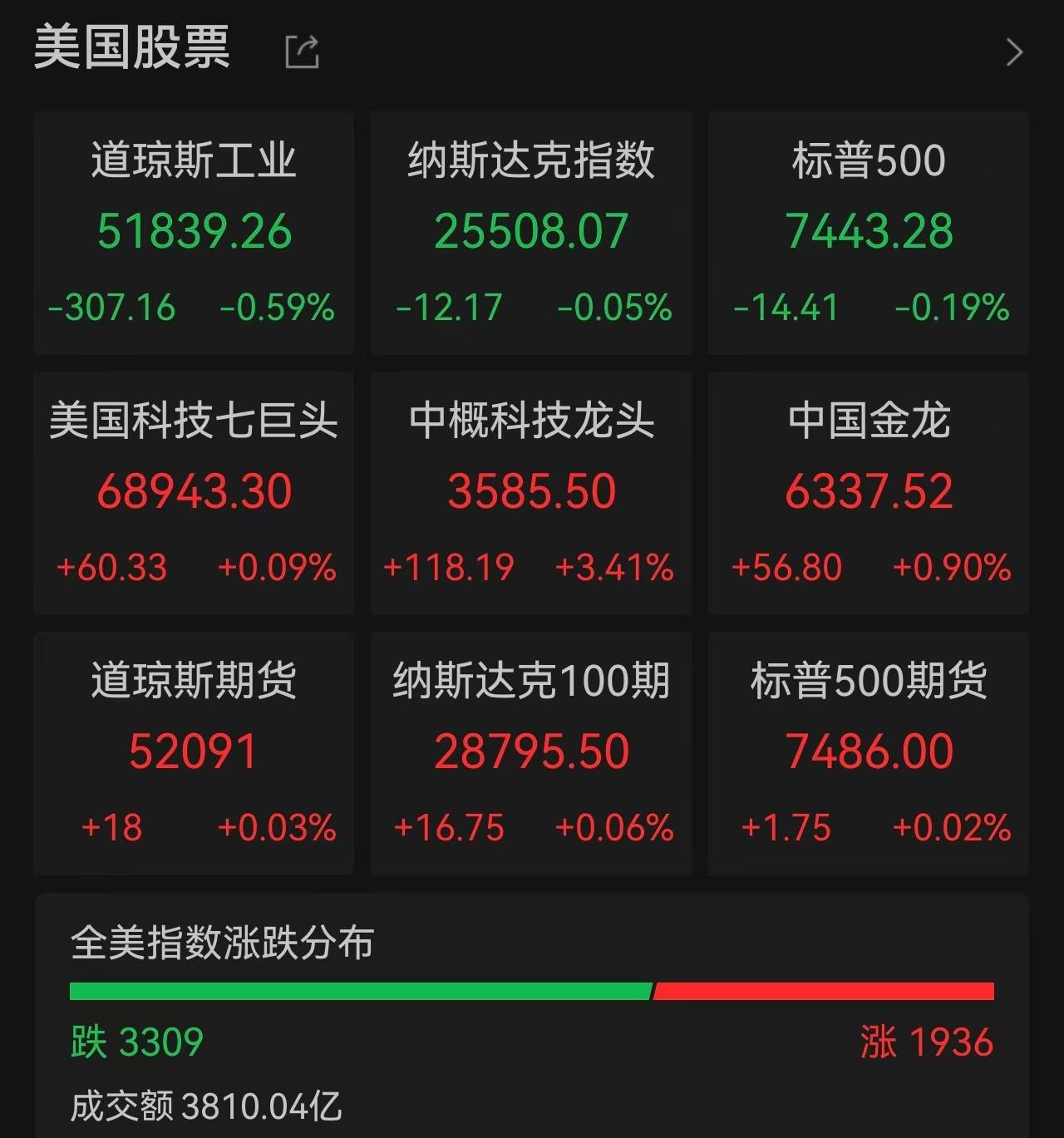
At the close, the Dow Jones Industrial Average fell 0.59% to 51,839.26 points; the Nasdaq Composite Index fell 0.05% to 25,508.07 points; and the S&P 500 Index dropped 0.19% to 7,443.28 points. The Philadelphia Semiconductor Index surged over 3% at one point intraday, but the gains narrowed in the afternoon, and finally closed up 0.60%, presenting a clear high-then-reverse pattern.
Significant differentiation occurred within sectors, with optical communication and storage tracks as the main driving forces of the rebound. Lumentum and Credo Technology both rallied over 4%, Marvell Technology rose 3.32%, Coherent, SanDisk, and Western Digital rose more than 2%, Micron Technology and Seagate Technology were up nearly 2%; by contrast, SK Hynix ADR dropped 1.86%, while equipment sector players KLA Corp and Lam Research fell by more than 2%, becoming the major drags within the sector.
Large-cap tech stocks also saw divergent moves. The Wind U.S. Tech Giants 7 Index rose slightly by 0.09%, with Microsoft up 2.15%, Google up 1.52%, and Amazon up 1.12%; Apple and Tesla both fell over 2%, SpaceX dropped over 3%, while Nvidia edged up just 0.23%. On the news front, Google is developing server chips powered by the Gemini large model to improve AI computing power efficiency and ease the shortage of computing resources—a localized boost to sentiment in tech stocks.
Chinese assets rallied against market trends, with the Nasdaq Golden Dragon China Index closing up 0.90%. At the stock level, Youdao surged over 6%, Kingsoft Cloud climbed more than 5%, Alibaba rose by 4.69%, Kanzhun jumped over 4%, 21Vianet, GDS Holdings, JD.com, and Weibo all advanced more than 3%, while only a few such as XPeng and KE Holdings closed lower.
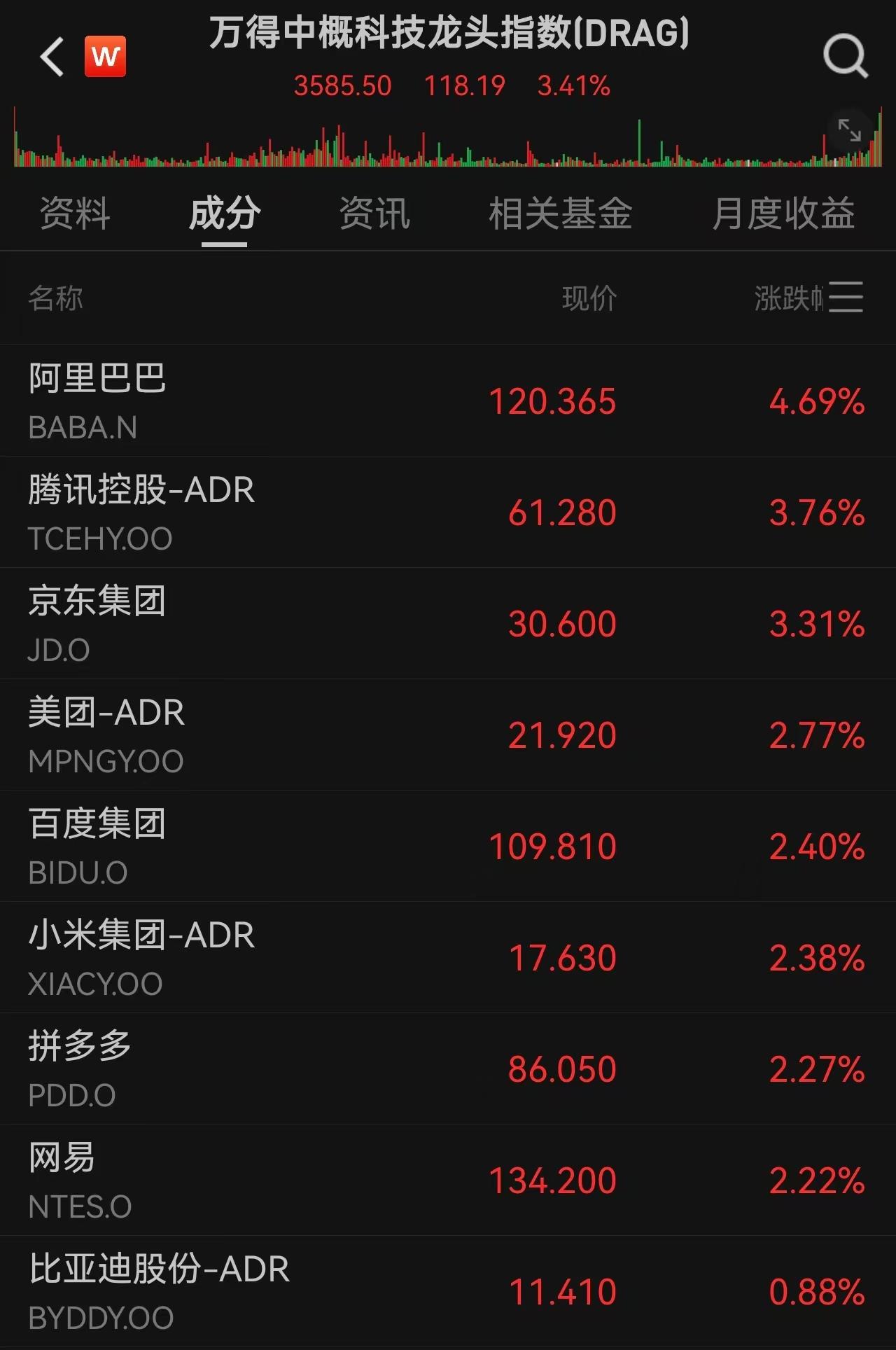
The rally in Chinese assets to some extent reflects the reallocation logic of global capital under current uncertainty—when the AI narrative is questioned, geopolitical risks drive up energy prices, and short positions in U.S. equities approach historical extremes, Chinese assets with more attractive valuations have become a safe haven for some funds. However, whether this relative strength can persist still depends on subsequent Chinese economic data, policy pace, and the evolution of global risk appetite.
Short positions near historic highs—the AI sector enters a valuation correction period
The lackluster rebound in chip stocks reflects the deeper market doubts over the sustainability of the AI narrative. According to data from S3 Partners LLC dating back to 2010, short interest in S&P 500 constituents has reached 3.79% of free float, nearing all-time highs; for Russell 3000 constituents, the short position ratio has risen to 6.3%, a record new high. Short interest in NYSE-listed stocks has continued to climb since February this year and hit 9% of free float in late June, also the highest on record.
The surge in short positioning, combined with uncertainty over future AI spending, has sharply heightened market disagreements about the second half of the year. Joseph Saluzzi, partner and co-head of equity trading at Themis Trading LLC, said: "Concerns about AI spending and volatility in the semiconductor sector are keeping investor skepticism elevated. For the rest of the month, earnings season and geopolitical events will be major variables."
Oracle’s Credit Default Swap (CDS) spreads rose by about 10 basis points last Friday to 198.23, hitting a historical closing high. This sign reflects deeper market concerns over the sustainability of the AI investment frenzy—as the cost to insure Oracle’s debts from default has risen to unprecedented levels.
Nevertheless, some institutions remain relatively optimistic. Guolian Minsheng Securities believes that after months of sharp gains, the perceived "certainty" has faded, leveraged capital may retreat in waves of narrative change causing sharp pullbacks, but commercialization of AI applications is still at an early stage. With the popularization of models like Fable 5 and penetration of Agentic AI, growing demand for inference will support AI infrastructure prosperity. Wells Fargo Investment Institute President Darrell Cronk said, "Semiconductor and AI sectors are experiencing a healthy reality check for valuations. The current sector is oversold; a short-term technical rebound is not unexpected, but the mid-term upward trend is already broken."
Middle East tensions cause repeated shocks—Commodities market shows fragmentation
The real "variable generator" in today’s trading was the escalating situation in the Middle East.
According to China Central Television News, on July 20 local time, the U.S. Central Command stated that at 4 p.m. ET that day, the U.S. military, under presidential orders, began a new round of strikes against Iran "to further degrade Iran’s military capability to attack merchant ships in the Strait of Hormuz." On the same day, Iran’s Islamic Revolutionary Guard Corps issued a statement, claiming they attacked U.S. targets in Bahrain and Kuwait, inflicting "heavy blows" on them.
Previously, two U.S. soldiers were killed by Iranian ballistic missile and drone attacks in Jordan on the 17th. U.S. President Trump then warned on social media, "For every U.S. soldier killed by Iran, Iran will pay multiple times over!" Although Secretary of State Rubio said on the 19th the Trump administration "remains open to diplomatic solutions," military strikes on both sides continue, and the memorandum of understanding previously signed between the U.S. and Iran has in fact collapsed.
The fermentation of geopolitical risks directly transmitted to the commodities market. On July 20, the main NYMEX WTI crude oil futures contract rose 0.78% to $82.42/barrel; ICE Brent crude futures main contract rose 0.95% to $88.94/barrel. Since July 2026, the Strait of Hormuz has once again fallen into blockade, shipping volume has declined, and geopolitical risk aversion sentiment continues to simmer, pushing Brent crude back above the $80/barrel mark.
Soochow Securities believes that the global crude oil supply-demand balance will persist, repeated geopolitical conflicts will impact crude supply and support oil prices above pre-war central levels. On the supply side, oil fields and related production equipment in Gulf oil-producing countries have been damaged and post-shutdown resumption takes a long time, so Middle Eastern oil supply cannot immediately normalize. On the demand side, the seasonal peak for crude oil consumption is approaching and global inventories are relatively low, with potential restocking. Guotai Haitong pointed out that while geopolitical tensions may bolster the global oil price center, global crude demand is relatively weak, OPEC+ output policy changes frequently, so there is still a lack of upward momentum for the long-term oil price center.
In international precious metals, COMEX gold futures fell 0.17% to $4,011.80 per ounce; COMEX silver futures rose 0.60% to $56.66 per ounce. Guotai Haitong believes that the market's repeated revisions of global macro liquidity expectations may periodically impact gold prices, but in the long run, gold’s strategic allocation value still clearly remains.
Disclaimer: The content of this article solely reflects the author's opinion and does not represent the platform in any capacity. This article is not intended to serve as a reference for making investment decisions.
You may also like
Dogecoin accumulation score hits 100, eyes $0.65 in next cycle
Momentum Whale Inflow Ratio Hits 2026 Low
Grayscale files for a Worldcoin ETF as WLD jumps 8% – What’s next?
Oracle’s $15B AI data center hits roadblock as Wisconsin rejects rule change
Crypto prices
More


