
Institutional Research Report: Asian Power Supports the $4,000 Threshold, Gold Pricing Power Gradually Shifting Eastward

FXComing July 28 Report—— Weak demand for gold in the West has pressured gold prices, but strong physical demand from major Asian powerhouses has built a solid support at the $4,000 mark. According to BMO’s assessment, the above-ground gold reserves of this country are far above official data, contributing to one-third of global demand. Driven by this country’s currency internationalization strategy, its central bank continues to buy gold on dips, with huge room for reserve expansion remaining. As Asian gold market infrastructure improves, global gold pricing power is gradually shifting from the West to this country.
Recently, gold has experienced continuous volatility and correction. Weak investment demand in the West has suppressed gains, but gold has held steadfastly above the key $4,000/ounce support.
According to a new research report by Bank of Montreal (BMO), the backbone of resilience comes from demand in major Asian economies. The overall gold stockpile and market influence of these Asian powerhouses are significantly underestimated, accounting for one-third of global gold demand. The country’s central bank’s consistent buying on dips and robust private physical demand will be the core drivers of rising gold prices in the second half of the year. In the medium and long run, driven by its currency internationalization strategy, the country’s gold reserves will continue to expand, and as domestic gold market infrastructure is refined, the global gold pricing power is shifting from the West to this major Asian country.
Core Market Support: Weak Western Demand and Asian Powerhouse Underpinning Gold Prices
In recent months, international gold markets have come under broad pressure, entering a long-term correction. Investment demand in Europe and the US has remained weak, continuing to restrain any gold price rebound. However, gold prices have consistently held above the vital $4,000 mark, defying any deep plunge.
BMO’s analysis believes that the core logic of this resilience is not overseas institutional allocation but rather the continued underpinning from physical demand, led by major Asian economies. This has offset the negative impact of Western capital outflows and built a solid price floor for gold.

Key Data: Major Asian Powerhouse's Gold Stock Heavily Underestimated
For a long time, the market has relied on this country's official reserve data to judge its gold holdings, but BMO's new calculations overturn traditional perceptions, revealing that the actual stock size is much higher than expected and far above disclosed figures. Currently, the level of demand from this country already accounts for one-third of global gold demand, making it the largest incremental source in the global gold market.
Breaking down the stockpile structure, besides the gold held by the central bank, the vast majority is concentrated in private jewelry consumption and physical investment bars. Presently, this Asian powerhouse’s above-ground gold stock accounts for 13% of the world total, very close to the US’s 15% global share; both countries’ gold stockpiles are gradually leveling.
Accumulation Logic and Medium- to Long-term Targets
BMO notes that this Asian powerhouse has not publicly announced an ultimate target for gold accumulation. However, combined with the country's economic expansion and its currency internationalization strategy, a robust logic supports aggressive gold expansion.
Meanwhile, the Asian powerhouse continues to invest in overseas assets, with a cumulative outlay of about $18 billion to safeguard its gold strategy.
From the pace of surpassing the US: at the current rate of gold purchases, the official central bank reserves of this Asian power could catch up with the US in about 5 years. If the entire national gold stockpile is counted, the time to surpass the US would be significantly shorter.
Short-term Operations: Central Bank Continues to Buy on Dips Using Price Adjustment Windows
Amid several months of gold price corrections, the Asian powerhouse’s central bank has adopted precise tactical accumulation, making the most of low price windows to replenish reserves.
Latest data shows the central bank increased its gold reserves by 15 tons last month, the largest monthly rise since October 2023, and has accumulated more than 40 tons in new purchases this year—continuing to send strong bullish signals, providing sustained bottom support for gold prices.
Ultimate Pattern: Global Gold Pricing Power Accelerates Eastward Shift
Beyond expanding reserves, this major Asian power is building a global gold pricing system across all dimensions. Through upgrading Hong Kong’s status as an international gold hub, improving settlement and clearing infrastructure, integrating gold exchanges, and expanding futures and OTC market liquidity, it is continuously drawing global funds into its domestic gold market.
BMO believes that as the demand size, market liquidity, and reserves of the Asian powerhouse continue to grow, the centuries-old Western dominance in gold pricing will be broken. Global gold pricing power is systematically shifting to this Asian power.
Summary
Overall, the core support for the current gold price consolidation is the strong physical demand from the Asian powerhouse, with weak Western investment demand being only a short-term disruption. The gold stockpile and contribution from this Asian powerhouse far exceed market expectations, and under the impetus of its currency internationalization strategy, the logic for long-term gold accumulation remains solid. The central bank’s continued buying on dips underpins gold prices, coupled with the improvement in domestic gold market systems and strengthening pricing voice, demand from the Asian powerhouse will become the main driving force for gold prices in the second half of the year and the medium to long term.
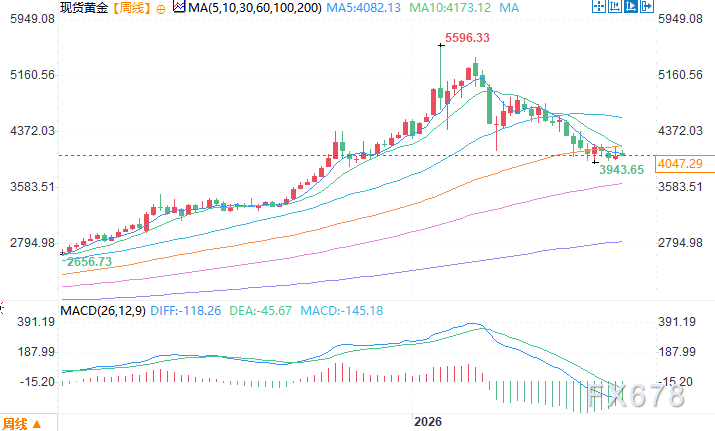
Spot gold weekly chart Source: Easy FXComing
As of 13:14 (UTC+8) July 28, spot gold was quoted at $4,042.29 per ounce
Disclaimer: The content of this article solely reflects the author's opinion and does not represent the platform in any capacity. This article is not intended to serve as a reference for making investment decisions.
You may also like
Australian Dollar: Risk-off and RBA tone weigh on Aussie – MUFG
Recently Turned Bullish Reputed Crypto Analyst Reveals Greater Bet on Ethereum Over Bitcoin

Pi Network Price Prediction: Can a $12M Robotics Bet Save PI From a New All-Time Low?
Abandoning Food and Betting on Personal Care Pays Off! Unilever (UL.US) Q2 Sales Growth Hits Highest in Over a Decade, Raises Full-Year Performance Guidance
Benefiting from strong demand in key markets such as India, Indonesia, and Latin America, international consumer goods giant Unilever delivered its best quarterly sales performance in more than a decade in the second quarter and subsequently raised its full-year guidance.

Crypto prices
More


