
August 4th Financial Morning Brief: Gold Holds Steady at the 4050 Level, US-Iran Negotiation Rumors Denied, US Oil Eyes the 80 Level

Financial News August 4th — In early Asian trading on August 4th, spot gold remained stable near $4050/oz, affected by uncertainty in the Middle East war, concerns over rising inflation, and the market's wait for this week’s US employment data to assess the Federal Reserve’s policy direction.
On Tuesday (August 4th, GMT+8), during the Asian session, spot gold stabilized near $4050/oz, influenced by the uncertainty surrounding the Middle East conflict, concerns about rising inflation, and the market's wait for US employment data to judge the Federal Reserve's policy outlook. US crude oil was trading below $80/barrel as Trump halted attacks on Iran and restarted negotiations over the Strait of Hormuz. On Monday, oil prices plummeted by more than 7%. However, Iran emphasized that it has had no talks with the US and will not allow the US to open non-Iranian shipping routes in the Strait of Hormuz, adding further uncertainty to the Middle East situation.
Key Focus of the Day
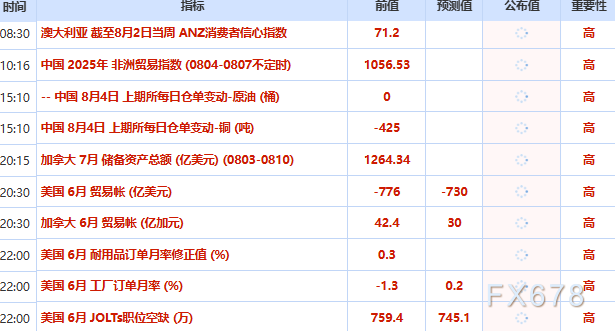
Stock Market
US stocks started August strongly on Monday, with the Dow Jones Industrial Average closing at a record high, mainly driven by signs of easing US-Iran tensions. Oil prices and Treasury yields fell, while a wave of earnings reports and economic data were released.
The Dow rose 1.32% to close at 53,178.41, the S&P 500 rose 1.48% to 7,600.50, and the Nasdaq rose 2.13% to 25,913.90.
On Sunday, President Trump stated that talks with Iran to reopen the Strait of Hormuz would take place, and although denied by Iran, crude oil prices still fell, supporting the decline in US bond yields. Meanwhile, market participants continued to assess the long-term impact of the Iran situation on the likelihood of a Federal Reserve rate hike.
In terms of sectors, Communication Services led the gains, up 4.3%, driven by increases in Meta Platforms and Alphabet. The Energy sector was the worst performer, down 1.2%. Q2 earnings have been strong, with 304 S&P 500 constituent companies reporting as of last Friday, an earnings growth rate of 29.3%, and 85.2% beating expectations.
On the stock level, Amazon's share price rose 4.6%, with its market value surpassing $3 trillion for the first time. SpaceX rose 5.6%. Bristol Myers Squibb edged up by 0.2% on reports of preliminary merger talks with AstraZeneca; if completed, it would create a pharmaceutical giant with nearly $400 billion in market value. Marriott International, however, plummeted by 7% due to lower-than-expected Q3 profit forecasts.
New York Fed President Williams expressed optimism that inflation pressures would gradually ease. However, the market is concerned about policy uncertainty after Chair Waller suggested reducing the frequency of rate-setting meetings.
According to CME FedWatch, the market estimates a 64.5% chance of at least one 25bp rate hike by the Fed in September. This week, investors will focus on several labor market indicators, especially Friday’s government employment report.
Gold Market
Gold prices remained stable near $4050/oz on Monday, mainly supported by the uncertainty in the Middle East crisis, concerns over rising inflation, and market anticipation of US employment data this week for policy direction insights from the Federal Reserve.
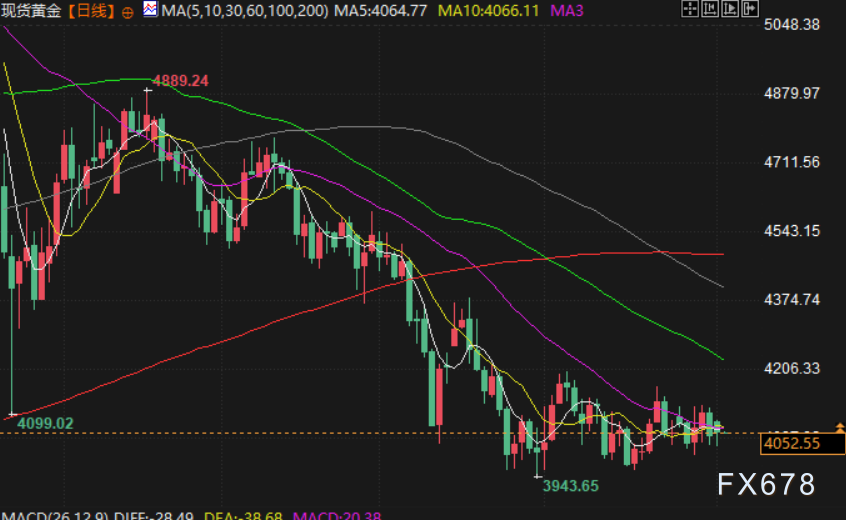
Analysts pointed out that gold has fluctuated in the $4000–$4200 range for over a month, supported by expectations that inflation might rebound, especially since July data may reverse part of the June decline.
Meanwhile, three Fed officials last week advocated for rate hikes at the policy meeting. New York Fed President Williams also stated that he is ready to raise rates if inflation pressure does not ease; on Monday, Iran denied having any negotiations or scheduled meetings with the US, contradicting messages from Trump.
This week, the market will closely watch the ADP employment report and non-farm payrolls among other labor market indicators. In addition, the Bank of Korea announced it will purchase gold from domestic producers to diversify supply and boost reserves.
For other precious metals, spot silver remained steady near $58/oz, platinum fell 1.6% to $1615.25, and palladium declined 1.7% to $1252.62.
Oil Market
Oil prices fell sharply by more than 7% on Monday. Brent crude plunged 7.38% to a three-week low, closing at $83.53 per barrel. US crude slid 7.77% to $80.06, mainly due to President Trump’s temporary pause in attacks on Iran and his stated hope of swiftly reaching an agreement that could increase Gulf oil supplies. Despite this, Iran’s foreign ministry immediately refuted claims of talks or planned meetings with the US, contradicting Trump’s statement.
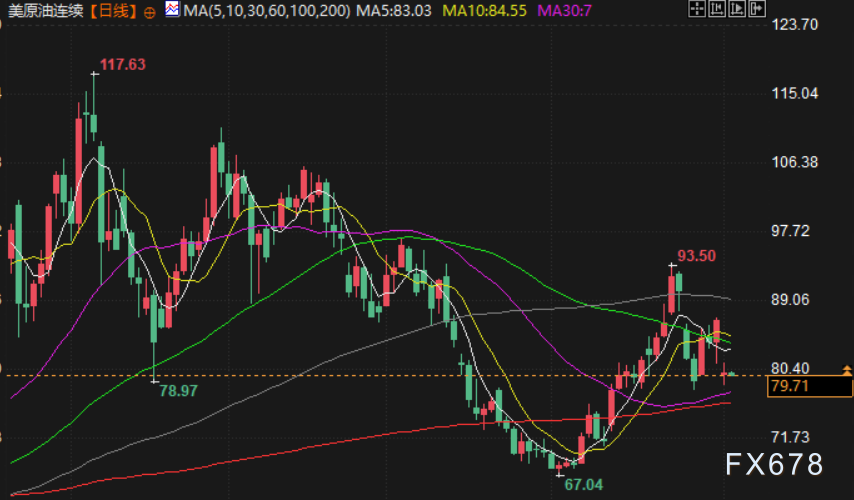
Trump later said the negotiations were “ongoing” and threatened that Tehran would face “decapitation” if it did not agree to a deal. Yet the market still expects improvements in supply. Additionally, on Sunday, the OPEC+ alliance approved an increase in its production quota of about 188,000 barrels per day starting September, adding further pressure on oil prices.
Furthermore, shipping data show six Saudi supertankers diverted around Africa due to threats from Yemen’s Houthi militia, but other Saudi tankers still used the Bab-el-Mandeb strait. At the same time, shipping in the Strait of Hormuz has slowed. US gasoline and diesel futures both fell around 5%. Analysts believe this selloff was another instance of excessive market reaction to Trump’s remarks.
Foreign Exchange Market
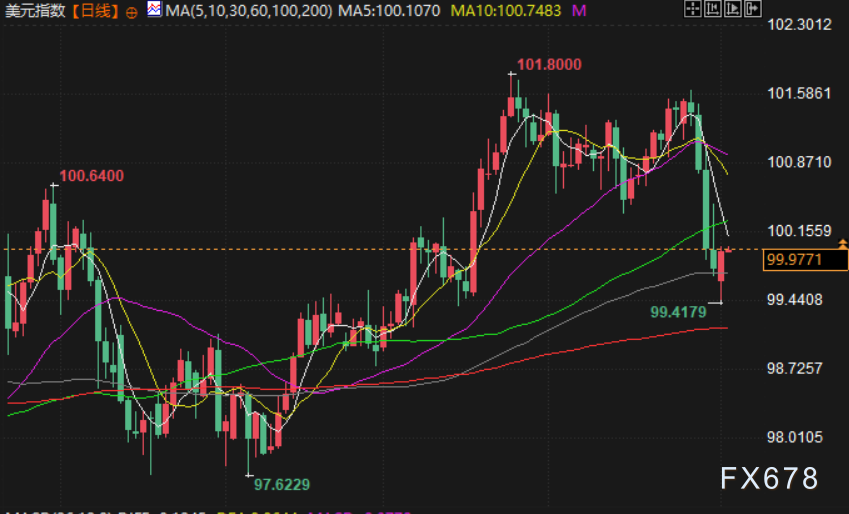
The US dollar index edged up 0.17% to 99.96 on Monday, ending a four-day decline as easing geopolitical tensions reduced safe-haven demand, pressuring the dollar but supporting the euro and yen. Additionally, it was reported that the New York Fed—representing the US Treasury through banks—sold euros for yen to avoid signaling an overall dollar weakness.
The yen surged to roughly a three-month high against both the dollar and the euro on Monday. The dollar/yen closed at 157.14, down 0.31%. The euro/yen touched its highest since mid-November 2025 at 179.435, mainly due to the sustained impact of last week’s coordinated intervention in the FX market by Japan and the US to support the yen. Japan’s Ministry of Finance confirmed on Monday that it had coordinated a yen buying intervention and stated it would not hesitate to take further action. Data showed Japan may have spent up to $36.58 billion in the latest intervention, bringing the total cost of this year’s two interventions above $100 billion.
The market is closely monitoring the possibility of further interventions. Analysts noted that US Treasury involvement has changed the traditional view that such interventions have limited effect, but also warned that the Bank of Japan might drive up bond yields by selling government bonds to raise funds for intervention.
International News
On Monday, President Trump announced from the Oval Office that negotiations with Iran were underway, covering the reopening of the Strait of Hormuz and Iran’s nuclear program. He stated that this was Iran's “last chance to sign a good deal,” and revealed that Saudi Arabia, UAE, and Qatar also support the talks. Trump said before taking new military action, he decided to give Tehran one last chance. "I want to give them another opportunity before completely destroying Iran," he said. "They called and asked not to attack and said they would reach a deal. This is the truth—everybody knows it." He further stated that the original military strike plan was difficult to implement, but he is proud to have provided a diplomatic opportunity. Regarding the Strait of Hormuz, Trump said: "We're discussing a complete reopening today." He expects swift progress in the talks, saying, "It’s not a very complex issue." Further discussions will cover Iran's nuclear capability after the Strait issue. However, the nature of US-Iran contact remains contentious. Iranian Foreign Ministry spokesperson Bagheri clarified: “To avoid any misunderstanding, it’s necessary to clarify the content and parties of current talks. We are not in negotiations with the U.S. at the moment.” Iran emphasized its talks with Oman only concern Strait of Hormuz security and navigational solutions. Trump insists diplomatic progress is smooth and denies claims of a deadlock. He said, “They didn't deny it this time, but for some reason, the Iranians negotiate but don't want to admit it.” The current diplomatic focus remains the reopening of the Strait of Hormuz and the nuclear issue, with Gulf countries actively seeking ways to avoid renewed regional escalation.
According to CME “FedWatch”: The probability of the Fed keeping rates unchanged by September is 32.8%, while a cumulative 25bp hike is at 67.2%. The probability of unchanged rates by October is 23.3%, with at least a 25bp hike at 76.7%. The probability of unchanged rates by December is 14.2%, a cumulative 25bp hike is 44%, and at least a 50bp hike is at 41.8%.
Sources reveal the Trump administration has invited staff from major tech firms OpenAI, Google, Anthropic, and others to the White House on Tuesday to review the final version of the artificial intelligence regulatory framework. This framework establishes a set of voluntary mechanisms requiring AI labs to submit relevant models to the government before releasing to partners or the public. An executive order in early June required the framework’s completion by August 1, and the meeting is scheduled for a few days after the deadline. Another source noted the meeting is hosted by the Office of the National Cyber Director and will explore follow-up promotion plans as well as a yet-undisclosed related event. Two sources said the representatives are mid-level staff, not executives, and the new framework will not be officially released at this meeting. It remains unclear whether the White House will solicit feedback from companies or publish the final version at the meeting. A White House official said Monday that the voluntary framework was completed on time, and the government is consulting the industry on further steps but did not say if the framework has taken full effect.
Monetary market data published by the Bank of Japan on Monday suggested Japanese authorities may have spent up to about $36.58 billion intervening in the FX market last Friday to support the struggling yen—one of the strongest stabilizing actions in recent months. The forecast for the next day's money market conditions showed net outflows of 11.4 trillion yen, far exceeding dealer forecasts of 5.66–6.70 trillion yen. Such a large deviation normally signals official intervention. The market had already been wary of intervention risk, and this data further confirmed the authorities’ resolve amid ongoing yen pressure. Despite the significant size of intervention, market focus remains on subsequent FX trends and whether official follow-up can be sustained. The tug-of-war between yen bears and official intervention continues, with short-term FX trends depending on the BoJ’s funding pace and the cooperation of external macro conditions.
Today (August 3rd), Iranian Foreign Ministry spokesperson Baghaei stated at a regular press conference that there are currently no meetings between Iran and the United States. The only negotiations at this stage are with Oman, related to the Strait of Hormuz. Baghaei also noted that with the US continuously violating its memorandum of understanding, the situation in the Strait of Hormuz will not change significantly. (CCTV International News)
On August 3rd local time, Mohsen Rezaei, top military adviser to Iran’s supreme leader, told media that Iran will never allow the United States to establish any non-Iranian shipping lanes in the Strait of Hormuz. Even if the US deploys warships on illegal routes, Iran will target them. Rezaei also said Iran had previously been ready to attack three locations in Ukraine, but canceled the attacks due to Ukraine’s apology. (CCTV News)
On August 3rd local time, President Trump stated at the White House that negotiations with Iran are underway. The first phase concerns opening the Strait of Hormuz, and the second phase is denuclearization. Trump stressed that the US stance is firm—Iran must not possess nuclear weapons. Trump also revealed progress in talks about reopening the Strait of Hormuz, possibly as soon as tomorrow.
The Iranian leadership judges that Trump seeks to use military threats as leverage rather than launch a large-scale war. According to Tehran, it can rely on regional proxies and sustained global shipping pressure to withstand external pressure until the US shifts to diplomacy. Although Trump repeatedly warns of military action, Iran has made this assessment, and stressed that there are currently no plans for direct negotiations with the US.
On August 3rd, Commander Mohammad Karami of the Islamic Revolutionary Guard Corps ground forces, while inspecting preparations in northwest Iran, stated: "The Revolutionary Guard has full intelligence control and combat readiness in all areas of operation nationwide, ready to decisively respond to any threat at any time."
Domestic News
In response to market needs and to improve operational efficiency, from August 24, 2026 (evening session of August 21, 2026), the Shanghai Futures Exchange will launch arbitrage orders. Initially, arbitrage orders will be applied to copper, gold, rebar, and natural rubber futures contracts. Future expansion to other varieties and launch of cross-product arbitrage combinations will be notified separately. Arbitrage orders apply only to futures, with a minimum order size of 1 contract and a maximum of 500 contracts. (Shanghai Futures Exchange)
Today (3rd), the Hong Kong Exchange officially launched the 5-year RMB government bond future. As the only offshore government bond futures product, this aims to meet overseas investors’ growing needs for interest rate risk management and trading. Launching the 5-year government bond future is a major step toward making Hong Kong an offshore RMB hub and risk management center. (CCTV News)
On August 3rd local time, at the 46th Scientific Assembly of the Committee on Space Research (COSPAR) held in Florence, Italy, Wang Jinsong, a researcher from the China Meteorological Administration, was awarded the William Nordberg Medal. The medal honors outstanding achievements and contributions in applied space science. Since its inception in 1988, Wang is the first Chinese scientist to receive the award and also received the right to name an asteroid. The award signifies international recognition of China’s achievements in space science and application. (CCTV News)
The booming popularity of water sports among consumers is fueling a surge in upstream manufacturing. In a powered surfboard production workshop, workers are rushing to fulfill orders, which are currently scheduled half a month in advance. China is the world’s largest exporter of sporting goods, accounting for over 40% of global exports. As interest in surfing and other outdoor water sports rises, sales of accessories like surf hats and waterproof bags have also soared, with many online stores out of stock and factories rushing to replenish inventory. In the first half of this year, China’s total export value of sporting goods and equipment reached 67.53 billion RMB. As outdoor sports become more diverse globally, exports of paddleboards and other water sports equipment reached 4.77 billion RMB. (CCTV)
Disclaimer: The content of this article solely reflects the author's opinion and does not represent the platform in any capacity. This article is not intended to serve as a reference for making investment decisions.
You may also like
Report: The production capacity of the three major storage manufacturers for 2027 is already sold out in advance, confirming that "next year will be the most supply-short year for storage"
According to DIGITIMES, the entire annual production capacity of DRAM and HBM from Samsung, Micron, and SK Hynix for 2027 has already been fully allocated, and the NAND Flash capacity has also been nearly sold out in advance. Previously, SK Group warned that 2027 will see the most severe supply-demand imbalance in history. Although price increases are expected to slow down compared to 2026, "high prices becoming the norm" has already become a new normal, and those who have not locked in supply ahead of time will face a shortage and inability to purchase.
Can the yen be supported by the joint efforts of the US and Japan? Wall Street believes that "if Japan doesn't raise interest rates, any intervention is useless"
The United States and Japan coordinated intervention in the yen, using nearly $100 billion over two days—the largest amount on record—but the effects have already begun to fade. Institutions such as Goldman Sachs believe that the root cause of the yen's depreciation lies in Japan's high debt suppressing interest rate increases, as the Bank of Japan is reluctant to actually raise rates and the intervention can only buy time. Goldman Sachs predicts that the Bank of Japan’s next rate hike may be delayed until January 2027, at which point carry trades will return and the yen could weaken sharply again. The US Treasury will also face losses from this intervention.
After the collapse of the South Korean stock market, retail investors "lost confidence": Remember two principles—First: do not buy Korean stocks, Second: adhere to the first rule.
In July, the Korean stock market plunged by 22%, suffering a historic crash. Previously, driven by FOMO sentiment, retail investors heavily bought into AI-related stocks such as Samsung and SK hynix, and leveraged their positions with single-stock leveraged ETFs introduced by the government, resulting in severe losses. Analysts warn that deleveraging and volatility in semiconductor stocks may persist for several months, and that rebuilding market confidence will require a longer period of recovery.
Data center "power engine" experiences explosive growth! The AI surge spills over to the power supply chain; ON Semiconductor (ON.US) Q2 cash flow quadruples and outlook beats expectations
The company's AI data center "Power Engine" business has completely taken off—demand for power management chips used in artificial intelligence data centers has surged, driving the company's stock price to soar by more than 7% in after-hours trading on the US stock market.

Crypto prices
More


