
The Rise of Astar 2.0 and Its Impact on AI-Powered Learning and Marketing
- Astar 2.0, a blockchain platform, introduces Burndrop PoC and Tokenomics 3.0 to enhance AI integration in education and advertising . - It partners with Google, IBM , and Animoca Brands to deploy AI tools like Smart Scheduling™ and AdCreative.ai, addressing efficiency and personalization challenges. - While AI-driven solutions optimize education and advertising, critics warn of risks like reduced critical thinking and ethical concerns in AI adoption. - Astar 2.0's interoperability and deflationary tokeno
The Impact of Astar 2.0 on AI Integration in Education and Advertising
Artificial intelligence is rapidly transforming a wide range of industries, with education and advertising standing out as two of the most significantly affected sectors. At the center of this technological shift is Astar 2.0, a blockchain-powered platform that is set to change how AI solutions are woven into both learning environments and marketing strategies. As the global AI industry is expected to reach a staggering $2.4 trillion in value by 2032, investing in platforms like Astar 2.0 is becoming increasingly important for those looking to benefit from AI’s ability to personalize education and revolutionize advertising.
Astar 2.0: Laying the Groundwork for Advanced AI Applications
The latest iteration of the Astar Network, known as Astar 2.0, brings a host of new features aimed at improving scalability, cross-chain compatibility, and token economics. A key innovation is the Burndrop PoC, a system that lets ASTR token holders voluntarily burn their tokens in exchange for future assets within the Startale ecosystem, promoting both openness and community involvement. Additionally, Tokenomics 3.0 introduces a maximum supply of 10.5 billion ASTR tokens (with the possibility of a lower cap after Burndrop), establishing a deflationary model that appeals to institutional investors. These enhancements are not just technical upgrades—they are strategic moves that position Astar as a reliable backbone for AI-powered solutions.
Interoperability is another cornerstone of Astar 2.0, with integrations such as Plaza (built on Polkadot) and Astar zkEVM (a zero-knowledge Layer 2 solution for Ethereum) highlighting its ambition to become a cross-chain hub for decentralized applications. For investors, this means Astar 2.0 is more than just another blockchain—it’s a foundational platform for AI tools that demand secure, efficient, and seamless data exchange.
Revolutionizing Education: AI for Customization and Efficiency
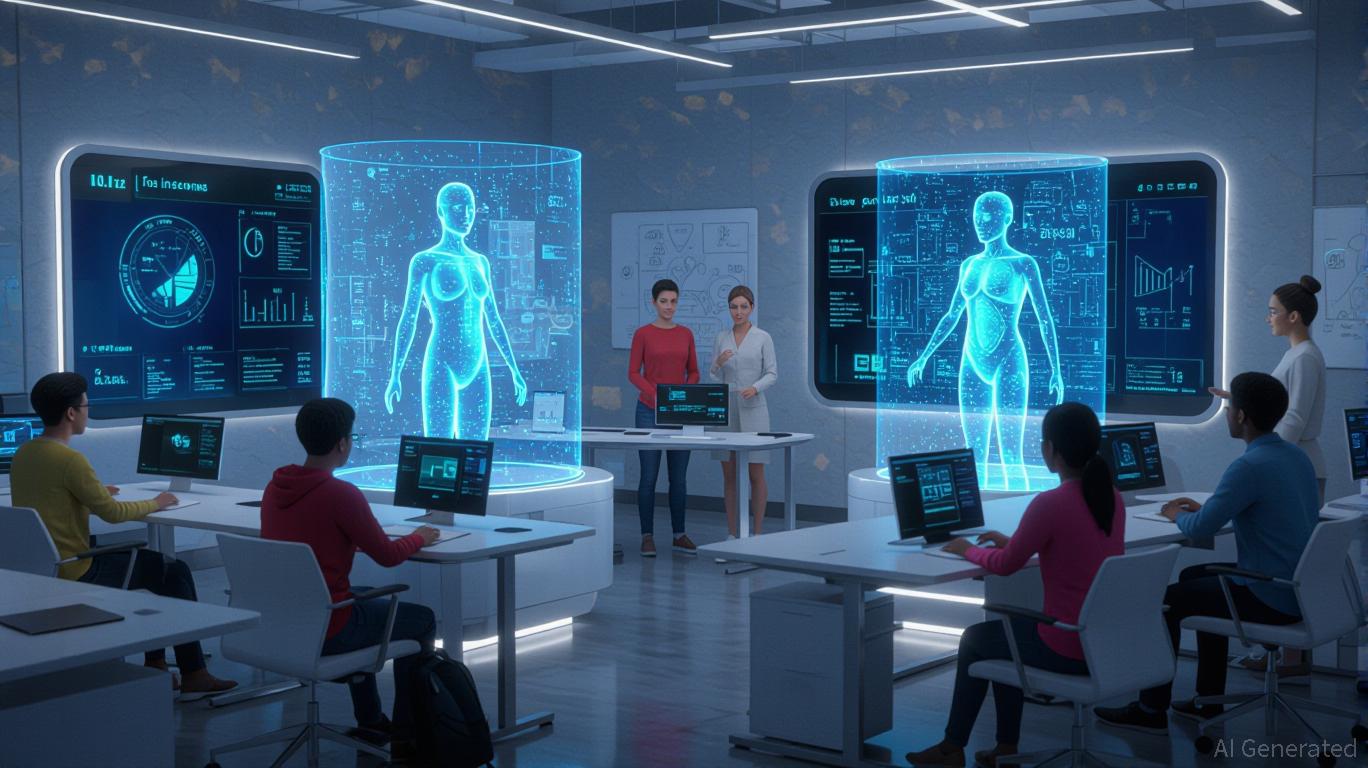
Within the education sector, Astar 2.0’s capabilities are amplified by its alignment with AI-driven initiatives that tackle longstanding challenges. For example, Ad Astra's Smart Scheduling™ leverages predictive algorithms to streamline course and classroom assignments, demonstrating how AI can boost both student retention and operational efficiency. Astar 2.0’s modular design could enable similar solutions to be scaled up, integrating real-time analytics and collaborative tools for educators.
Government support is also accelerating this trend. The White House Task Force on Artificial Intelligence Education in the United States has joined forces with major tech companies like Google, IBM, and Pearson to deliver free AI resources to schools and universities. Google’s $1 billion investment in AI education, including complimentary access to Gemini for Education, underscores the growing need for platforms that make AI knowledge accessible to all. Astar 2.0’s emphasis on decentralized, collaborative infrastructure fits seamlessly with these efforts, providing a robust foundation for AI-powered educational tools.
Despite these advancements, some experts warn against excessive dependence on AI in classrooms, pointing out potential drawbacks such as diminished critical thinking when tools like ChatGPT are overused. Astar 2.0’s long-term success in education will rely on its ability to blend automation with human-centered approaches, ensuring that AI supports rather than replaces meaningful learning experiences.
Transforming Advertising: Automation and Personalization at Scale
The advertising landscape is also being reshaped by AI, which now enables highly personalized campaigns and real-time performance optimization. Astar 2.0 supports this evolution through platforms like AdCreative.ai and Pencil, which automate the creation and testing of thousands of ad variations using predictive analytics to identify the most effective content. This reduces manual workload and maximizes return on investment.
Google Ads’ adoption of Gemini’s conversational AI is a prime example of the industry’s shift toward AI-centric strategies, simplifying both ad creation and targeting. Automation tools such as N8N further enhance efficiency by linking ad platforms with CRM systems, enabling smarter, data-driven decisions. For investors, Astar 2.0’s interoperable blockchain infrastructure makes it a vital component in the next generation of advertising technology.
Strategic collaborations further bolster Astar’s position in advertising. A recent investment from Animoca Brands, a prominent name in blockchain gaming, highlights Astar’s potential to expand into web3 entertainment and marketing. By incorporating tools like Anime ID on Soneium (Astar’s Ethereum Layer 2 blockchain), this partnership aims to deliver immersive, AI-powered advertising experiences tailored to Asian audiences.
Key Considerations for Investors
Astar 2.0’s dual emphasis on education and advertising makes it an attractive opportunity for investors. Its Tokenomics 3.0 and Burndrop PoC address concerns about long-term sustainability, while its interoperability opens doors for AI startups and established businesses alike. In the education sector, Astar’s alignment with global initiatives—such as the U.S. Department of Education’s guidelines for responsible AI use—ensures both regulatory and institutional backing. In advertising, partnerships with industry leaders like Animoca Brands and Google position Astar to capture a share of a market expected to generate $1.3 trillion in AI-driven ad revenue by 2032.
Nevertheless, challenges remain. The AI education market continues to wrestle with ethical and pedagogical questions, while the advertising industry faces hurdles in managing ad spending across multiple platforms. Astar 2.0’s ability to navigate these complexities, leveraging its blockchain foundation for transparency and adaptability, will be crucial to its future success.
Conclusion
Astar 2.0 stands at the intersection of blockchain and artificial intelligence, offering a scalable platform for groundbreaking applications in both education and advertising. As the AI sector accelerates, investing in platforms that connect technological innovation with real-world impact—like Astar 2.0—will be vital for those aiming to lead in an AI-driven economy. By addressing both operational needs and ethical considerations, Astar 2.0 is not just building a blockchain network; it is paving the way for a future where AI empowers human achievement across diverse industries.
Disclaimer: The content of this article solely reflects the author's opinion and does not represent the platform in any capacity. This article is not intended to serve as a reference for making investment decisions.
You may also like
Timeless Strategies for Investing in Today's Market
- R.W. McNeel and Warren Buffett share timeless value investing principles emphasizing emotional discipline, long-term vision, and intrinsic value. - Both stress faith in the U.S. economy, with Buffett's Berkshire Hathaway exemplifying this through long-term investments in American icons like Apple and Coca-Cola . - Retained earnings and margin of safety strategies, demonstrated by Apple's reinvestment and Berkshire's share buybacks, highlight compounding's role in mitigating market volatility. - Modern be

Investing for Tomorrow: Preparing the Workforce and Advancing Tech Education in the Digital Age
- AI, cybersecurity, and data analytics are reshaping industries, driving 29% growth in cybersecurity roles and 56% wage premiums for AI skills. - Educational institutions like CCBC and Cengage Work are bridging skill gaps through AI-powered training and industry partnerships. - Government-industry collaborations aim to train 500 AI researchers by 2025, emphasizing workforce readiness as a shared responsibility. - ROI metrics for tech education now include operational efficiency gains and strategic alignme

FARTCOIN Trades at $0.347 as 9.6% Daily Gain Meets Strong $0.38–$0.40 Resistance

Aster Holds Near $1.06 as Tightening Channel Highlights Key Resistance

Trending news
MoreCrypto prices
More





