
Workday HR System Enhancements and Their Effects on Public Sector Payroll and Compliance: Improving Operational Performance and Reducing Risks for State HR Technology
- Workday's 2025R2 release introduces automation and compliance tools to modernize public sector payroll systems. - Features like Time Management Hub and Acknowledgment lessons reduce manual errors while ensuring regulatory adherence. - AI-driven tools like Workday Assistant mitigate risks by proactively resolving payroll discrepancies in real time. - Case studies show $100k annual savings for Washington county but highlight Oregon's $15M error risk from poor implementation. - Success depends on strategic
Transforming Public Sector Payroll: Workday’s 2025R2 Innovations
State governments are increasingly prioritizing the modernization of their payroll systems to achieve both regulatory compliance and greater operational efficiency. Workday, a prominent provider of enterprise cloud solutions, is at the forefront of this transformation. Its 2025R2 Feature Release introduces a suite of enhancements specifically designed to address the complex needs of public sector payroll management. For HR leaders in government, understanding these advancements is crucial for effective risk management and informed technology investment.
Automation and Compliance: Working Hand in Hand
The latest Workday release places automation at the heart of payroll optimization. The new Time Management Hub brings together absence tracking, time management, and scheduling into a unified platform, significantly easing the administrative workload for payroll teams.
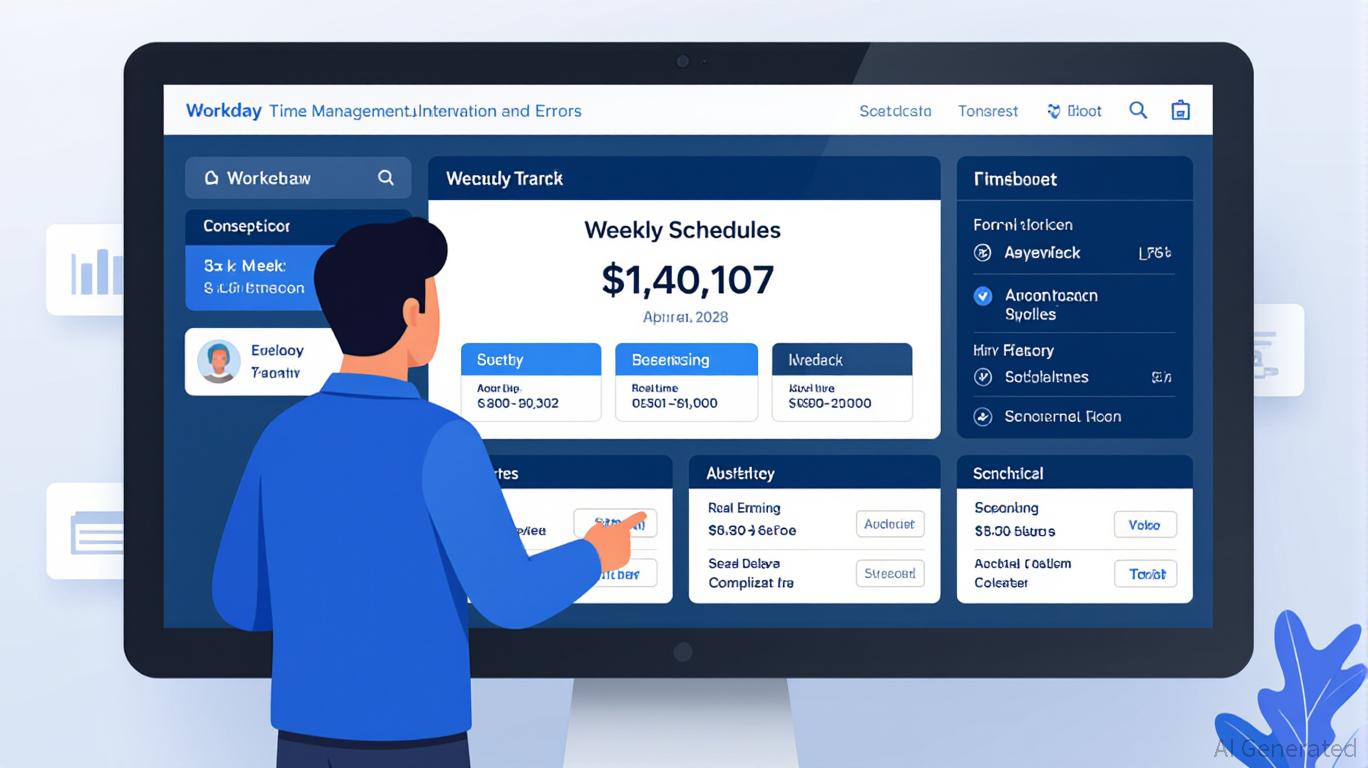
This integrated approach is especially beneficial in the public sector, where intricate union agreements and variable shift patterns can complicate payroll processes. By centralizing these functions, Workday reduces manual input, thereby decreasing the likelihood of mistakes and compliance breaches.
Compliance is further strengthened through features such as the Acknowledgment lesson type, which creates verifiable records confirming that employees understand regulatory requirements. This is invaluable for governments adapting to changing labor laws, ensuring compliance is both actionable and provable. Additionally, the introduction of multicurrency support for company bank accounts helps manage foreign exchange risks, which are increasingly relevant for states with international payroll responsibilities. Collectively, these updates position Workday as a proactive solution that anticipates regulatory changes.
Leveraging AI and Integration for Risk Reduction
Workday’s 2025R2 release also highlights the role of artificial intelligence in minimizing risk. The HCM Admin Hub and Job Architecture Hub offer centralized oversight of job structures and data integrity, reducing inconsistencies that could result in payroll errors. For example, the ability to apply position-based time-off policies to contingent workers with multiple roles ensures consistent enforcement of leave rules, reducing the risk of disputes and legal challenges.
AI’s impact goes beyond compliance. The Workday Assistant for Adaptive Planning utilizes natural language processing to help users quickly resolve payroll discrepancies. This real-time support helps prevent errors from spreading through financial systems—a critical advantage for states, as payroll mistakes can lead to costly settlements, such as the $15 million payout experienced in Oregon after a problematic Workday implementation.
Real-World Insights: Efficiency and Caution
Workday’s enhancements have demonstrated tangible benefits in practice. For instance, Pierce County, Washington, achieved annual savings of $100,000 by transitioning to Workday’s cloud-based payroll platform, showcasing the potential for cost reduction while maintaining compliance. On the other hand, Oregon’s difficulties highlight the importance of careful implementation; technical missteps led to widespread payroll errors. These examples underscore that while Workday’s tools are powerful, their effectiveness depends on thoughtful deployment and alignment with local regulations.
Strategic Considerations for State Agencies
The 2025R2 release marks a significant move toward integrated, AI-driven payroll ecosystems for state governments. Features such as intercompany multicurrency netting and automated payout of expiring accruals streamline administrative processes, enabling HR professionals to focus on strategic workforce initiatives. Workday’s collaborations with partners like PwC further ensure that payroll compliance is maintained across multiple jurisdictions, benefiting states with complex operational needs.
Nevertheless, Oregon’s experience serves as a reminder of the platform’s complexity. Successful adoption requires thorough testing, comprehensive stakeholder involvement, and robust change management. Investing in training and preparation is essential to avoid the pitfalls that can undermine even the most advanced systems.
Summary
Workday’s 2025R2 update presents a strong case for modernizing public sector payroll. By automating routine tasks, embedding compliance into daily operations, and harnessing AI for proactive risk management, the platform addresses the dual demands of efficiency and regulatory adherence. However, as demonstrated by Oregon’s challenges, the true value of these innovations is realized only through careful and strategic implementation. For state governments, Workday’s latest features offer a solid foundation for building resilient and future-ready payroll systems.
Disclaimer: The content of this article solely reflects the author's opinion and does not represent the platform in any capacity. This article is not intended to serve as a reference for making investment decisions.
You may also like
Bears take over below $90K? 5 things to know in Bitcoin this week

How CFTC-regulated platforms such as CleanTrade are transforming clean energy into a new category of tradable assets
- CFTC-approved CleanTrade transforms clean energy derivatives into standardized, liquid assets via its SEF platform, unlocking $16B in trading volume within two months. - By standardizing VPPAs/RECs and offering real-time analytics, CleanTrade bridges sustainability and profitability for institutional investors seeking ESG-aligned opportunities. - Early adopters like Cargill leverage CleanTrade to hedge energy costs while addressing fragmented markets, accelerating a $125T global clean energy derivatives

The Emergence of a Vibrant Clean Energy Market: How REsurety's CleanTrade Platform is Transforming Institutional Investments and ESG Approaches
- REsurety's CleanTrade platform, CFTC-approved for clean energy swaps, is transforming the market by enabling institutional trading of renewable assets with liquidity and transparency. - It addresses historical illiquidity in VPPAs/RECs through standardized contracts and real-time pricing, reducing transaction times and enabling $16B in notional value within two months. - The platform integrates ESG metrics with financial analysis, supporting 84% of institutional investors' growing demand for decarbonizat

COAI's Significant Recent Drop: Should Investors See This as a Chance to Buy or a Cautionary Signal?
- COAI's sharp stock decline sparks debate over short-term volatility vs. structural risks in South Africa's coal sector. - Weak domestic coal supply chains, US tariffs, and governance gaps amplify operational risks for export-dependent COAI. - Unclear AI policy implementation and media credibility issues deepen investor skepticism about COAI's transparency and adaptability. - Structural challenges including infrastructure bottlenecks and low AI adoption rates suggest the decline may reflect systemic indus

Trending news
MoreCrypto prices
More





