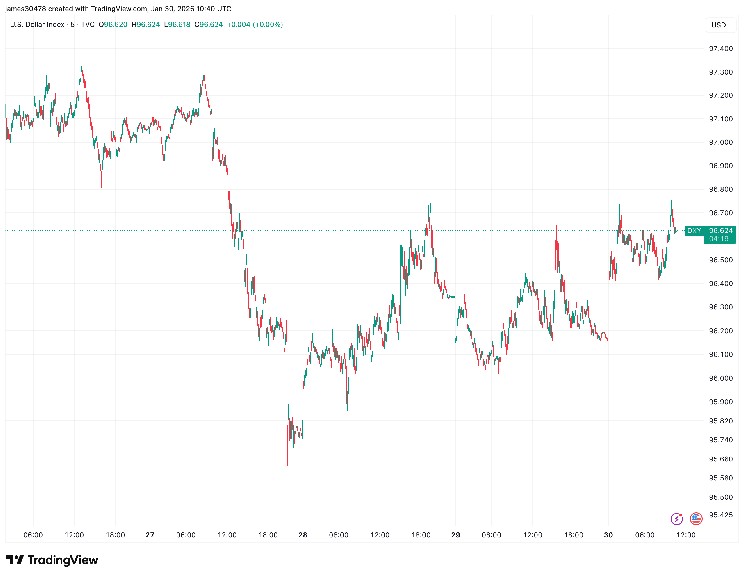
Market volatility spiked after comments from Donald Trump suggested the United States could pursue control of Greenland by force. The CBOE Volatility Index jumped above levels associated with equity-market stability, triggering a broad pullback across risk assets. Bitcoin failed in its latest attempt to reclaim $100,000 and slid below $90,000, while crypto-linked equities such as Coinbase and Strategy dropped more than 5% on the day.
This kind of volatility reframes decision-making inside crypto. When price swings are driven by geopolitics and macro risk, some investors reduce exposure tied to daily price action and look toward projects where entry, supply, and participation are already defined. Bitcoin Everlight is being examined in that context as a Bitcoin-anchored transaction network still in its build phase.
Volatility And The Bitcoin Hedge Debate
The latest drawdown has reopened a long-running debate around Bitcoin’s role in portfolios. Investors such as Ray Dalio have promoted exposure to both gold and Bitcoin as protection during macro stress. Yet the current move, where gold rallied and Bitcoin fell, has renewed questions about how Bitcoin behaves during geopolitical shocks.
This uncertainty affects how capital is allocated. Assets that already trade heavily on sentiment tend to amplify volatility. In contrast, early-stage projects are evaluated on structure and delivery. Bitcoin Everlight enters the discussion here because it is not competing on short-term price behavior. Its evaluation centers on whether a transaction network tied to Bitcoin can be built and operated through unstable market conditions.

What Bitcoin Everlight Is Designed To Deliver
Bitcoin Everlight is a transaction-layer network connected to Bitcoin. Its purpose is to route fast, low-cost transactions while anchoring settlement back to Bitcoin’s base layer. Bitcoin remains the settlement foundation. Everlight focuses on transaction flow and usability.
Transactions are routed through lightweight nodes that validate activity and periodically anchor transaction data to Bitcoin. Users and merchants interact with the network without managing channels or liquidity balances. The system is judged on routing performance, uptime, and reliability, not on speculative trading volume.
This focus on transaction handling explains why Everlight continues to attract attention during volatility. The project is assessed as infrastructure under construction, not as a proxy for market sentiment.
Node Operation And Incentive Structure
Everlight Nodes form the operational backbone of the network. Nodes route transactions, perform lightweight validation, maintain uptime, and support overall performance. Confirmation relies on distributed participation rather than discretionary approval.
Node operators earn variable rewards in a 4–8% range, tied to uptime, routing activity, and performance metrics. Compensation follows measurable contribution to network operation. This links incentives to keeping the system functional during periods when speculative interest across crypto fluctuates sharply.

Entry Structure Unchanged by Market Swings
Bitcoin Everlight’s appeal during volatility starts with its entry structure. The project uses a fixed supply of 21,000,000,000 BTCL, allocated upfront: 20% to node rewards, 15% to liquidity, 10% to the team, and 10% to ecosystem and treasury functions. Distribution rules are locked at launch.
Contract review and team accountability are published through independent parties.
Why Everlight Draws Attention During Risk-Off Markets
Periods of heightened volatility narrow investor focus. Exposure tied to price momentum becomes harder to size, while projects with defined terms and visible execution paths gain scrutiny. Bitcoin Everlight sits in that category through its infrastructure-driven design and staged roadmap toward mainnet.
As geopolitical headlines continue to drive market swings and Bitcoin’s role as a hedge is debated, some investors are positioning around network build-out rather than price recovery.