
Octopus Energy Expands Into China Through Green Trading Joint Venture With PCG Power

Octopus Energy Enters Chinese Clean Energy Market with Major Joint Venture
Octopus Energy Group has revealed a significant partnership with China’s PCG Power, marking its official debut in the world’s largest renewable energy sector. This move will greatly extend the reach of British energy software and trading solutions on a global scale.
The collaboration, announced during the UK Prime Minister’s visit to China, will establish a new entity named Bitong Energy. This company will focus on facilitating renewable electricity trading within China’s rapidly evolving spot power markets. Greg Jackson, the founder and CEO of Octopus, joined the UK business delegation, highlighting the importance of this agreement both politically and economically.
Bitong Energy: Combining Strengths for a Greener Future
Bitong Energy merges PCG Power’s expertise as a top investor and solutions provider in China’s commercial and industrial renewables sector with Octopus Energy’s advanced technology for real-time electricity trading, optimization, and asset management. The venture will begin operations in Guangdong, China’s leading spot electricity market, with plans to expand nationwide as more regions open up to spot trading.
China’s Energy Landscape and Market Reforms
China’s demand for electricity is projected to grow by about 33% over the next five years, fueled by industrial expansion, electrification, and the rise of data centers. At the same time, regulatory changes are accelerating, with new rules requiring at least 10% of electricity to be traded on spot markets by year-end. These developments are paving the way for advanced trading platforms that can handle fluctuating renewable supplies, price swings, and grid challenges.
Ambitious Goals and Economic Impact
By 2030, Bitong Energy aims to handle up to 140 terawatt-hours of renewable electricity annually—comparable to the UK’s entire green energy output. The joint venture is targeting yearly profits of around £50 million, with about half expected to benefit the UK. Within five years, the partners anticipate the business will surpass a £500 million valuation, making it one of the UK’s most prominent clean tech exports to Asia.
Expanding Beyond Trading
Octopus also plans to introduce its software solutions to enhance the efficiency and profitability of China’s growing battery storage and renewable generation assets. As battery technology becomes increasingly vital for balancing China’s solar and wind-heavy grid, optimization software is set to become a key differentiator in the market.
Strategic Vision for Global Energy Technology
This agreement aligns with Octopus Energy Group’s broader mission to export British energy technology rather than invest in capital-heavy generation projects. The company has formed similar alliances worldwide, using its software to lower costs for consumers and utilities while speeding up the adoption of renewables, electric vehicles, and storage solutions.
Aligning with China’s Energy Goals
In China, this partnership supports national objectives around energy security, affordability, and decarbonization—often referred to as the “energy trilemma.” PCG Power believes the collaboration will enable it to deliver smarter, more cost-effective energy services to commercial and industrial clients, while also advancing the evolution of China’s electricity markets.
Strengthening Ties with Chinese Clean Energy Leaders
Octopus has already built strong relationships with Chinese clean energy manufacturers. In 2025, it launched a bundled electric vehicle and energy package with BYD, and its EV division has helped introduce brands like Geely, XPENG, OMODA, and Jaecoo to the UK. This new joint venture further blends Asia’s hardware capabilities with the UK’s software and market design expertise.
Industry Impact and Global Attention
As China continues to lead the world in renewable energy deployment, the progress of Bitong Energy will be closely monitored by investors and policymakers as a model for how international energy technology firms can engage in China’s sophisticated power markets.
By Charles Kennedy for Oilprice.com
Disclaimer: The content of this article solely reflects the author's opinion and does not represent the platform in any capacity. This article is not intended to serve as a reference for making investment decisions.
You may also like
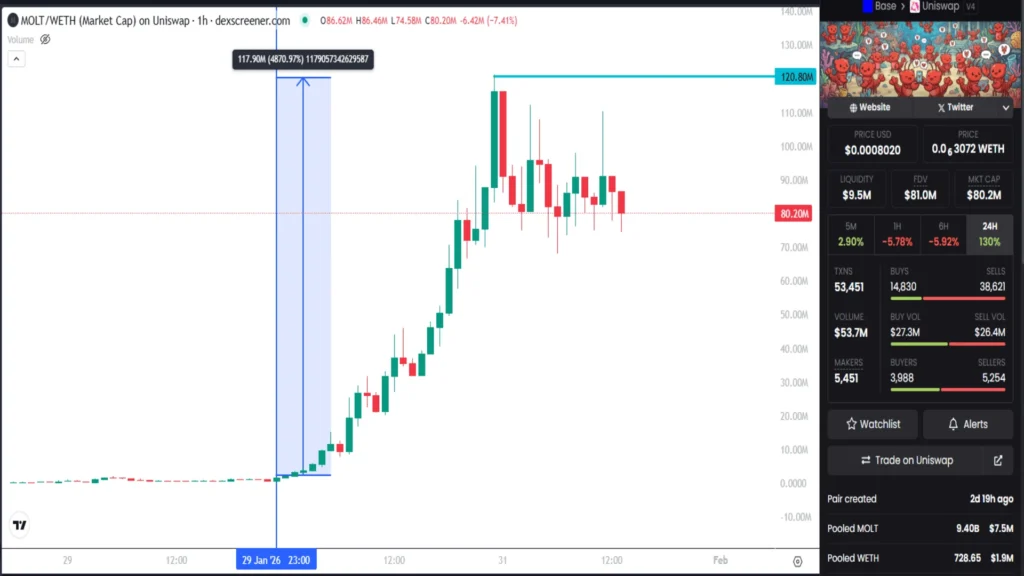
MoltBook Exploded 4,700% in Just 24 Hours. Could Husky Inu AI Be Next?
Ghana ramps up digital asset oversight via education
US Sanctions Iran-Linked Crypto Exchanges in Historic First
AP Top Financial News at 8:13 a.m. EST
Trending news
MoreCrypto prices
More





