
S&P 500 index dips as private credit risks escalate

The S&P 500 Index retreated by over 0.6% on Friday, continuing a retreat that started on Thursday as market participants reacted to the latest NVIDIA earnings.
- The S&P 500 Index retreated by over 0.50% on Friday.
- Jitters in the booming private credit industry accelerated.
- The US published a strong producer price index report.
The blue-chip index, which tracks the biggest companies in the United States, dropped to $6,857, down substantially from the year-to-date high of $7,010.
Other stock indices like the Nasdaq 100, Dow Jones, and the Russell 2000 declined by over 1%.
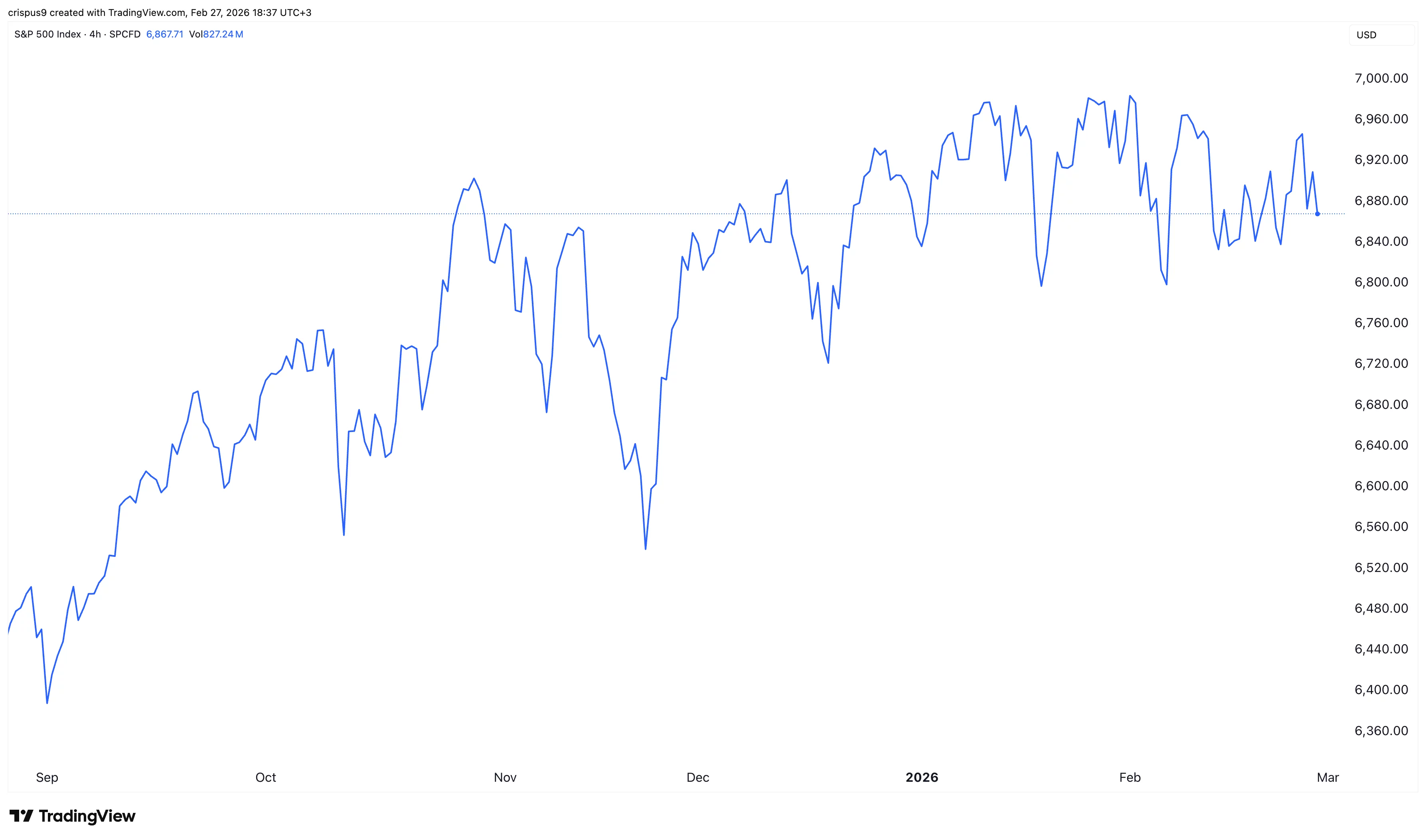 S&P 500 Index chart | Source: crypto.news
The decline happened as concerns about the $1.8 trillion private credit industry escalated. These concerns started earlier this month after Blue Owl, a company with over $300 billion in assets under management, sent shockwaves in the broader market.
Blue Owl sold a private credit portfolio and announced measures to limit redemption by its investors. This move was an escalation to what happened last year when the company attempted to merge a private and public fund.
The crisis escalated this week after a fund managed by Apollo Asset Management slashed its dividend in a bid to preserve cash as defaults rose.
As a result, top private credit and equity companies like Blue Owl, Apollo, Ares, and Blackstone continued falling. Blue Owl stock dropped by over 4.3%, bringing its three-month decline to 25%.
Apollo Global Management’s stock dropped by over 7%, while Ares fell by over 6%. Blackstone and KKR stocks also continued falling.
The S&P 500 Index also dropped as odds of a US attack on Iran jumped after Israel’s embassy asked non-essential staff to leave. As a result, airline stocks like United Airlines, Delta Airlines, and American Airlines were among the top laggards in the S&P 500 Index.
Additionally, the index retreated after the US published strong producer price index (PPI) data.
The report showed that the headline PPI rose by 2.9% in January, while the core PPI moved to 3.6%. These numbers mean that the Federal Reserve may find it difficult to cut interest rates in the coming meetings.
Disclaimer: The content of this article solely reflects the author's opinion and does not represent the platform in any capacity. This article is not intended to serve as a reference for making investment decisions.
You may also like
Fulton Financial (FULT) Stock Trades Down, Here Is Why

Figma Stock Slides On AI Competition Amid Friday Market Rout
The Trend Is Your Friend: 7 Charts Most Investors Are Missing
The Surplus of Oil That Was Expected but Didn’t Occur
Trending news
MoreCrypto prices
More





