
BK Drops Even After Surpassing Earnings Estimates as $330M Trading Volume Places It at 441st in Market Turnover

Overview of BK's Market Performance
On March 3, 2026, The Bank of New York Mellon Corporation (BK) saw its stock price decrease by 1.27%, closing at $117.95, down from the previous day's $119.47. Trading volume reached $330 million, placing it 441st in daily activity rankings. Despite delivering strong fourth-quarter 2025 results—reporting earnings per share of $2.08, surpassing the $1.99 estimate, and generating $5.18 billion in revenue—the stock experienced a modest decline in pre-market trading following the announcement. BK's share price remains within its 52-week range of $70.46 to $128.76, and the company holds a market capitalization of $82.25 billion. Analysts have set an average 12-month price target of $133.83, indicating a measured optimism about the stock's future direction.
Main Factors Influencing BK
BK's recent financial update showcased notable strength, with fourth-quarter earnings per share exceeding projections by 4.52% and annual revenue climbing 8% year-over-year to $20 billion. Nevertheless, the slight post-earnings dip in share price reflects a typical market response when results only marginally surpass expectations. For the full year 2025, BK achieved net income of $5.3 billion and delivered a 26% return on tangible common equity, highlighting its profitability. The 1.27% drop in share price suggests that investors may have anticipated even stronger growth, prompting a reassessment of short-term prospects.
A central element of BK’s future plans is its proactive adoption of artificial intelligence throughout its operations. CEO Robin Vince described AI as a driving force for significant transformation, aligning with the bank’s broader digital asset initiatives. This commitment to technological advancement has enabled BK to better serve evolving client needs in asset servicing and custody. During analyst discussions, it was noted that the bank’s AI-focused projects are expected to boost efficiency and create new revenue opportunities, though investors may be waiting for more tangible outcomes. BK’s goals for 2026—including 5% revenue growth, a 28% return on tangible common equity, and a 38% pre-tax margin—demonstrate confidence in its ongoing transformation.
Dividend policy has also influenced investor attitudes. BK declared a quarterly dividend of $0.53 per share, scheduled for payment on February 5, with an ex-dividend date of January 23. The dividend yield stands at 1.8%, supported by a payout ratio of 28.61%, reflecting a prudent approach to capital returns. While this is attractive for income-oriented investors, the recent share price decline may have lessened its appeal compared to the forward P/E ratio of 14.43. The company’s plan to return $5 billion to shareholders in 2025, through both dividends and share repurchases, highlights its strategy of balancing reinvestment with rewarding shareholders.
Looking at valuation, BK trades at a price-to-earnings ratio of 15.94 and a PEG ratio of 1.29, suggesting mixed expectations for future growth relative to earnings. With a beta of 1.10, the stock is slightly more volatile than the overall market, yet its robust net margin of 13.62% and return on equity of 14.37% underscore operational strength. Analysts continue to rate the stock as “Hold,” with Citigroup recently increasing its price target from $120 to $136, signaling cautious optimism about BK’s prospects.
Across the financial sector, many major banks—including JPMorgan Chase and Bank of America—have reported varied results. However, BK’s emphasis on high-margin custody and asset servicing, which saw an 8% revenue increase in 2025, positions it well in a low-interest-rate landscape. The company’s focus on AI, digital assets, and disciplined expense management (projecting 3-4% expense growth in 2026) points to a strategy aimed at sustained profitability. Investors are expected to closely watch future earnings reports for evidence that these initiatives are driving meaningful revenue growth and supporting share price improvement.
Disclaimer: The content of this article solely reflects the author's opinion and does not represent the platform in any capacity. This article is not intended to serve as a reference for making investment decisions.
You may also like
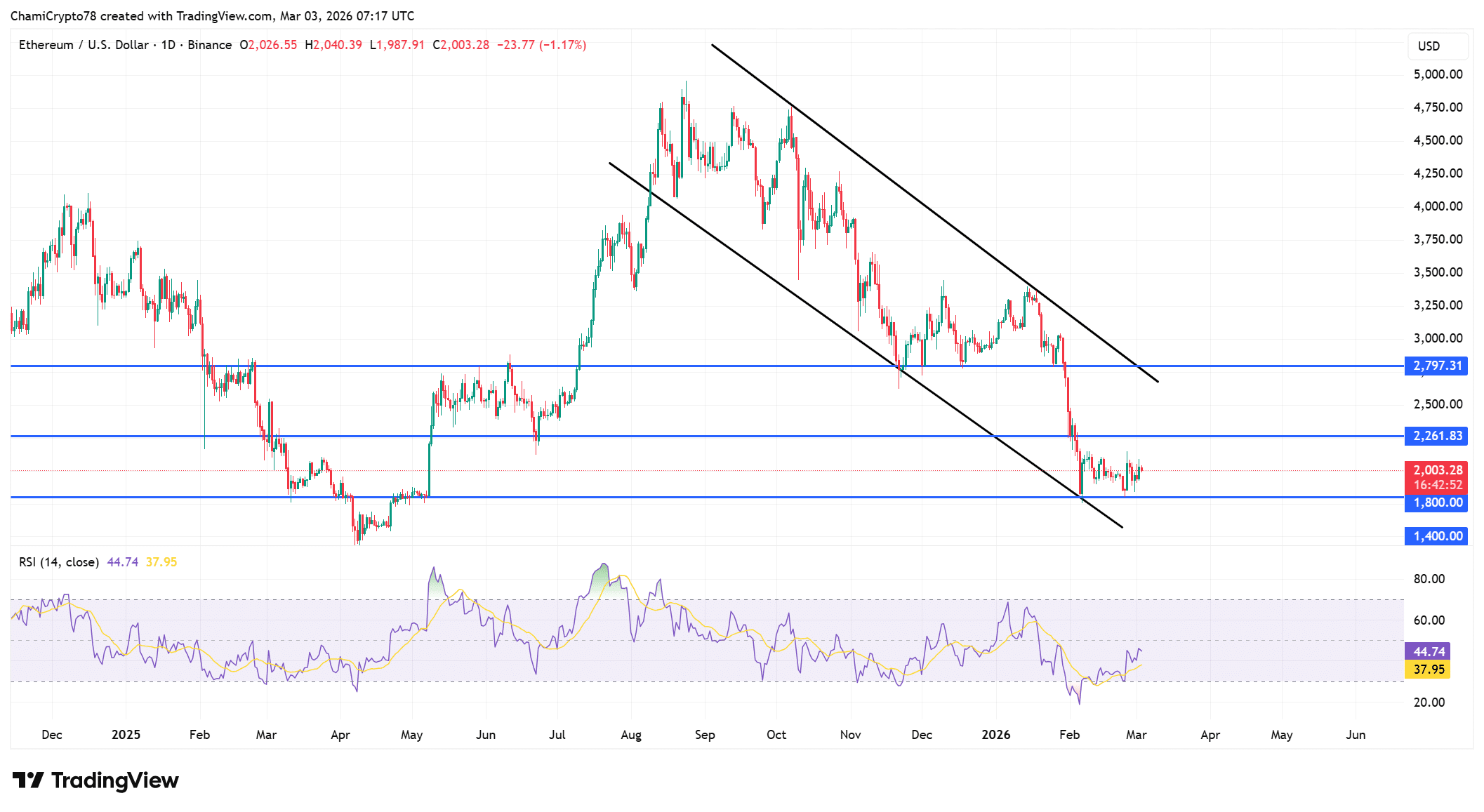
Ethereum whales accumulate $12.5mln – Is ETH’s $2,261 breakout next?
China’s RatingDog Manufacturing PMI climbs to 62.1 in February, Services PMI rises to 56.7
PayPal Names Enrique Lores CEO as $475B Volume Giant Eyes Fintech Reset
Trending news
MoreCrypto prices
More





