
Pundit Says XRP is the New E-SDR. Here’s Why

The global financial system is quietly evolving in ways that could redefine how nations hold and transfer reserves. Traditional mechanisms, such as the International Monetary Fund’s Special Drawing Rights (SDRs), have long provided countries with a means of stabilizing liquidity and settling international balances.
However, as digital assets gain legitimacy and institutional adoption grows, some analysts suggest that new forms of reserve assets may emerge, potentially reshaping the landscape of global finance.
One such perspective comes from pseudonymous analyst {x} (@unknowDLT), who recently proposed on X that XRP, the digital asset associated with Ripple, could function as a new form of electronic SDR (E-SDR) in the near future.
According to {x}, recent regulatory developments and emerging frameworks for digital asset compliance create the conditions for XRP to be integrated into national and international monetary systems in ways previously reserved for government-backed assets.
Once the Clarity Act is approved, Ripple must hold under 20% of XRP’s supply to avoid being a security. By ceding part to the U.S. government, it complies and allows the IMF to set XRP’s price since the IMF can only adopt assets first adopted by nations.
XRP IS THE NEW E-SDR.
— {x} (@unknowDLT) March 6, 2026
Regulatory Compliance and the Clarity Act
Central to this vision is the proposed Clarity Act, a regulatory framework designed to define how digital assets like XRP are treated under U.S. law. If enacted, the act would require Ripple to hold less than 20% of XRP’s total supply to avoid classification as a security. By ceding part of its holdings to the U.S. government, Ripple could comply with the regulation while maintaining broader market confidence.
This compliance would not merely satisfy domestic regulators. It would create a pathway for international bodies, including the IMF, to consider XRP as an adoptable reserve asset. The IMF can only incorporate assets that have already achieved recognition and adoption within national systems, which positions XRP as a uniquely eligible digital asset for global liquidity use.
XRP as a Digital Reserve Asset
The concept of XRP serving as a global reserve asset hinges on its technical infrastructure. The XRP Ledger facilitates rapid cross-border settlement, low transaction fees, and scalable liquidity management—qualities highly valued in international finance.
Unlike traditional fiat reserves, XRP’s distributed ledger allows for near-instant transfers between parties worldwide, potentially reducing reliance on slower, intermediary-heavy systems.
Analysts argue that if nations and central banks begin holding XRP as a reserve, it could act as a bridge currency in international settlements, similar to how SDRs provide a weighted basket of national currencies to stabilize global liquidity.
Implications for Global Finance
Adopting XRP as an E-SDR could have far-reaching implications. It could accelerate the integration of digital assets into central bank operations, encourage broader adoption of blockchain-based settlement systems, and redefine the mechanics of global liquidity. Additionally, institutional and sovereign participation could increase XRP’s market stability and establish its role as a foundational layer in future financial infrastructure.
For investors and policymakers, {x}’s theory underscores the potential of XRP beyond speculative trading. By positioning itself at the intersection of regulatory compliance, technological capability, and global adoption, XRP may become a cornerstone of a digital era in international finance, representing a shift from traditional SDRs to a blockchain-based, programmable reserve currency.
Disclaimer: The content of this article solely reflects the author's opinion and does not represent the platform in any capacity. This article is not intended to serve as a reference for making investment decisions.
You may also like
Solana Surpasses Ethereum in RWA Holders for the First Time
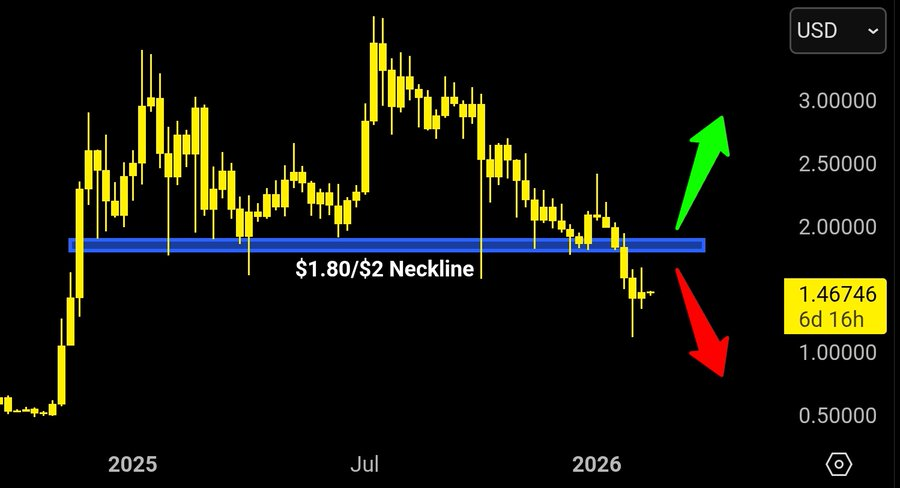
XRP Slides to $1.42 After Losing $1.80–$2 Neckline as $1.39 Support Faces Immediate Test
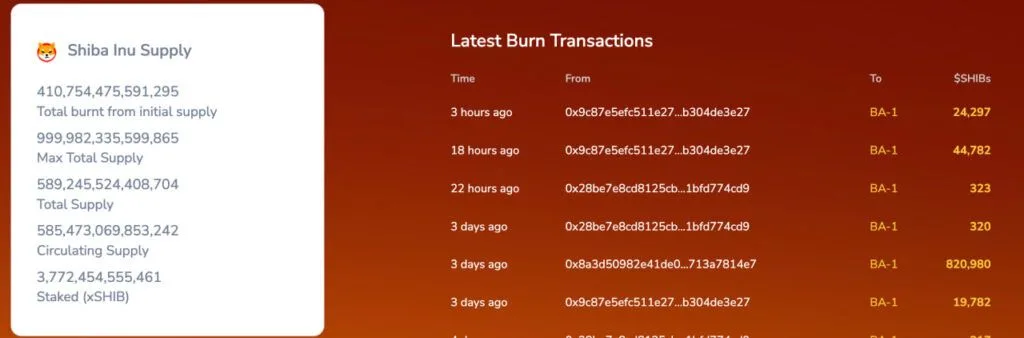
SHIB Burn Rate Surges 53,000% But Price Fails to Follow
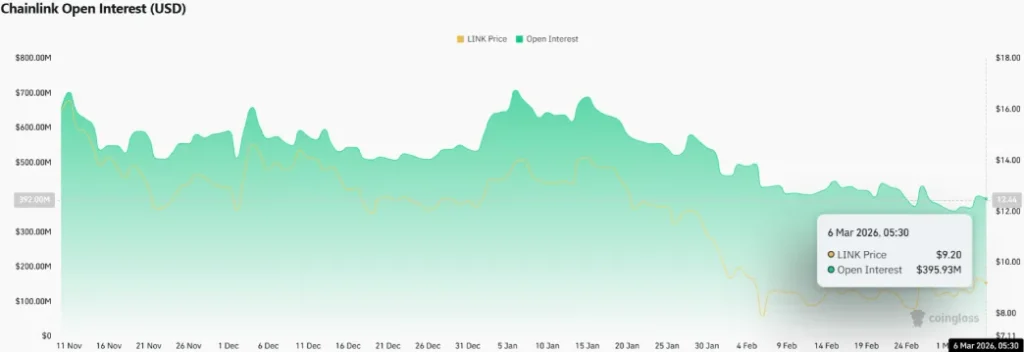
Chainlink Futures Open Interest Shrinks 44% as Market Risk Appetite Fades
Trending news
MoreCrypto prices
More





