
Libya's Sharara Outage Challenges the Oil Industry's 2030 Goal Endurance

Libya’s Oil Sector: Recovery and Strategic Growth
Libya’s oil industry is experiencing a notable period of recovery, with recent events such as the Sharara disruption highlighting the sector’s increasing resilience. This renewed optimism is underpinned by the nation’s average daily oil production in 2025 reaching 1.374 million barrels—a peak not seen in 15 years. Unlike previous rebounds, this resurgence is the result of structural changes, including new drilling initiatives and the return of international oil companies. The sector’s momentum is further evidenced by the launch of its first oil and gas exploration tender since 2007, drawing interest from major corporations such as Exxon and Chevron.
Building on this progress, the National Oil Corporation (NOC) has outlined an ambitious vision: attracting $20 billion in new oil and gas investments to raise crude output to 2 million barrels per day by 2030. This investment marks the beginning of a long-term expansion, aiming to establish a more stable and productive oil sector that moves beyond the volatility of recent years.
The Sharara incident, while a temporary setback, should be viewed within this broader context. Libya’s ability to rebound in 2025 demonstrates its capacity for high output when conditions are favorable, and the 2030 roadmap sets the stage for sustained advancement. The true challenge lies not only in reaching the 2 million barrel target but in maintaining the operational stability necessary to achieve it. The Sharara disruption serves as a reminder of the sector’s lingering vulnerabilities, even as it lays the groundwork for a more robust future.
The Sharara Disruption: Assessing Resilience and Infrastructure
The Sharara event underscores the operational fragility that persists despite Libya’s recent gains. The disruption began with a fire caused by a valve leak on the Sharara crude export pipeline. In response, the NOC promptly enacted contingency measures, initiating a gradual shutdown of production at the field. This process, expected to last around two days, directly impacts one of Libya’s largest oil-producing sites, which typically yields between 300,000 and 320,000 barrels daily.
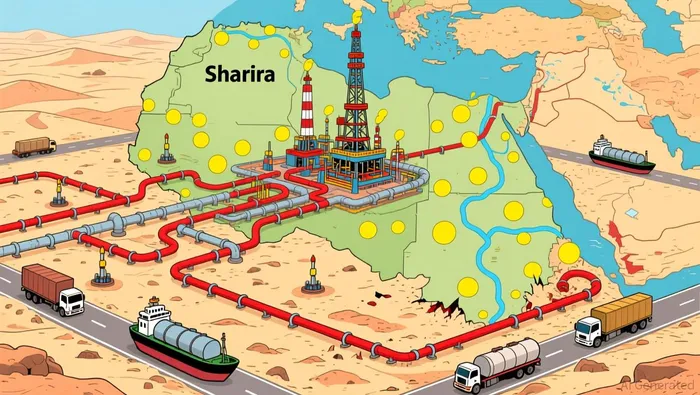
The NOC’s ability to reroute oil flows—diverting exports through the El Feel pipeline to Mellitah port and the Hamada pipeline to storage in Zawiya—demonstrates operational flexibility. This quick adaptation is a positive sign, suggesting that Libya’s aging infrastructure still retains some adaptability. However, the timing is concerning, as this incident follows another pipeline leak near the Zawiya refinery just a week earlier, which halted flows from the Hamada oilfields. The recurrence of such technical issues highlights ongoing weaknesses in the country’s energy infrastructure.
In light of Libya’s 2030 production goals, these incidents are more than isolated events—they reveal the critical risks posed by infrastructure bottlenecks and maintenance challenges. While the NOC’s swift response limits immediate losses, the frequency of failures suggests that significant investment is needed to support long-term expansion. The Sharara episode is not merely a short-term maintenance issue; it is a crucial test for the infrastructure that underpins Libya’s ambitious growth plans.
Economic Consequences and Strategic Shifts
The financial repercussions of the Sharara disruption are substantial, given the field’s scale. With output near 311,000 barrels per day, Sharara accounts for almost a quarter of Libya’s total crude production, making every barrel vital for national revenue. Analysts estimate that each 10,000 barrel-per-day increase at Sharara can yield tens of millions of dollars in monthly income, depending on global oil prices. Thus, even a brief two-day shutdown significantly impacts the country’s foreign currency earnings, which are already under strain.
This event occurs as Libya pivots strategically. The NOC’s plan to boost natural gas output to nearly 1 billion cubic feet per day is central to diversifying the nation’s energy mix and attracting further investment. This initiative is part of the broader $20 billion program to elevate oil production to 2 million barrels daily by 2030. While the Sharara incident is a setback, it does not alter the overarching strategy: expanding both oil and gas production to meet ambitious targets and stabilize the economy.
However, the incident highlights the core challenge of achieving consistent production across the network. The NOC’s ability to redirect flows during the shutdown is encouraging, but the back-to-back pipeline failures reveal systemic vulnerabilities. Achieving the 2030 objectives will require more than isolated field recoveries—it demands a resilient, integrated system capable of sustained, high-volume operations. The Sharara event is a clear signal that the journey toward stability is ongoing.
Wider Implications: Libya and Global Commodity Cycles
The Sharara disruption is emblematic of the broader commodity cycle forces that will shape Libya’s future. The country’s 2030 ambitions rest on global demand and favorable financing conditions—factors largely outside Libya’s control.
- Global Economic Trends: Libya’s production is highly sensitive to worldwide growth and real interest rates. The $20 billion investment needed for expansion is a significant financial undertaking. Rising interest rates increase borrowing costs, threatening the project’s feasibility. Additionally, a slowdown in major economies could reduce oil demand, jeopardizing the revenue streams essential for servicing debt and funding growth.
- Currency Fluctuations: The strength of the U.S. dollar directly affects Libya’s oil revenues. When the dollar is strong, oil sales yield less in local currency, putting additional pressure on the national budget. The Sharara shutdown, by cutting off a major revenue source, exposes this vulnerability and amplifies the financial impact of even short-lived disruptions.
- Market Volatility: As a relatively small but volatile oil producer, Libya’s output fluctuations can cause sudden shifts in the global supply-demand balance. Technical failures like pipeline leaks can lead to unpredictable supply shocks, contributing to price volatility and uncertainty in the market.
Ultimately, Libya’s progress from its 2025 rebound to its 2030 goals is intertwined with global economic forces. The Sharara incident tests operational resilience, but the greater challenge will be navigating the complex macroeconomic environment that influences commodity prices, financing, and demand.
Looking Ahead: Catalysts and Challenges for 2026–2030
The road from the Sharara disruption to Libya’s 2030 objectives is shaped by immediate opportunities and ongoing risks. The most pressing catalyst is the rapid and effective repair of the damaged pipeline. The NOC’s swift action to shut down production and redirect flows through alternative routes has helped cushion the financial blow. The speed of repairs and the restoration of full capacity will be a crucial test of the sector’s resilience.
However, the repeated occurrence of infrastructure failures remains a significant risk. The Sharara incident, following another pipeline leak near Zawiya, points to systemic weaknesses. For Libya to realize its long-term ambitions, it must transition from managing isolated disruptions to building a robust, integrated network capable of supporting sustained, large-scale operations. The frequency of technical breakdowns suggests that the current infrastructure may not be adequate for multi-year growth without major upgrades.
Another key factor is the pace at which new production units come online to offset losses and drive expansion. The recent activation of a new early production unit at the al-Mabruk field is a promising development. According to the NOC, production resumed at al-Mabruk with initial rates of 25,000 to 30,000 barrels per day, marking a significant step after a decade-long closure. The success of such projects will be vital for counterbalancing the volatility of existing fields and achieving the 2030 production target.
In summary, Libya’s oil sector must strike a balance between rapid operational responses to disruptions, reducing the frequency of infrastructure failures, and steadily increasing new production capacity. This approach will be essential for sustaining growth and realizing the country’s long-term energy ambitions.
Disclaimer: The content of this article solely reflects the author's opinion and does not represent the platform in any capacity. This article is not intended to serve as a reference for making investment decisions.
You may also like
Citigroup Lowers 12-Month Bitcoin Price Forecast To $112,000, ETH To $3,175—Here’s The Reason

SpaceX Launches Surpass 10,000 Satellites: What Investors Need to Know

LULU Stock Faces Strategic Shifts as Lululemon Aims to Reignite Growth

TransFi's $19.2M Funding: Flow Analysis Amid Regulatory Scrutiny

Trending news
MoreCrypto prices
More





