
2 Real Estate ETFs Take Contrasting Approaches: HAUZ Invests Worldwide, While ICF Focuses Heavily on the U.S.

Comparing HAUZ and ICF: International vs. U.S. Real Estate ETFs
The Xtrackers International Real Estate ETF (NYSEMKT:HAUZ) distinguishes itself with lower fees, higher dividend payouts, and broad global exposure. In contrast, the iShares Select U.S. REIT ETF (NYSEMKT:ICF) takes a more focused approach, investing solely in U.S. REITs and offering stronger historical growth.
Although both funds provide access to real estate investments, their strategies differ significantly. ICF concentrates on American real estate investment trusts, while HAUZ invests in a wide array of properties across developed and emerging markets worldwide, excluding the U.S., Pakistan, and Vietnam. This review examines their costs, performance, risk profiles, liquidity, and portfolio composition to help investors decide which ETF best suits their real estate allocation needs.
Cost and Fund Size Overview
| Metric | ICF | HAUZ |
|---|---|---|
| Issuer | iShares | Xtrackers |
| Expense Ratio | 0.32% | 0.10% |
| 1-Year Return (as of 2026-03-18) | 7.4% | 19.6% |
| Dividend Yield | 2.6% | 4.0% |
| Beta | 1.11 | 0.05 |
| Assets Under Management | $2.1 billion | $1.1 billion |
Beta indicates how much the ETF’s price fluctuates compared to the S&P 500, calculated using five years of monthly data. The 1-year return reflects the total performance over the past twelve months.
HAUZ stands out for its cost efficiency, charging less than half the expense ratio of ICF. It also delivers a higher dividend yield, making it attractive to investors seeking both income and low fees.
Performance and Risk Analysis
| Metric | ICF | HAUZ |
|---|---|---|
| Maximum Drawdown (5 years) | -34.75% | -34.53% |
| Growth of $1,000 Over 5 Years | $1,117 | $850 |
Portfolio Breakdown
HAUZ invests in international real estate, holding 445 securities from developed and emerging markets (excluding the U.S., Pakistan, and Vietnam), and has been active for 12 years. Its portfolio consists mainly of real estate assets, with minor allocations to industrials and communication services. Leading holdings include Goodman, Mitsubishi, and Mitsui Fudosan, highlighting its strong presence in Asia-Pacific and its diversified approach.
ICF, on the other hand, is heavily weighted toward U.S. REITs, with only 34 holdings. Its largest positions are Equinix (NASDAQ:EQIX), Welltower (NYSE:WELL), and American Tower (NYSE:AMT), which together represent a substantial portion of the fund. This concentration exposes investors primarily to large U.S. property companies, without international diversification.
Investor Implications
REITs are required by law to distribute at least 90% of their taxable income as dividends, making them ideal for those seeking regular income. ICF offers a concentrated investment in 34 major U.S. REITs, with nearly 60% of its assets in its top 10 holdings. This focused strategy has delivered solid long-term returns but also ties the fund’s performance closely to the U.S. real estate market.
In contrast, HAUZ provides broad exposure to global real estate, tracking over 400 international securities from regions such as Japan, Australia, and Europe. Its portfolio includes both real estate operating companies and REITs, which may slightly reduce its income profile, but it still offers a higher yield than ICF and is significantly less expensive to own over time.
Investors who already have U.S. real estate holdings and are seeking affordable international diversification may find HAUZ appealing. Those who prefer a pure U.S. REIT focus and a proven track record might opt for ICF.
Should You Invest in Dbx ETF Trust - Xtrackers International Real Estate ETF?
Before making a decision about Dbx ETF Trust - Xtrackers International Real Estate ETF, consider the following:
The Motley Fool Stock Advisor team recently revealed their picks for the 10 best stocks to buy right now—and Dbx ETF Trust - Xtrackers International Real Estate ETF was not among them. The selected stocks have the potential to deliver substantial gains in the future.
For example, when Netflix was recommended on December 17, 2004, a $1,000 investment would have grown to $508,877. Similarly, Nvidia was recommended on April 15, 2005, and a $1,000 investment would now be worth $1,115,328.
Currently, Stock Advisor’s average return is 936%, far outpacing the S&P 500’s 189%. Don’t miss the latest top 10 recommendations, available through Stock Advisor, and join a community designed for individual investors.
*Stock Advisor returns as of March 18, 2026.
Sara Appino does not own any of the stocks mentioned. The Motley Fool holds positions in and recommends American Tower and Equinix. For more information, see the disclosure policy.
2 Real Estate ETFs With Opposite Strategies: HAUZ Spans the Globe, ICF Bets Big on the U.S. was first published by The Motley Fool.
Disclaimer: The content of this article solely reflects the author's opinion and does not represent the platform in any capacity. This article is not intended to serve as a reference for making investment decisions.
You may also like
3 Top Dividend Stocks Worth Holding for the Next Decade


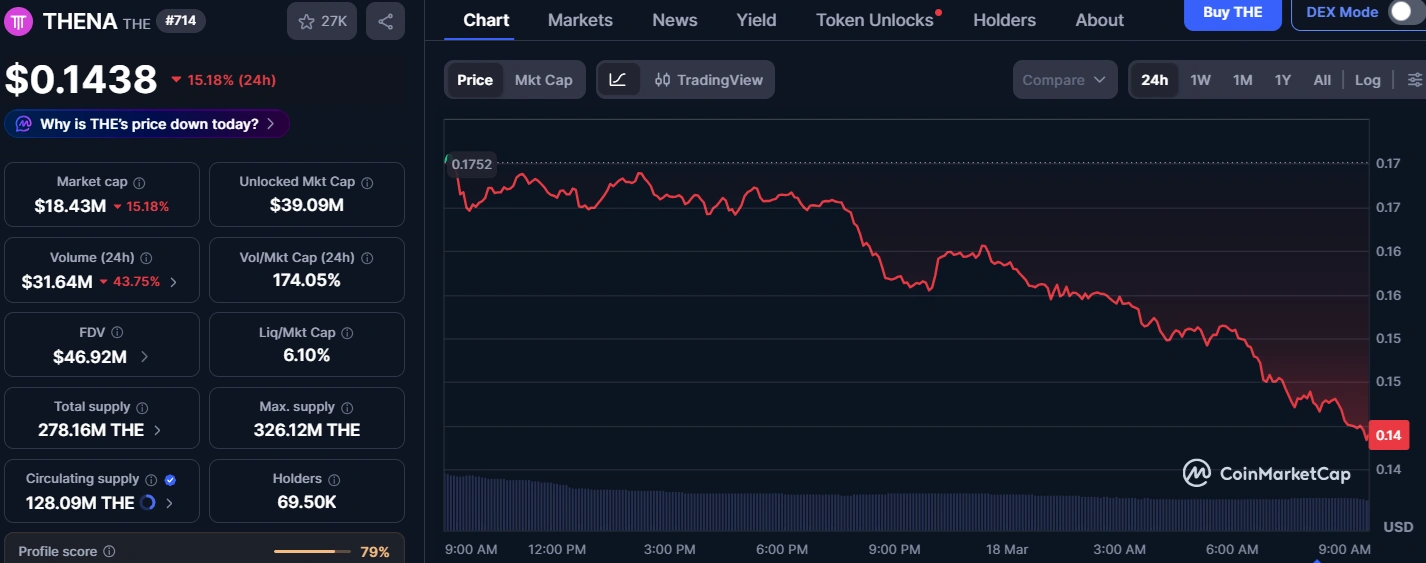
Thena downtrend continues despite exploit denial, APR increase
Symbotic Named One of New England's Fastest-Growing Companies by The Boston Globe

Trending news
MoreCrypto prices
More





