
IRA Advisors Not Bound by Fiduciary Duty—Leaving Retirees Exposed to Sales-Driven Advice

The idea of a fiduciary is simple: someone who must act solely in your interest. For retirement plans, the law defines this duty clearly. A fiduciary is anyone who exercises discretionary control over plan management or assets, or who provides investment advice for compensation. Their core responsibility is to run the plan for the exclusive purpose of providing benefits to workers and their families, and to do so with the care, skill, and prudence of a prudent person. In theory, this creates a powerful shield for your savings.
Yet the legal definition is a patchwork, not a blanket promise. The duty only kicks in for specific actions, not all who call themselves advisors. The 2024 rule change was a step forward, expanding coverage to include more recommendations within employer-sponsored plans. But even this updated rule has a glaring gap: it still excludes one-time, non-recurring advice. That means a single conversation about a lump-sum distribution or a one-off portfolio tweak might not trigger the fiduciary standard at all.
The most significant disconnect, however, is what the rule does not cover. The 2024 update explicitly states that the fiduciary standard does not apply to most advice given within Individual Retirement Accounts. This leaves a huge portion of your retirement savings unprotected. If you get advice on your IRA from a broker or financial planner who isn't acting as a fiduciary, they are not legally required to put your interests first. The law's narrow focus on specific plan functions means the promise of "solely in your interest" is often just that-a promise, not a guarantee.
The Real-World Smell Test: Where the System Breaks
The fiduciary standard sounds like a solid promise. In practice, it often fails the most basic test: common sense. The system breaks down when you look at the real-world mechanics of fees and conflicts, where the law's fine print clashes with the bottom line of a worker's retirement.

| Total Trade | 12 |
| Winning Trades | 7 |
| Losing Trades | 5 |
| Win Rate | 58.33% |
| Average Hold Days | 16.08 |
| Max Consecutive Losses | 2 |
| Profit Loss Ratio | 1.34 |
| Avg Win Return | 2.59% |
| Avg Loss Return | 1.84% |
| Max Single Return | 3.91% |
| Max Single Loss Return | 4.46% |
This isn't theoretical. The "cumulative effect" of high fees can cost a worker hundreds of thousands of dollars in retirement savings. When you're picking a menu of funds, the uniformity of low-cost index funds makes it easy to avoid the most egregious fee-drainers. But the system doesn't force that choice. It leaves the door open for higher-cost alternatives, and the fiduciary duty to act solely in the participants' interest gets muddled when the advisor or provider has a financial incentive to push those more expensive products.
Then there's the fundamental flaw in delegation. Hiring a service provider is itself a fiduciary act. The employer retains responsibility for selecting and monitoring that provider. Yet, many employers lack the time or expertise to do this job properly. They hire a broker or consultant, but the fiduciary duty doesn't vanish-it just gets outsourced. Without the proper oversight, the employer can't demonstrate a prudent process, leaving them exposed to liability if the chosen provider underperforms or charges excessive fees. The system assumes a level of diligence from plan sponsors that simply isn't there for most small and mid-sized businesses.
The bottom line is that the fiduciary standard is a process, not a guarantee of outcome. It protects you from outright fraud or reckless decisions, but it doesn't automatically protect you from the slow bleed of high fees or the conflicts inherent in a sales-driven industry. When the law says you must act prudently, it's up to you to kick the tires861155-3.38% and ask: Is this fund's fee structure reasonable? Is the advisor's compensation tied to selling something? The fiduciary promise is only as strong as the common-sense scrutiny you bring to it.
The Common-Sense Check: What You Can Actually Do
The fiduciary promise is a good starting point, but it's not a substitute for your own common sense. The law sets a floor, not a ceiling. The real protection comes from asking the right questions and sticking to simple, proven principles. Here's how to kick the tires on your own retirement plan.
First, kick the tires on fees. This is the single most important thing you can do. High fees are a silent killer of returns. Ask your plan administrator or advisor for a simple, itemized list of all fees and commissions charged against your account. Look for the expense ratios of the funds you're invested in. Then, compare them directly to low-cost index funds. The difference is stark. As the Department of Labor notes, a prudent fund is one that meets its objective for reasonable fees. If a fund charges 1% or more annually while an index fund tracking the same market charges 0.03%, that's a massive red flag. That extra cost compounds over decades, costing you tens of thousands of dollars in retirement savings. The law doesn't force fiduciaries to pick the cheapest funds, but you can.
Second, do a smell test on any advice. If an advisor pushes complex products with high fees, or pressures you into a one-time "important" decision, that's a classic red flag. The 2024 rule aims to fix this by requiring advisers to give loyal advice and avoid misleading statements, but it's not a guarantee. The bottom line is simple: if the advice feels salesy or complicated, it probably is. A good advisor should be able to explain their recommendations in plain language and show you why a simple, low-cost option might be better. If they can't, or if they focus more on their own compensation, walk away.
Finally, keep it simple. For your own retirement plan, the most powerful move is often the simplest: stick to low-cost, diversified index funds. The Department of Labor itself points out that index funds can make prudent fund selection easy because they are designed to track a market benchmark. This isn't just a suggestion; it's a proven strategy that avoids the pitfalls of high fees and complex products. Avoid the temptation of "hot" funds or guaranteed income products with hidden costs. The goal is to capture market returns, not beat them with a sales pitch. By focusing on low-cost index funds, you align your investments with the core purpose of a retirement plan: building a nest egg through disciplined, long-term saving.
The fiduciary standard is a process, not a magic shield. Your job is to ensure that process works for you. By asking about fees, smelling out bad advice, and sticking to simple index funds, you take control. That's the real retirement security.
Disclaimer: The content of this article solely reflects the author's opinion and does not represent the platform in any capacity. This article is not intended to serve as a reference for making investment decisions.
You may also like
3 Strategies Recommended by Specialists to Reduce Fuel Expenses as Gas Prices Rise
THINK Ahead: Raising rates may open Pandora’s box, sparking new waves of instability
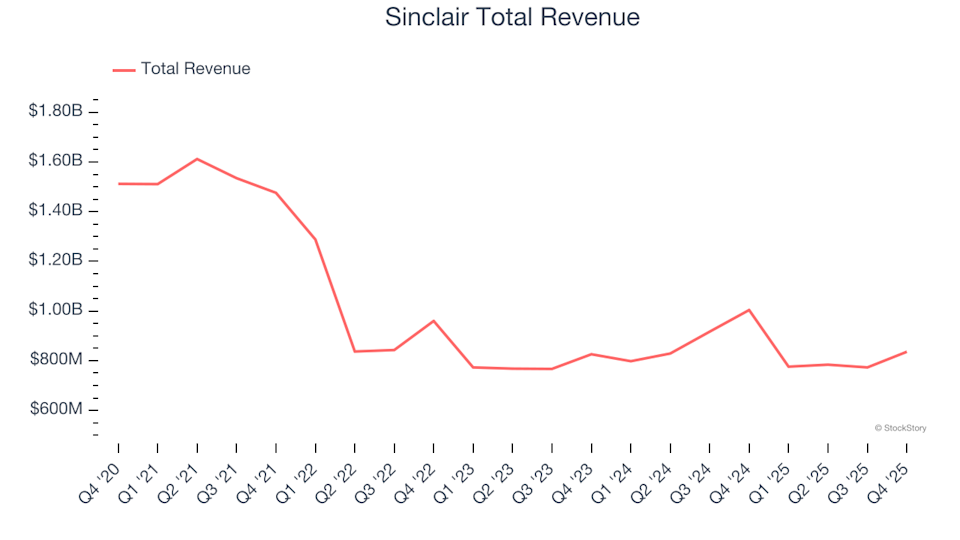
Q4 Financial Results Overview: Sinclair (NASDAQ:SBGI) Compared to Other Media & Entertainment Companies
Five Below’s Recovery Already Reflected in Price—However, Margin Pressures May Challenge Optimistic Outlook

Trending news
MoreCrypto prices
More





