
An Iranian representative suggests six prerequisites for a ceasefire as regional tensions escalate

Iran Issues Warning Over Potential Attacks on Power Facilities
Mohammad Bagher Ghalibaf, the Speaker of Iran's Parliament, has cautioned that any assault targeting Iranian power stations would trigger retaliatory measures against vital energy and oil assets throughout the region. He stressed that such actions could result in prolonged instability in global oil markets and disrupt the reliability of energy infrastructure. At the same time, U.S. President Donald Trump reaffirmed that the United States is not pursuing a ceasefire, maintaining a focus on military initiatives aimed at ensuring freedom of navigation in the Strait of Hormuz.
Japan Considers Mine-Sweeping Operations
Japan is evaluating the deployment of its Self-Defense Forces to clear mines from the Strait of Hormuz if a ceasefire is reached. Foreign Minister Toshimitsu Motegi underscored the importance of mine removal for restoring safe passage and minimizing risks to Japan’s energy imports. This potential move would mark a significant shift in Japan’s constitutional and legal approach, as the nation has traditionally restricted its military activities abroad.
U.S. Military Reduces Iran’s Threat in the Strait
According to the U.S. military, Iran’s capacity to endanger the Strait of Hormuz has diminished after targeted strikes destroyed an underground storage site for anti-ship weaponry. Admiral Brad Cooper of U.S. Central Command confirmed the operation, noting that it was intended to limit Iran’s ability to disrupt maritime traffic and to help restore regional stability.
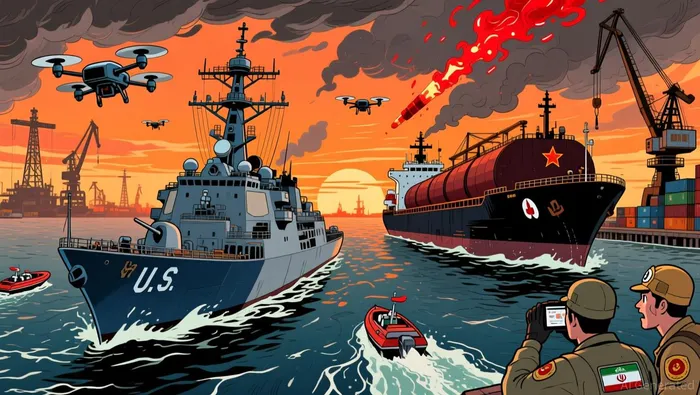
Understanding the Escalation
Rising hostilities in the Middle East have heightened as both Iran and the United States reinforce their stances regarding the Strait of Hormuz. Ghalibaf’s remarks serve as a strategic deterrent, warning that attacks on Iranian infrastructure would be met with reciprocal strikes on regional energy assets. This approach aims to discourage military escalation by emphasizing the potential for widespread economic fallout.
President Trump’s decision to avoid a ceasefire highlights the U.S. administration’s reliance on military force to achieve stability in the region. He argued that halting operations is not feasible when one party is overwhelmingly dominating the other, insisting that continued military engagement is necessary to accomplish strategic goals.
Market Impact and Economic Reactions
Financial markets have responded with uncertainty as the conflict unfolds, prompting investors to reassess global economic prospects and central bank policies. The ongoing instability has led to doubts about imminent U.S. interest rate cuts, with many shifting investments toward safer assets. Despite the volatility, the Federal Reserve has maintained its current rate policy and inflation outlook.
Energy markets have also been shaken, with Brent crude oil prices surpassing $105 per barrel amid the turmoil. Companies such as Energean PLC have suspended their 2026 production forecasts for Israel after regional conflict forced the shutdown of key production facilities. These disruptions have led to precautionary closures at major oil and gas sites, further impacting global energy supplies.
Key Issues on the Horizon
- Export Controls in Technology: Experts are watching the enforcement of export regulations in the semiconductor sector, especially after allegations involving companies such as Super Micro. These cases reveal weaknesses in current controls and highlight the need for stricter oversight to prevent unauthorized technology transfers.
- Cryptocurrency Developments: In the digital asset space, Strategy (MSTR) is quickly closing the gap in Bitcoin holdings with BlackRock’s iShares Bitcoin Trust (IBIT). Strategy’s approach allows it to acquire Bitcoin independently of ETF demand, potentially enabling it to surpass IBIT in the near future. This shift could influence the broader Bitcoin market and investor sentiment.
With global energy infrastructure remaining a central concern for both geopolitical and economic stakeholders, Japan’s consideration of military mine-clearing operations and the U.S.’s ongoing military pressure on Iran signal that a resolution is still distant. The persistent instability has led governments and investors to reevaluate their positions in energy markets and international supply chains.
Disclaimer: The content of this article solely reflects the author's opinion and does not represent the platform in any capacity. This article is not intended to serve as a reference for making investment decisions.
You may also like
$BNGO , Setup

Whale Accumulation Spikes as XRP Gains Momentum Amidst Regulatory Optimism
4 ETFs With Yields Above 7% That Income-Focused Investors Are Discreetly Accumulating

Trending news
MoreCrypto prices
More





