
Big Tech’s Reason for Optimism: The Connection Between the Magnificent 7 and the S&P 500 Has Been Disrupted

Tech Giants and the S&P 500: A Shifting Relationship
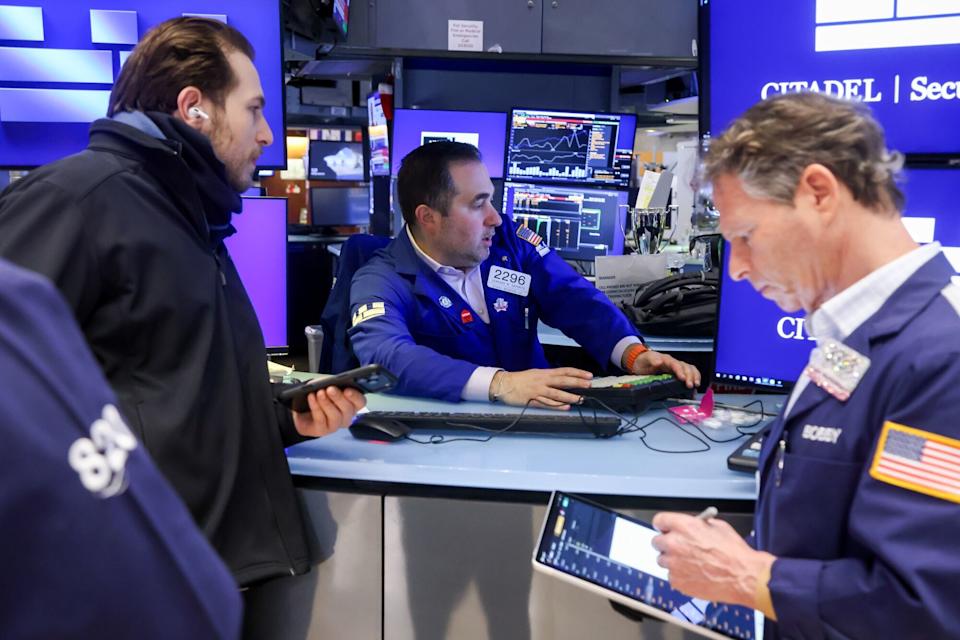
For much of the past three years, the S&P 500 Index and leading technology companies have moved in tandem. Recently, however, this connection has weakened—a development that may offer hope for tech stocks that have been underperforming.
On February 23, the correlation between the so-called Magnificent Seven index and the equal-weighted S&P 500 turned negative, signaling a divergence between the largest tech firms and the broader market. This disconnect has only grown as geopolitical tensions in Iran have unsettled markets and driven up oil prices.
Top Stories from Bloomberg
“We’ve never witnessed a tech cycle accelerate at this pace,” remarked Daniel Newman, CEO of the Futurum Group. “The future remains uncertain.”
Since 2016, only once before has the correlation between these indices been more negative. In early 2023, the Magnificent Seven—Nvidia, Apple, Microsoft, Alphabet, Amazon, Meta, and Tesla—surged ahead, fueled by excitement over artificial intelligence following OpenAI’s launch of ChatGPT. Meanwhile, the rest of the S&P 500 struggled to recover from a bear market.
During the first quarter of 2023, the Magnificent Seven index soared by 45%, while the standard S&P 500 rose just 7%. Eventually, this tech-driven momentum spread, with the S&P 500 ending 2023 up 24% and gaining another 23% in 2024.
Recent Market Dynamics
Unlike last year’s rally, the current divergence comes after months where the Magnificent Seven lagged behind, weighed down by concerns over heavy investments in AI. From late October to February, the Bloomberg Magnificent 7 index dropped 7.3%, while the S&P 500 Equal Weighted Index climbed 8.9%, led by sectors such as energy and materials.
Since the correlation turned negative, the roles have reversed: Big Tech has entered a correction, but their losses have been less severe than those of the broader market.
A Changed Landscape
The market environment today is markedly different from three years ago, with the conflict in Iran casting uncertainty across global markets. Tech giants are also facing challenges from their own aggressive AI spending and the disruptions brought by new technologies.
“A few years back, when the Magnificent Seven moved in sync, Nvidia was delivering massive upward surprises,” said Jonathan Cofsky, portfolio manager at Janus Henderson Investors. “Concerns about capital expenditures, returns, AI, and software were far less pronounced, and Apple wasn’t facing memory shortages.”
The last time correlations were this negative, Big Tech dramatically outperformed: from early 2023 to February 23, the Magnificent Seven index jumped over 300%, while the equal-weighted S&P 500 rose 42% and the standard S&P 500 gained 78%.
Outlook for Big Tech
While few on Wall Street expect a repeat of such explosive gains, some analysts see reasons for optimism. Ohsung Kwon, chief equity strategist at Wells Fargo, notes that recent declines have improved valuations and investor positioning, potentially setting the stage for a tech rebound.
“We’ve seen a significant shift from US equities to international markets, sparked by tariff policies last April,” Kwon explained. “With the onset of the current conflict, that trend is reversing, and tech—especially Big Tech—stands to benefit most.”
Currently, the Magnificent Seven index trades at less than 25 times projected earnings, down from nearly 33 in October and below its 10-year average of 29, according to Bloomberg data. This is the lowest valuation since the tariff disputes last April.
A resurgence among these tech leaders would have a major impact on the broader market, as they make up roughly one-third of the S&P 500’s total market capitalization.
“Big Tech is becoming increasingly attractive,” said Newman of Futurum. “Investors can feel confident placing their money here, given these companies’ resilience and consistent outperformance.”
Nvidia Faces Headwinds
Despite the positive outlook, Nvidia presents a challenge for bullish investors. As the world’s most valuable company and the largest component of the S&P 500, Nvidia’s stock has stalled after skyrocketing over 1,100% from late 2022 through July. For the past seven months, shares have traded sideways amid concerns that its rapid expansion may be peaking and that major customers are rethinking their AI spending.
Last week, CEO Jensen Huang’s projection of $1 trillion in data center sales by 2027 failed to impress investors, even as the company received approval to resume AI chip sales in China. Nvidia’s stock ended the week down 4.1%.
“The market seems to think expectations are too high,” said Randy Hare, portfolio manager at Huntington National Bank, which owns Nvidia shares. “We disagree and see the stock as a good value.”
Challenges for Tech Titans
Another obstacle for major tech firms is declining free cash flow, as they pour resources into AI infrastructure. Amazon, Microsoft, Alphabet, and Meta are expected to generate a combined $94 billion in free cash flow this year, a sharp drop from $205 billion in 2025 and $230 billion in 2024.
Even with lower valuations, skepticism remains about the sustainability of data center investments and the depreciating assets now on tech companies’ balance sheets, according to Michael O’Rourke, chief market strategist at Jonestrading.
“Business models for hyperscalers have shifted, justifying lower valuations,” O’Rourke said. “The 30% valuation gap between the S&P 500 and its equal-weighted counterpart makes a strong case for investors to diversify, especially in volatile times.”
Nevertheless, the Magnificent Seven continue to deliver robust earnings growth. Profits are projected to rise 19% in 2026, compared to 14% for the rest of the S&P 500, according to Bloomberg Intelligence.
“Their performance deserves recognition,” said Newman of Futurum Group. “With results like these, it’s hard to see why investors would look elsewhere.”
More from Bloomberg Businessweek
©2026 Bloomberg L.P.
Disclaimer: The content of this article solely reflects the author's opinion and does not represent the platform in any capacity. This article is not intended to serve as a reference for making investment decisions.
You may also like
Retirees Confront 'Sequence-of-Returns Risk' Amid Market Volatility Concerns

CLARITY Act's Binary Flow: A 7-Week Liquidity Catalyst
Fannie and Freddie Submit Significant Offers for Mortgage-Backed Securities

XRP Slides to Lower Range as Traders Weigh Commodity Status, Weak Technicals, Rising Macro Tensions

Trending news
MoreCrypto prices
More





