
Delhi’s street vendors resort to diesel generators for survival as the city’s power grid lets them down instantly

Delhi’s Street Vendors: Battling Heat and Economic Hardship
Delhi’s street vendors are facing a harsh reality as soaring temperatures threaten both their health and their livelihoods. According to a recent study, these vendors are losing an average of Rs.500-600 per day because the oppressive heat makes it nearly impossible to do business. In the peak months of April and May, about half of all vendors experience substantial drops in income—amounting to a 50% reduction in their already modest daily earnings.
Their daily routine is grueling, often stretching to nearly 12 hours without respite. Vendors endure the relentless sun, watching their products spoil and their own health deteriorate. Women are especially vulnerable, with seven out of eight reporting high blood pressure, sleep disturbances, fatigue, and menstrual irregularities. Their children are also at risk, frequently suffering from symptoms like vomiting and nosebleeds, which only add to the family’s challenges.
Generators: A Costly Lifeline
The urgent need for reliable backup power has fueled a thriving market for diesel generators in New Delhi. Vendors turn to companies such as Subhash Generators for rental units ranging from 10 kVA to over 1,000 kVA. For these workers, generators are not a luxury—they are essential for keeping food fresh and stalls operational, highlighting the shortcomings of the city’s power grid during critical times.
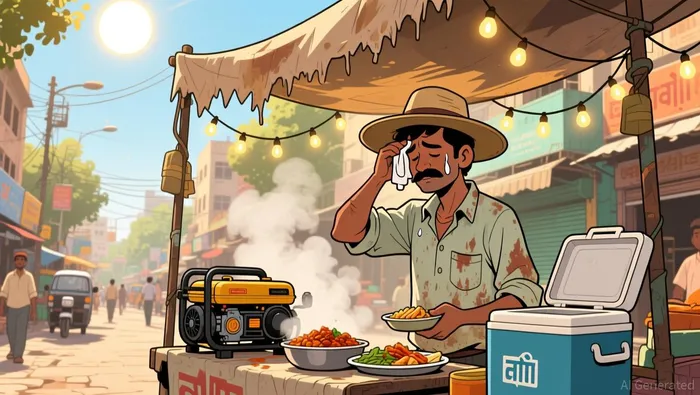
However, relying on diesel generators comes at a steep price. The cost of fuel directly reduces the vendors’ already slim profits, making this a tough but necessary compromise. While it allows them to continue working, it’s only a temporary solution that does nothing to address the underlying issues with the power infrastructure.
The Economics of Diesel: A Temporary Solution with Lasting Costs
Diesel generators offer an immediate, practical fix for power shortages, but the financial burden is significant. Vendors must pay for fuel out of their own pockets, which further erodes their earnings. This stopgap measure is a rational choice for survival, but it’s unsustainable and fails to address the root causes of the energy crisis.
Meanwhile, there is much talk about green hydrogen as a future alternative. Yet, current costs make it an unrealistic option for now. Recent bids for green hydrogen in India indicate that it remains far more expensive than electricity from conventional sources. Until cleaner energy becomes affordable and accessible, diesel generators remain the only viable option for many vendors.
In summary, while diesel generators keep businesses afloat, the high cost of fuel underscores the inadequacy of the current system. The visible demand for generators is proof of the need, but the expense highlights the urgent need for better solutions.
Wider Implications: The Informal Sector’s Struggle
The plight of Delhi’s street vendors is part of a much broader issue: India’s informal sector is bearing the brunt of the country’s energy shortfalls. These workers lack the safety nets and reliable power that formal businesses enjoy. When the grid fails, they are the first to suffer. The data is stark—over 71% of vendors are unable to access medical care due to financial constraints, compounding the health risks posed by extreme heat. Women, in particular, face both economic and physical hardships, with many reporting high blood pressure and significant income loss. This creates a vicious cycle where poor health further limits earning potential, trapping families in hardship.
India’s ambitions for a cleaner energy future are bold, with plans to add nearly 300 GW of renewable capacity by 2030. The country has already achieved its goal of 50% non-fossil fuel capacity ahead of schedule. However, these large-scale initiatives operate on a different timeline than the daily struggles of street vendors. The reliance on diesel generators is a clear sign that the current system is not meeting the needs of the most vulnerable. Without improvements to the grid and targeted support for the informal sector, these workers will continue to face energy insecurity.
The gap between policy and reality is critical. While diesel generators are a practical short-term fix, they are expensive, polluting, and unsustainable. Real progress requires building a resilient power infrastructure that serves everyone, not just large businesses. For India’s most vulnerable, reliable electricity is not just about economics—it’s a matter of fairness and survival. The energy transition must include the informal sector, or risk leaving millions behind.
What Could Drive Change?
The fate of Delhi’s street vendors will be shaped by two main forces: the weather and government policy. The next severe heatwave and the official response to it will be key indicators. Studies show that half of all vendors see major income losses during extreme heat, and this number is likely to rise with each new weather event. If the India Meteorological Department issues another severe heat warning, demand for cooling and backup power will surge, highlighting the scale of the problem.
Government action will be the next signal. The latest budget includes a nearly 640% increase in funding for the Ministry of Coal, suggesting continued reliance on traditional energy sources. For vendors, this could mean little change, with diesel generators remaining the default solution. However, if new policies or subsidies are introduced to support renewables and modernize the grid—especially if they reach the informal sector—this could begin to shift the landscape. The real test will be whether these initiatives are designed to benefit small vendors, not just large industries.
Ultimately, the most important sign of progress will be the adoption of cleaner alternatives. Vendors have expressed a need for financial help to purchase cooling equipment. If pilot programs or microloans for solar panels or battery storage begin to appear in markets, it would signal that the clean energy transition is finally reaching those who need it most. Until then, diesel generators remain the practical, if costly, choice for survival. Watch for changes in weather, policy, and the real-world uptake of cleaner solutions—these will be the true catalysts for change.
Disclaimer: The content of this article solely reflects the author's opinion and does not represent the platform in any capacity. This article is not intended to serve as a reference for making investment decisions.
You may also like

ZUS Coffee's Rapid Growth May Lead to Overpricing as Consumer Enthusiasm Declines
Trending news
MoreCrypto prices
More





