
Two Point Zero’s $2.25 Billion Investment in US Gas Relies on Fee-Based Security During Price Fluctuations

Two Point Zero Group's Major Acquisition in US Natural Gas
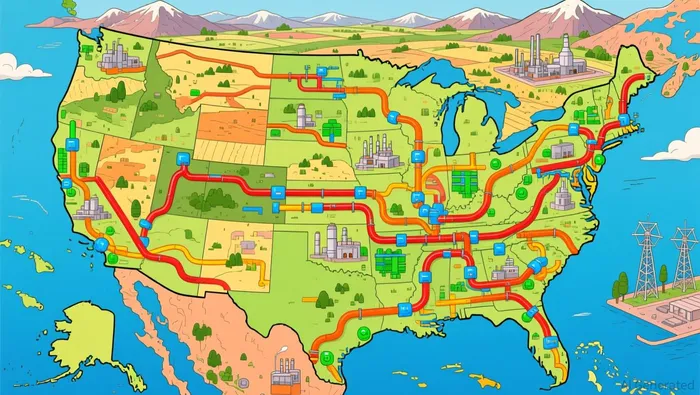
ePointZero, a subsidiary of Two Point Zero Group, has entered into an agreement to purchase Traverse Midstream Partners for $2.25 billion. This transaction, which is awaiting regulatory clearance, represents a substantial investment in the American natural gas infrastructure. The goal is to secure reliable, fee-based revenue streams from midstream assets, thereby reducing exposure to unpredictable commodity price swings.
This acquisition aligns with Two Point Zero Group's broader strategy to develop a diversified portfolio centered on the Energy and Consumer sectors. Following a recent merger that consolidated its operations, the group now possesses the scale and financial strength to pursue large investments. The group's impressive performance in FY2025, highlighted by a net profit of AED 3.6 billion and a robust cash reserve of AED 9.2 billion, provides a solid foundation for this move. The Traverse deal marks a new phase in deploying capital toward global growth opportunities, particularly in energy transition and infrastructure expansion.
US Natural Gas Market Dynamics
The decision to acquire Traverse Midstream is rooted in the current state of the US gas market, where price volatility signals underlying supply chain stress. The Henry Hub spot price is presently $8.03 per MMBtu, with recent fluctuations ranging from $7.8856 to $8.53. These price swings are driven by real-world disruptions, such as the recent conflict with Iran, which has contributed to higher energy prices and exposed vulnerabilities in global supply chains. For midstream operators, this instability highlights the importance of owning infrastructure that can generate consistent, fee-based income regardless of commodity price cycles.
By acquiring Traverse Midstream Partners, Two Point Zero aims to secure ownership of pipelines and processing facilities, positioning itself to benefit from steady cash flows even amid market turbulence. The enduring demand for natural gas—driven by its use in electricity generation, industrial applications, and as a cleaner alternative to coal—is expected to outstrip supply in key US regions. Price volatility is not a drawback, but rather a characteristic of the market that the midstream business model is designed to withstand.
Strategy Spotlight: ATR Volatility Breakout (Long Only)
- Entry: Initiate positions when the 14-day ATR exceeds its 60-day SMA.
- Exit: Close positions if the price falls below the 20-day SMA, after 20 trading days, or upon reaching a take-profit of +8% or a stop-loss of −4%.
- Asset: USNG
- Risk Controls:
- Take-Profit: 8%
- Stop-Loss: 4%
- Maximum Hold: 20 days
Backtest Results:
- Strategy Return: 0%
- Annualized Return: 0%
- Maximum Drawdown: 0%
- Win Rate: 0%
- Total Trades: 0
- Winning Trades: 0
- Losing Trades: 0
- Average Hold Days: 0
- Max Consecutive Losses: 0
- Profit Loss Ratio: 0
- Average Win Return: 0%
- Average Loss Return: 0%
- Max Single Return: 0%
- Max Single Loss Return: 0%
Additionally, the group's energy platform extends beyond US borders. IRH Global Trading, another subsidiary, has demonstrated international reach through a three-year LNG supply contract with Egypt. This global trading capability offers strategic insights and risk management advantages, enabling the group to approach the US gas market from a worldwide perspective. The acquisition is not merely a domestic infrastructure investment, but a step toward building a diversified energy portfolio that can adapt to various regional and commodity cycles.
Financial Strength and Portfolio Diversification
The $2.25 billion investment in Traverse Midstream represents a significant allocation of resources, but it is supported by the group's strong financial position. The FY2025 results, including a net profit of AED 3.6 billion, and disciplined capital management have resulted in a robust balance sheet. A notable recent event was the AED 2.7 billion gain from selling PAL Cooling, which further strengthened the group's liquidity and demonstrated its ability to generate capital from non-core assets.
This acquisition is a strategic move to diversify the group's exposure to commodities. While Two Point Zero already has a presence in mining and global trading, this investment shifts focus toward US gas infrastructure, creating a new, fee-based revenue stream less affected by commodity price fluctuations. This approach spreads risk across different segments of the energy value chain, from upstream resources to midstream logistics and downstream trading.
With a cash reserve of AED 9.2 billion, the group has ample financial flexibility to fund this acquisition without compromising its liquidity. This strong capital base supports its strategy to pursue new growth opportunities confidently. According to the Chairman, the Traverse deal is a deliberate investment in a sector with structural demand, aimed at capturing stable, long-term cash flows.
Key Drivers and Risks
The outcome of Two Point Zero's $2.25 billion investment will depend on several critical factors. The most immediate is the successful completion of the deal and the integration of Traverse Midstream's assets. Once finalized, these pipelines and processing facilities are expected to deliver the fee-based returns central to the midstream investment thesis. Effective integration will be essential to realizing the value of the capital deployed.
The main risk lies in the possibility of sustained low natural gas prices or an unexpected oversupply in the US market. Although the Henry Hub price currently sits at $8.03 per MMBtu, prolonged weakness could reduce volumes through Traverse's infrastructure, impacting fee income and potentially challenging the acquisition's justification. This risk is heightened by the commodity's sensitivity to weather, economic conditions, and the adoption rate of alternative energy sources.
However, the group's global trading platform offers a potential buffer against these risks. The three-year LNG supply agreement with Egypt showcases IRH Global Trading's ability to manage complex, cross-border energy flows. This expertise could be used to optimize gas movement through Traverse's assets, possibly by facilitating exports or balancing regional supply. In effect, the midstream investment could be integrated into a broader strategy that leverages trading to enhance asset utilization and profitability.
In summary, the success of this investment depends on whether US natural gas supply and demand continue to support strong, fee-generating volumes. The deal's completion and integration are the immediate catalysts, while price and volume risks remain the primary challenges. The group's global trading capabilities may provide additional upside, making this a classic supply-side investment where the outcome is tied to the market's physical needs and the capital deployed to meet them.
Disclaimer: The content of this article solely reflects the author's opinion and does not represent the platform in any capacity. This article is not intended to serve as a reference for making investment decisions.
You may also like
Equinix launches an AI-optimized data center in Johannesburg, paving the way for Africa's digital acceleration.

SGMOs Earnings Miss Sparks 30% Stock Slide Despite Pipeline Progress

Redoxblox Sets Sights on $10 Billion Thermochemical Storage Surge Amid Rising Need for Extended Energy Solutions
Lagarde indicates that April remains an active possibility
Trending news
MoreCrypto prices
More





