
EM Rally Hinges on Unstable De-Escalation Story—Monitor Oil and Options for Upcoming Action

Emerging Markets: Relief Rally or Lasting Recovery?
Emerging markets have recently experienced a sharp rebound, but this movement is more of a temporary relief than a true turnaround. The bounce followed a dramatic selloff caused by heightened geopolitical tensions, specifically the United States and Israel launching strikes against Iran. This event sent shockwaves through global financial markets, leading to a rapid and severe decline in emerging-market assets. By mid-March, losses reached their largest weekly drop in three years, with the MSCI EM equity index losing over a trillion dollars in value from its peak.
The selloff was a direct response to escalating conflict in the Middle East, prompting investors to seek safety in cash and the US dollar. Bonds also suffered, and the MSCI EM currency index broke a three-month streak of gains. The market initially priced in a prolonged, expensive conflict, expecting higher oil prices and disruptions to global trade, which fueled the massive capital outflows.
Although markets have since rallied, this recovery remains fragile. The underlying anxiety persists, merely overshadowed by fleeting optimism. Signs of de-escalation, such as President Trump's prediction that the war could end within weeks, have sparked hope. However, options market data shows investors are still bracing for volatility: one-month risk reversals are trading above one-year contracts, a rare occurrence not seen since the 2020 pandemic crash. This indicates investors are paying a premium for short-term protection, suggesting that while the market hopes for a quick resolution, it expects continued turbulence in the near future.
Oil Prices: The Real Test for Emerging Markets
The sustainability of the rally depends heavily on oil prices. The initial rebound did not fully account for the new, higher oil price benchmark. Brent crude is now trading around $114 a barrel, marking a roughly 50% increase since the start of the year. This elevated price is the new reality for markets. When hostilities resumed, Asian markets quickly sold off, highlighting the gap between expectations and fundamentals. The narrative of de-escalation faltered, and the impact of high oil prices became evident, especially for oil-importing Asian economies.
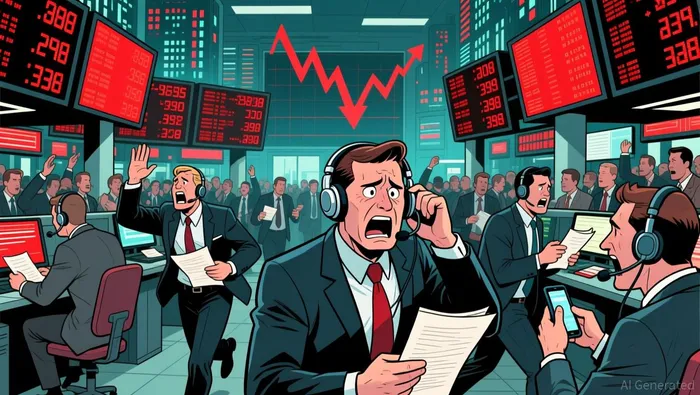
This situation creates a delicate balance. The current rally is built on hopes for peace, but for it to evolve into a sustained recovery, the de-escalation narrative must persist long enough for markets to focus on economic fundamentals rather than headlines. The risk is that markets are pricing in a swift resolution, while the reality of expensive oil and rising gasoline costs continues to weigh on emerging economies. As MUFG's Michael Wan observed, Asian currencies have rebounded despite high oil prices, reflecting cautious optimism. The question is whether this optimism can withstand further shocks or price spikes.
Investment Outlook: Scenarios and Key Drivers
Investors are navigating two competing narratives, each with its own conditions and outcomes. The bullish scenario relies on lasting de-escalation. If diplomatic signals from Washington and Tehran prove reliable and the conflict ends soon, geopolitical fears will subside. This could lead to a revaluation of emerging-market assets, a weakening dollar, and renewed focus on strong sector fundamentals. The MSCI EM index currently trades at a 28% discount to developed markets, which may narrow as risk premiums decrease. This would likely attract new investment from those previously on the sidelines, as noted by PGIM's Cathy Hepworth.

On the other hand, the bearish scenario is driven by persistent conflict or sustained high oil prices. If tensions escalate or oil remains elevated, emerging-market importers will face increased economic challenges, potentially triggering another round of capital flight and undoing the relief rally. The risk is that the initial optimism was merely speculative, and renewed hostilities could quickly reverse sentiment. Morgan Stanley's James Lord cautions that further increases in oil prices could deepen losses.
A crucial indicator to watch is the spread between short- and long-term currency downside protection costs. This spread has inverted to its widest level since 2020, signaling heightened near-term anxiety. If this spread narrows, it would suggest that fears of acute volatility are easing, which is necessary for a sustained recovery. For now, the options market is still pricing in a brief but intense period of risk, and the longevity of the rally depends on whether the hope for de-escalation can overcome these fears.
Strategy Spotlight: ATR Volatility Breakout for MSCI EM
- Entry: When ATR(14) exceeds its 60-day moving average and the price closes above the 20-day high.
- Exit: When the price closes below the 20-day low, after 20 trading days, or upon reaching a take-profit of +8% or a stop-loss of −4%.
- Risk Controls: Take-profit at 8%, stop-loss at 4%, maximum holding period of 20 days.
Backtest Results
- Strategy Return: 2.07%
- Annualized Return: 1.82%
- Maximum Drawdown: 4.42%
- Profit-Loss Ratio: 2.46
- Total Trades: 2
- Winning Trades: 1
- Losing Trades: 1
- Win Rate: 50%
- Average Holding Days: 20
- Max Consecutive Losses: 1
- Average Win Return: 3.49%
- Average Loss Return: 1.37%
- Maximum Single Return: 3.49%
- Maximum Single Loss Return: 1.37%
Disclaimer: The content of this article solely reflects the author's opinion and does not represent the platform in any capacity. This article is not intended to serve as a reference for making investment decisions.
You may also like
XRP Shows a Big Upside to $2.50, But Risk Lingers at $0.53
Caterpillar Surges 6.15% on Bullish Technical Signals and Strong Volume

New Hampshire Bitcoin-backed bond receives Ba2 rating from Moody’s
oOh!media’s 10% Share Repurchase: Strategic Support or Risky Wager in a Declining Industry?

Trending news
MoreCrypto prices
More





