
Nvidia's Rubin graphics processor might resolve uncertainties surrounding AI capital expenditures — This is why the market adjustment could soon reverse

Nvidia Faces a Rare Downturn Amid Shifting Market Sentiment
For the first time in a while, Nvidia’s shares have declined for two straight quarters—a notable development for a company at the forefront of a thriving industry. Despite delivering impressive results, including fourth-quarter revenue of $68.13 billion and a 65% year-over-year increase in fiscal 2026 revenue to $215.9 billion, investor excitement has cooled. Analysts point out that attention has moved from immediate performance to questions about how long the current surge in AI-related capital spending can last. This tension—between robust financials and doubts about the durability of the spending boom—defines the current market mood.
This scenario echoes previous turning points in the tech sector. When a new technology wave hits, growth can be rapid, but investors quickly start to wonder if it’s sustainable. In Nvidia’s case, the concern is that its main customers—large-scale cloud providers—are now running low on cash after heavy investment in AI infrastructure. The recent decline in Nvidia’s stock seems to reflect this cyclical uncertainty rather than any fundamental weakness in the company. Essentially, the market is moving from initial excitement to a more cautious evaluation of whether the current pace of capital investment can continue.
Looking Back: Innovation Cycles and Market Corrections
Nvidia’s current correction fits a familiar pattern in technology markets. When a leading company drives a new growth phase, its stock often cools off after a period of exceptional gains, as investors reassess the long-term prospects. This mirrors earlier episodes where the focus shifted from inventory concerns to questions about the sustainability of capital spending.
Take the semiconductor downturn of 2018-2019 as an example. At that time, fears centered on excess inventory as chipmakers overproduced. The spotlight was on balance sheets and short-term sales. Today, the conversation has shifted to whether AI infrastructure spending can be maintained. While the trigger is different—cash flow depletion among hyperscalers rather than unsold chips—the underlying issue is the same: investors are questioning the longevity of the current investment cycle. Such skepticism often precedes a market reset.

This pattern repeated in 2024, when Nvidia’s shares experienced a sharp correction after a period of rapid growth. Despite strong business performance, the stock’s pullback tested the idea that even industry leaders can fall out of favor temporarily. The difference this time is the sheer scale of Nvidia’s growth: revenues have soared from $16.6 billion to $215.9 billion over five years, making continued double-digit growth more challenging. Still, history suggests these downturns are usually temporary pauses, not signs of lasting decline.
After each correction, a new wave of innovation has typically reignited growth. The 2018-2019 slump was followed by advances in mobile and cloud computing, while the 2024 dip preceded the AI boom. The current period of skepticism may serve a similar purpose—filtering out speculation and laying the groundwork for the next phase of adoption. In other words, this appears to be a typical correction within a larger cycle, not a fundamental break from it.
What’s Next: The Rubin Platform and a New Inflection Point
While history points to a correction, it also suggests that a new catalyst is on the horizon. For Nvidia, that catalyst is the upcoming Rubin GPU platform. Historically, market downturns have ended with major technological leaps that reignite demand and set a new growth trajectory. Rubin is shaping up to be such a turning point.
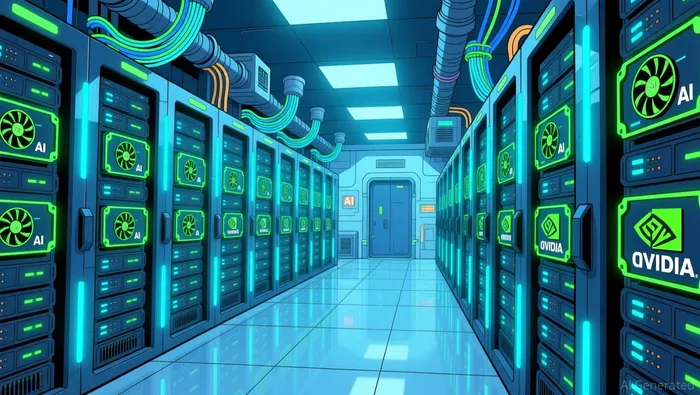
The most significant technical advance expected from Rubin is a potential tenfold reduction in inference token costs. Inference—the process of running AI models after training—accounts for most operational expenses. By dramatically lowering these costs, Rubin addresses the main concern about the sustainability of AI spending. This could make AI deployment affordable for a much wider range of businesses and developers, unlocking new demand.
Rubin isn’t just a minor upgrade. It’s engineered to accelerate the development of agentic AI—autonomous software agents—and is expected to require only a quarter of the GPUs needed to train mixture-of-experts (MoE) models compared to the current Blackwell architecture. Such efficiency gains are the kind of breakthrough that typically ends a correction cycle by changing the economics of AI investment.
Market expectations are already building. Some analysts predict Nvidia’s stock could climb 40% by the end of 2026, and early signs of adoption are strong. Industry leaders from OpenAI, Anthropic, Alphabet, and Elon Musk—who described Rubin as a “rocket engine for AI”—have all expressed support. This optimism suggests that Rubin could be the spark for the next growth phase.
Ultimately, the Rubin launch marks a pivotal reset. It shifts the conversation from concerns about current spending to the new opportunities that a more efficient platform can create. As with previous tech cycles, this could be the moment when the correction ends and growth resumes.
Key Catalysts and Risks Ahead
The next few months will be crucial in determining whether history repeats itself. The most important event is the launch and adoption of the Rubin platform, which is expected to begin production shipments in the second half of 2026. Early endorsements from major industry figures suggest strong initial demand, but the real test will be whether this translates into tangible growth in data center revenues in upcoming quarters.
There are risks, however. If AI capital expenditures slow more quickly than anticipated, the correction could last longer than usual. The market’s focus has shifted to concerns about the sustainability of AI spending, especially as hyperscalers draw down their cash reserves. If spending drops off sharply, Nvidia’s forecasts and share price could come under renewed pressure, extending the period of uncertainty.
The first major indicator will be Nvidia’s Q1 2026 earnings report, scheduled for May 28. Investors will be watching closely for guidance on data center revenues, which will provide insight into near-term spending trends. Current estimates for Q1 2026 data center revenue range widely, from $34.8 billion to $42.1 billion, highlighting the uncertainty in the market.
Expectations for the new Blackwell solution are even more varied, with forecasts from 11 sources ranging from $2.5 billion to $24.4 billion in Q1 and a consensus of $11.9 billion. This wide range reflects differing opinions about the size and timing of the opportunity. While CEO Jensen Huang has pointed to strong demand, any disappointment or reduction in guidance could reignite skepticism. The upcoming quarter will be a key test of whether the current correction is ending or set to continue.
Disclaimer: The content of this article solely reflects the author's opinion and does not represent the platform in any capacity. This article is not intended to serve as a reference for making investment decisions.
You may also like
BoE Warns Markets Are Pricing in Rate Hikes Prematurely—Risk of Disorderly Correction Looms


Insider Buy and $50M Contract Fuel CTM’s Pre-Market Surge

DMart Hits 500 Stores: Price Surge Fueled by Momentum

Trending news
MoreCrypto prices
More





