
Metropolitan Confronts Snowpack Decline: Water District Implements Deficit Solutions Amid Climate Challenges

California's Snowpack Crisis: A New Reality for Water Supply
The latest snow survey from the California Department of Water Resources has revealed a sobering situation: there was no detectable snow left at Phillips Station, and the statewide snowpack measured only 18% of the April 1 average. This marks the second-lowest level ever recorded, driven by an exceptionally warm March and rainfall at high elevations that melted the snow far earlier than usual. Since snowpack typically supplies nearly a third of California’s water, this dramatic decline signals a major disruption to the state’s water resources.
Following the survey, the Metropolitan Water District acknowledged the benefit of recent storms but emphasized a crucial reality: a single wet month cannot compensate for years of drought and the premature loss of snowpack. This echoes last year’s experience, when heavy December rains were followed by the driest start to the year on record. While recent precipitation has helped fill reservoirs, it does not resolve the underlying deficit in California’s natural water reserves.
In response, the Metropolitan Water District is doubling down on its strategy of diversifying water sources. The district is prioritizing management of imports from the Colorado River and Northern California, while also supporting conservation and storage initiatives among its member agencies. This two-pronged approach—balancing engineered supply with demand management—reflects the need to adapt to increasingly unpredictable water availability. The focus now is on navigating the current shortfall, rather than hoping for a return to past norms.
Supply and Demand: The Water Imbalance
This year, California faces a fundamental mismatch between water supply and usage. The snowpack, which acts as the state’s natural water reserve and typically provides about 30% of annual supply, has all but vanished months ahead of schedule. With the snowpack at just 18% of normal statewide—and only 6% in the Northern Sierra—it likely reached its peak in late February, far earlier than usual, as extreme heat accelerated melting. As a result, the main natural water source for the dry months ahead has already been depleted.
This early loss means the spring and summer runoff that typically replenishes reservoirs will be largely absent. Even though three consecutive wet winters have kept reservoirs at healthy levels, the system is now vulnerable. Water managers must increasingly rely on rainfall and engineered infrastructure, which are less reliable than the snowpack. As one official put it, "our entire water system was built for a climate that depended on snowpack, and this year, nature didn’t deliver." While current reservoir and groundwater levels offer some relief for the coming summer, they are a temporary buffer that will need to be replenished by next winter’s precipitation.
Ultimately, the balance has shifted: natural water production from snowmelt has plummeted, but demand from cities, agriculture, and the environment remains high. This forces greater reliance on stored water and unpredictable rainfall, putting long-term resilience at risk if snowpack conditions do not improve.
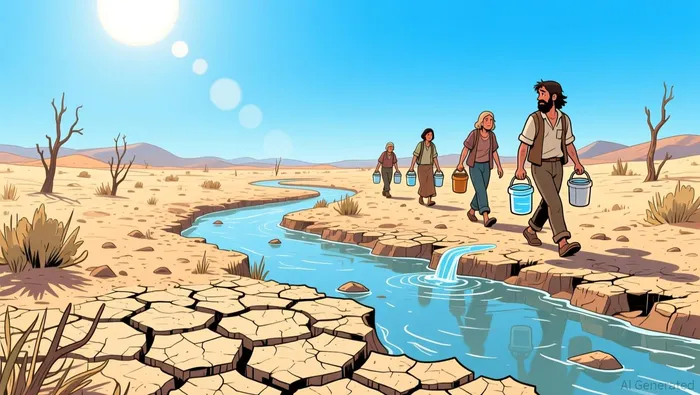
Water Storage and the Challenge of Replenishment
Addressing this year’s water shortage depends on a brief window of opportunity. The main hope for refilling reservoirs and restoring soil moisture is a period of sustained, significant rainfall in the next several weeks. Without it, the current reservoir reserves will be depleted, with no snowmelt to replace them. This is a critical juncture, as water managers have limited control over the weather but can use improved forecasting to anticipate supply levels.
The greatest risk is that the dry pattern persists. If mountain soils remain parched and major storms fail to materialize, reservoirs will not refill as they normally do in spring. This could lead to emergency water restrictions, similar to those imposed in 2015 when the snowpack also collapsed. That year, restrictions were announced after the snowpack dropped to just 5% of average. Although reservoirs are currently in good shape, the system’s dependence on snowpack for replenishment has been exposed. As one official observed, "our water system was built for a different climate, and this year, nature changed the rules." Without natural snowmelt, the system is left vulnerable.
Looking further ahead, this year’s events highlight a growing threat: that such extreme conditions may become commonplace. The heat wave that decimated the snowpack is a classic example of a “snow-eater” event, which scientists expect to become more frequent and arrive earlier as the climate warms. This year offers a preview of the challenges California will face in the coming decades. To adapt, the state must accelerate investments in water recycling, expanded storage, and conservation infrastructure to cope with a hotter, drier future. The current crisis is a stark warning that California can no longer count on a predictable seasonal water cycle.
Key Factors and Risks for California’s Water Future
California’s water outlook now depends on a narrow window of weather and soil conditions. The next 30 to 45 days are critical: any major storm system that brings substantial precipitation to the mountains could help offset the loss of snowpack. However, as DWR’s Andy Reising explained, "every week without significant snowfall makes it harder to recover." The state’s current advantage—reservoirs at 126% of average—provides a buffer, but not a long-term solution. The outcome depends on the weather in the coming weeks.
Another major concern is that dry mountain soils may absorb much of any runoff, as happened in 2021. That year, a warm spring caused snowmelt to soak into parched ground, leaving reservoirs underfilled despite some precipitation. DWR Director Karla Nemeth noted the similarity, saying "the relentlessly sunny skies of March 2026 are reminiscent of March 2021." If soils remain dry, much of the rainfall will be lost to runoff or evaporation, reducing the benefit to the water system.
Finally, California’s ability to capture and store water from future storms will be crucial. With the snowpack gone early, runoff is already occurring, but reservoirs must keep space for flood control, limiting their storage capacity. As Nemeth pointed out, "California lacks the infrastructure to move this early runoff into underground aquifers." Without expanded storage and conveyance systems, even a wet spring may not restore the supply-demand balance if the water cannot be saved for the dry months ahead.
In summary, the trajectory of California’s water deficit is not fixed. It will be shaped by the interplay of weather, soil moisture, and the state’s readiness to capture and store whatever water arrives. Water managers are closely monitoring forecasts, aware that the old patterns no longer apply in this new climate reality.
Disclaimer: The content of this article solely reflects the author's opinion and does not represent the platform in any capacity. This article is not intended to serve as a reference for making investment decisions.
You may also like
Trump’s Assertion of “Zero Inflation”: An Analytical Review of Price Movements and Economic Indicators
Apollo's $10B Atlantic Aviation Play Hinges on Navigating Rising Regulatory Costs and Ownership Friction

Trending news
MoreCrypto prices
More





