
RTX Surges as Iran Conflict Fuels Defense Needs and Unprecedented Order Backlog

RTX Sees Surge in Defense Demand Amid Geopolitical Uncertainty
RTX is witnessing a significant uptick in orders for its defense solutions, especially within its Raytheon division, as global tensions intensify. Recent reports highlight a robust $268 billion order backlog and a planned 20% boost in munitions output for 2025, pointing to strong short-term earnings prospects if the company can meet its delivery commitments according to available data. However, despite impressive revenue growth and a sharp rise in free cash flow, concerns about sector valuations and market volatility persist, as reflected by the NYSE Arca Defense index’s nearly 8% decline in March as noted.
Capitalizing on the Iran conflict, RTX has seen increased interest in its missile and radar offerings. In the fourth quarter of 2025, the company posted an adjusted EPS of $1.55—exceeding forecasts by 5.44%—and generated $24.24 billion in revenue, marking a 12.1% year-over-year increase. Free cash flow soared by 549% to $3.195 billion. Financial disclosures show Raytheon’s operating profit climbed 22% thanks to higher missile volumes. Leadership has stressed the importance of rapid product delivery to address urgent national security needs.
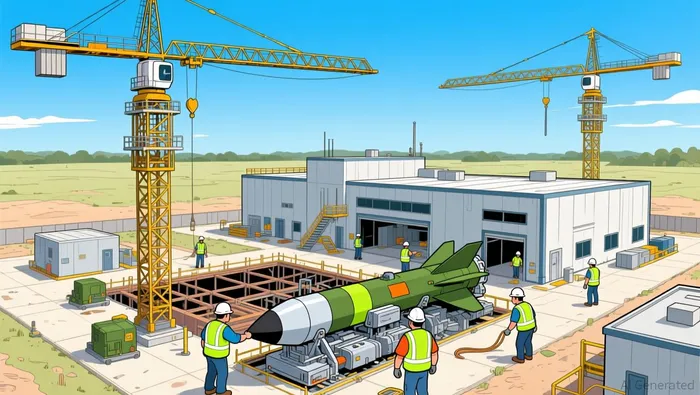
RTX’s substantial backlog includes $107 billion in defense contracts, ensuring revenue stability for the foreseeable future. The company has also expanded its missile integration facility in Alabama by 50% as reported. In Q4 2025, RTX secured a $966.7 million contract modification for its AN/TPY-2 radar system. Management anticipates Raytheon’s adjusted operating profit will grow by $200–$300 million in 2026.
Valuation Concerns and Sector Headwinds
Despite the surge in demand, investors remain wary about whether RTX’s growth can sustain its current high valuation. The defense sector is now trading at a price-to-earnings ratio of 39.2 according to market data. Tariff pressures at Collins Aerospace and Pratt & Whitney could impact operating profits, and the F135 engine program is a critical area to watch. The company’s ability to turn its large backlog into steady earnings will be a key focus for investors in the coming months.
Key Drivers Behind RTX’s Recent Growth
The recent escalation in defense demand, driven by the Iran War, has been a major catalyst for RTX’s performance. Raytheon has landed major contracts, including a $381 million agreement for Tomahawk missile production and a $384 million extension to an existing deal. The company has also entered into five framework agreements with the Pentagon to ramp up production and accelerate deliveries. With U.S. forces deploying over 850 Tomahawk missiles in the conflict, RTX stands to benefit from ongoing replenishment contracts.
Strong results from the Pratt & Whitney division have also contributed, with military revenues rising 30% in Q4 2025. The company secured a $6.6 billion contract for the F135 engine, further diversifying its income streams. This blend of defense and commercial aerospace business helps provide stability in a volatile sector as market analysis notes.
RTX Stock Snapshot
RTX Trend Chart
- Ticker: RTX
- Company: RTX Corporation
- Exchange: NYSE
- Latest Price: 197.920
- Change: -0.490 (-0.25%)
Is RTX’s Earnings Growth Sustainable?
Although RTX has posted impressive earnings growth, there are questions about whether these gains can be maintained at current valuation levels. The company’s $268 billion backlog and increased munitions production are positive signs, but the broader defense sector has not experienced a lasting rally. In March, the NYSE Arca Defense index fell by nearly 8%, indicating that investors are weighing the recent surge in demand against high sector valuations according to data.
Free cash flow jumped 549% year-over-year to $3.2 billion in Q4 2025 as reported. However, the company’s ability to consistently convert its backlog into earnings will be crucial. RTX’s 2026 guidance forecasts sales between $92–93 billion and EPS in the range of $6.60–$6.80. Tariff challenges at Collins Aerospace and Pratt & Whitney, along with the F135 engine program, remain important factors to monitor.
Potential Risks Impacting RTX’s Outlook
RTX faces several risks, including possible shifts in interest rates and government priorities that could affect long-term defense spending according to reports. Tariff pressures at Collins Aerospace and Pratt & Whitney could reduce operating profit by $850 million. The F135 engine program remains a critical variable for the company’s commercial aerospace segment.
The upcoming Q1 2026 results will be pivotal in determining whether RTX can sustain its growth trajectory amid heightened defense demand. Continued outperformance could reinforce the company’s growth story and support its valuation, but any setbacks in delivery schedules or production could dampen investor confidence.
Disclaimer: The content of this article solely reflects the author's opinion and does not represent the platform in any capacity. This article is not intended to serve as a reference for making investment decisions.
You may also like
Flow Review: The 1.1 Million BTC Account and BSTR’s $3 Billion SPAC

Recession Indicators: Unveiling the Vicious Cycle Index and Unseen Pressures in the Labor Market
ARKAY Dividend Stability: Assessing Whether Cut Risk Concerns Are Exaggerated

Bitget Introduces IPO Prime Offering Tokenized Access to SpaceX Pre-IPO

Trending news
MoreCrypto prices
More





