
Diversified Energy’s cost-effective approach distinguishes itself while limited energy supply slows down deal activity

Energy Market Tightness: Economic and Deal Market Ramifications
The energy sector is currently grappling with significant shortages, pushing prices to new highs and creating considerable challenges for the wider economy. This is not a simple price swing, but rather a deep-rooted imbalance between supply and demand. Across the United States, electricity prices have climbed by over 5% compared to last year, highlighting mounting pressures. The situation is even more severe in wholesale electricity markets, where capacity auction prices have soared by over 800% in certain areas within the past year. Such dramatic fluctuations reveal a system under stress, unable to meet surging demand.
This scarcity is rooted in a fundamental transformation of demand patterns. After years of relatively stable usage, U.S. electricity consumption is now expected to double over the next ten years. This rapid growth is fueled primarily by the expanding energy needs of data centers and the broader shift toward electrification in transportation and heating. These are not short-lived spikes, but persistent, inflexible demands that are reshaping the grid’s requirements.
On the supply side, growth is lagging. Renewable energy sources are expanding, but their variable output complicates grid management and drives up costs. The pace at which coal plants are being retired exceeds the addition of new, dependable capacity, resulting in bottlenecks. Natural gas serves as a crucial transitional resource, but infrastructure limitations hinder its further development. The outcome is a market defined by scarcity, with the cost of securing reliable power escalating rapidly.
The surge in energy prices is not just a concern for utilities—it has broad macroeconomic implications. The Federal Reserve is monitoring the situation closely. As Vice Chair Philip Jefferson has pointed out, persistently high energy costs could drive up prices across a wide range of goods and services. Since energy makes up a significant portion of household expenses, sustained high prices could entrench inflation and make the central bank less likely to lower interest rates. Currently, markets anticipate that rates will remain high through 2026. This scarcity in the energy market is therefore a direct source of pressure on deal activity and the broader economic outlook.
Deal Market Dynamics: Navigating a Backlog Amid Energy Volatility
Rising energy costs are now directly impacting how companies allocate capital, creating new obstacles for deal-making. While some of the economic uncertainty that characterized 2025 is fading, the unpredictability and high cost of energy have emerged as a persistent risk, forcing investors to rethink their strategies and exit plans.
The scale of the challenge is substantial. There are currently over 30,000 private equity-backed portfolio companies awaiting exit. Traditionally, these assets would be sold through a robust secondary market, which is still active, with projections of $250 billion in total volume this year. However, the path to exit is becoming more complicated. Higher energy costs are inflating operating expenses for these companies, squeezing profit margins and potentially lowering their valuations. This, in turn, makes them less appealing to buyers and can extend the time needed to complete sales.
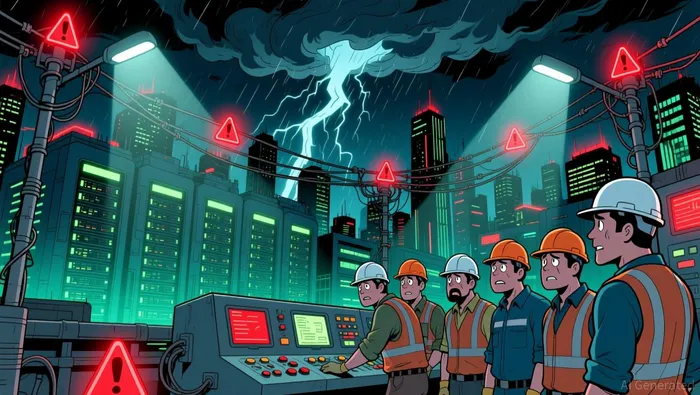
The contrast with the previous year is clear. In 2025, businesses were stalled by policy uncertainty—ranging from tariffs to immigration and legislative changes. Now, as those uncertainties fade, capital spending is expected to expand beyond the technology sector. However, the new challenge is more structural. As Federal Reserve Vice Chair Philip Jefferson emphasized, a prolonged energy price shock could have significant consequences for the entire economy. For dealmakers, this means higher financing costs and more cautious buyers, as the risk of persistent inflation increases.
Absolute Momentum Long-Only Strategy Overview
- Entry Criteria: Go long on SPY when the 252-day rate of change is positive and the closing price is above the 200-day simple moving average (SMA).
- Exit Criteria: Sell when the price falls below the 200-day SMA, after holding for 20 trading days, or if a take-profit (+8%) or stop-loss (−4%) threshold is reached.
- Asset: SPY
- Risk Controls:
- Take-Profit: 8%
- Stop-Loss: 4%
- Maximum Hold: 20 days
Backtest Highlights
- Strategy Return: 2.86%
- Annualized Return: 1.46%
- Maximum Drawdown: 2.65%
- Profit-Loss Ratio: 1.89
- Total Trades: 185
- Winning Trades: 2
- Losing Trades: 1
- Win Rate: 1.08%
- Average Hold Days: 0.16
- Max Consecutive Losses: 1
- Average Win Return: 1.93%
- Average Loss Return: 0.99%
- Max Single Return: 2.47%
- Max Single Loss Return: 0.99%
Adapting to the New Environment
In this challenging landscape, strategies that emphasize efficiency and disciplined capital management are gaining prominence. William Blair has pointed to the unique approach of Diversified Energy Company as a resilient model. Rather than investing heavily in new drilling, Diversified focuses on acquiring and optimizing existing, long-lived oil and gas assets. This approach is less capital-intensive and enabled the company to complete a major value-enhancing acquisition earlier this year. For private equity, this suggests that targeting companies with business models less sensitive to energy price swings, or those capable of boosting operational efficiency, could be a prudent path forward.
Ultimately, the deal market is navigating between a backlog of assets and a shifting economic landscape. While the reduction in political uncertainty from 2025 is encouraging for investment, it is being offset by the ongoing risk of high and volatile energy prices. This environment is likely to favor deals that prioritize operational strength and capital efficiency, while presenting challenges for those more exposed to rising input costs.
Key Drivers and Threats in the Energy-Deal Relationship
The interplay between elevated energy costs and deal activity depends on several pivotal factors that could either alleviate or worsen the situation. The main hope for relief lies in resolving geopolitical tensions in major energy-producing regions. According to William Blair’s analysts, instability in the Middle East—especially near the Strait of Hormuz, through which about 20% of global oil and LNG is transported—creates significant volatility. If these tensions subside, the risk of supply disruptions would decrease, potentially stabilizing global energy prices. This would benefit the U.S. economy, as higher prices have already boosted free cash flow for upstream producers. For the deal market, a more stable energy outlook could reduce uncertainty, freeing up capital and improving M&A sentiment.

However, the primary risk is the opposite scenario: ongoing energy price shocks that could lead to a deeper economic downturn. This is the concern raised by Federal Reserve Vice Chair Philip Jefferson, who warned that while short-term disruptions can be managed, prolonged energy price shocks could have far-reaching effects. Since energy accounts for roughly 7% of consumer spending, higher costs ripple through transportation, manufacturing, and food production. If inflation becomes entrenched, the Fed may be forced to keep interest rates high for an extended period. Markets already expect rates to remain elevated through 2026. For dealmakers, this means more expensive financing and a tougher environment for M&A, as buyer interest wanes.
Looking further ahead, a major structural trend could help offset these risks: the enormous investment required for decarbonization and modernizing the power grid. The energy transition is a long-term necessity, driven by policy mandates to cut carbon emissions. This is generating strong demand for new infrastructure. William Blair’s research team highlights opportunities in generation, energy efficiency, storage, and sustainability services. The focus is not just on replacing outdated plants, but on building a more robust and resilient system. The scale of investment needed—driven by electrification and reliability demands—could eventually spark a new wave of deal activity in clean technology and grid-related sectors, helping to counterbalance challenges elsewhere.
In summary, the market is balancing between potential catalysts and significant risks. While easing geopolitical tensions could provide short-term relief, the greater danger is a prolonged energy shock that stifles economic growth and capital flows. Over the long term, the structural push to decarbonize and upgrade the grid may lay the groundwork for renewed deal-making. For now, the intersection of energy and deal markets remains a delicate and high-stakes balancing act.
Disclaimer: The content of this article solely reflects the author's opinion and does not represent the platform in any capacity. This article is not intended to serve as a reference for making investment decisions.
You may also like
RxERP's Hub: The Absence of a Central "Source of Truth" in Pharma Supply Chains May Lead to a Data Monopoly

CEA Industries Inc. Announces Inducement Grants Under Nasdaq Listing Rule 5635(c)(4)
Grupo Cibest S.A. ANNOUNCES FILING OF THE 2025 ANNUAL REPORT ON FORM 20-F

Identifying the Impact of Tariffs on Consumer Prices Instantly
Trending news
MoreCrypto prices
More





