
Tariff-Induced Shifts Uncovering Unexpected Beneficiaries and Disadvantages in Commodity Supply Chains—Emphasis on Copper and Chinese Imports

Tariff Policy Reshapes U.S. Trade Landscape
President Trump's tariff measures last year marked a significant turning point, pushing the average U.S. tariff rate to a level not seen in eight decades—reaching 9.6%. Rather than being a fleeting policy adjustment, these tariffs have established a new, more restrictive standard for American trade, making the current environment the tightest in over a century by some assessments. While the overall effect on GDP has been relatively modest, the underlying shift is already transforming commodity supply routes and introducing ongoing points of strain.
This heightened trade tension has already divided the market into clear beneficiaries and those at a disadvantage—a pattern expected to continue through 2026. Countries and producers not affected by the new tariffs are seeing favorable conditions, whereas those linked to targeted supply chains are grappling with increased costs and reduced volumes. Although markets seem less reactive to each new tariff announcement, this masks the persistent, underlying pressures at play.
Rising Costs Evident in Import Prices
The impact of these tariffs is most visible in pricing trends. By December 2025, products imported from China experienced an 8.5% annual price increase, clearly reflecting the pass-through of higher costs. Rather than a sudden jump, this steady escalation indicates that tariffs are being gradually incorporated into consumer prices. Analysis shows that, in the latter half of 2025, at least 30% of tariff costs on Chinese goods were passed on to consumers. This shift is fundamentally altering the competitive landscape for finished goods and squeezing margins for industries reliant on imports.
Commodity Market Dynamics: Oil, Copper, and Gold
Trade policy is now a dominant force shaping supply and demand imbalances across major commodities, influencing both inventory levels and price volatility.
- Oil: After the announcement of tariffs, oil prices stabilized, suggesting that the market had already accounted for potential demand risks. However, volatility persists, with recent price drops counteracted by the threat of additional tariffs on Russian oil. This creates a balancing act: while tariff concerns can suppress demand, geopolitical actions—such as sanctions on Iran or threats to Russian energy—can restrict supply and intensify price swings. Inventory data adds complexity, with rising crude stocks but declining gasoline and distillate inventories, painting a mixed picture for U.S. supply and demand.
- Copper: The U.S. likely doubled its copper imports in 2025, amassing large reserves as it sought to diversify away from targeted suppliers. This surge in American demand has drawn down inventories elsewhere, causing a temporary global imbalance. The outlook for 2026 depends on whether new tariffs on refined copper are enacted; if so, U.S. imports may fall as current stockpiles are used up, potentially easing global supply pressures and opening opportunities for other importers like China.
- Gold: Gold was the standout performer in 2025, surging by 60% as trade and geopolitical uncertainty drove investors toward safe-haven assets. However, this rally appears to be entering a consolidation phase in 2026, with future movements likely to depend more on central bank demand and concerns over fiscal and monetary policy than on further tariff news. Another major crisis would be needed to trigger a new surge, but for now, the policy-driven momentum has reached its peak.
In summary, tariffs are no longer a distant policy issue—they are actively reshaping commodity flows, building up inventories in some sectors while depleting them in others, and adding a new layer of geopolitical risk to price formation.
Market Response: Calm on the Surface, Shifts Beneath
Despite ongoing tariff threats, markets have become less sensitive to new announcements. As highlighted by CGS International's CEO in July 2025, investors are no longer reacting as sharply to tariff news. This was evident when oil prices quickly stabilized after a recent tariff announcement, a stark contrast to the sharp sell-offs seen a year earlier.
However, this apparent stability is misleading. While headline prices may not fluctuate dramatically, the underlying strain on commodity balances and company cost structures continues to mount. The gradual but significant pass-through of tariff costs is clear: Chinese imports saw an 8.5% annual price increase by December 2025, with at least 30% of those costs reaching consumers between April and December 2025. This is not a one-off event, but an ongoing squeeze on profit margins and a shift in competitive dynamics.

Markets have adapted to the new tariff environment, treating it as a standard business cost. Yet, this adaptation is unfolding through gradual price increases and shifts in inventory, rather than dramatic market moves. The realignment of supply chains, inventory management, and corporate profitability is ongoing, even as financial markets appear to have moved past the initial shock. The underlying pressures remain, quietly shaping the economic landscape.
Looking Ahead to 2026: Key Drivers and Risks
The current market calm is unlikely to last. The true catalysts for 2026 will be the actual rollout of new tariffs and the geopolitical developments that either amplify or counteract their effects. While announcements may have lost their impact, the real consequences will be felt when trade barriers are enforced.
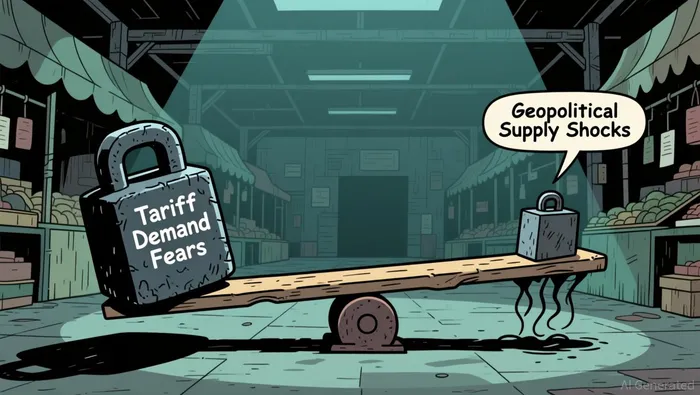
- Tariff Implementation: The most significant factor will be the actual scope and enforcement of new tariffs. Markets have learned to discount threats, as seen when oil prices remained steady after a recent announcement. The real impact will depend on the breadth and depth of these new duties—whether they trigger a fresh demand shock or simply extend current cost pressures. There is a risk that broad tariffs could slow global growth, affecting commodities such as oil and copper.
- Geopolitical Developments: Moves such as potential secondary tariffs on Russian oil can offset demand concerns linked to tariffs. Recent price movements have shown this dynamic, with declines from tariff fears balanced by threats of further sanctions. The pace and intensity of such geopolitical actions, including increased sanctions on Iran, will be a major source of volatility, driving prices based on headlines rather than fundamentals.
- Inventory and Supply Chain Signals: For commodities like copper, U.S. inventory levels are a critical indicator. The surge in American imports last year created substantial stockpiles, directly responding to trade policy. The direction for 2026 will depend on whether new tariffs on refined copper are imposed, which could lead to a drawdown in U.S. imports and a rebalancing of global supply chains.
- Consumer Price Impact: The gradual but significant pass-through of tariff costs to consumer prices was evident in 2025, with Chinese imports seeing an 8.5% annual price increase and at least 30% of costs reaching consumers. If this trend accelerates in 2026, it could strain household budgets and corporate profits, potentially reducing discretionary spending and introducing new economic challenges. While markets may have become numb to tariff news, a sustained rise in living costs cannot be ignored.
Disclaimer: The content of this article solely reflects the author's opinion and does not represent the platform in any capacity. This article is not intended to serve as a reference for making investment decisions.
You may also like
Morgan Stanley Jumps 4.51% on 3-Day Rally to $176.02

Why Copper Is Outperforming Gold And Silver In 2026

Live Nation Jumps 3.33% to 163.56 as Bullish Signals Converge
Zaif's $60 Million Breach: Examining Liquidity and Reserve Movements

Trending news
MoreCrypto prices
More





