
FPC’s Unconventional Approach Misses Insider Commitment—Are Savvy Investors Paying Attention?

Dividend and DRP: Routine Capital Raising, Not Insider Sentiment
The fund's approach to dividends and its Dividend Reinvestment Plan (DRP) is a conventional method for raising capital, rather than a reflection of insider optimism. Recently, the company announced a fully franked special dividend of AU$0.05 per share, equating to a 4.56% yield, scheduled for payment on September 25. Shareholders can opt into the DRP, which operates regularly by issuing shares at a 2.5% discount to the average price over three days.
This DRP structure is a typical way for funds to generate capital without launching a public offering. The fund's policy is to first acquire shares from the market to meet DRP demand; if these purchases are insufficient, new shares are issued. Oversight is provided by a corporate governance statement, ensuring adherence to the plan's guidelines—a standard disclosure that offers no insight into insider activity or sentiment.
In essence, the DRP is a financial tool designed for efficiency, not for signaling confidence. It provides shareholders with a discount and gives the fund a steady, cost-effective way to raise funds. However, the lack of insider buying in recent filings leaves a gap in the data. When insiders are inactive, the only information available is the operational mechanics, which are purely functional.
Insider Participation: Commitment or Uncertainty?
While the fund claims a high-conviction strategy, the real question is whether management has invested their own money. The fund aims to build a focused portfolio of 15-25 listed securities, implying thorough research and a contrarian stance. This is the hallmark of a smart-money approach, but true conviction is demonstrated through action, not just strategy.
Trading Strategy Overview: Absolute Momentum (Long-Only)
- Entry Criteria: Initiate a long position in FPC when the 252-day rate of change is positive and the closing price exceeds the 200-day simple moving average (SMA).
- Exit Criteria: Close the position if the price drops below the 200-day SMA, after holding for 20 trading days, or if a take-profit (+8%) or stop-loss (−4%) threshold is reached.
- Risk Controls: Take-profit set at 8%, stop-loss at 4%, and maximum holding period of 20 days.
Despite the fund's established history and the Founder & CIO Angus Geddes boasting over twenty years of experience, there is no evidence of insider buying or selling in the available disclosures. In an environment where institutional activity and regulatory filings are closely monitored for clues, the absence of such moves is telling. This lack of action suggests that insiders are neither betting against nor reinforcing their own thesis.

Ultimately, the fund's contrarian structure is a built-in feature, not a sign of personal investment from management. While the CIO's credentials are notable, they do not translate into visible insider participation. For investors, this creates ambiguity: you are supporting a concentrated, conviction-driven strategy without clear evidence that those making decisions are investing alongside you. In the absence of insider activity, the only capital at risk is yours.
Key Catalysts and Risks: Tracking Smart Money Signals
The fund's contrarian approach is about to face a significant test. The upcoming quarterly report will be a crucial indicator, revealing whether the concentrated investments are delivering the expected returns. Until then, investors should watch for any insider transactions involving FPC shares. A purchase would signal alignment, while continued inactivity, as seen in recent filings, indicates the CIO is not opposing his own strategy.
Another important metric is the fund's premium or discount relative to its Net Tangible Asset (NTA) value. This difference serves as a direct measure of market sentiment. A widening discount may reflect declining confidence in the fund's strategy, especially during periods of market turbulence. Conversely, a narrowing or positive premium could suggest that investors are beginning to appreciate the fund's contrarian approach. Monitoring monthly Morningstar reports will help track these shifts.
In summary, the true signals from smart money are found in performance data, insider transactions, and the NTA discount—not in DRP mechanics or governance statements. These are the indicators that will either validate or challenge the fund's high-conviction strategy. Until insiders act, the only stake in the game belongs to the investors.
Disclaimer: The content of this article solely reflects the author's opinion and does not represent the platform in any capacity. This article is not intended to serve as a reference for making investment decisions.
You may also like
German Industrial Production declines 0.3% MoM in February vs. 0.9% expected
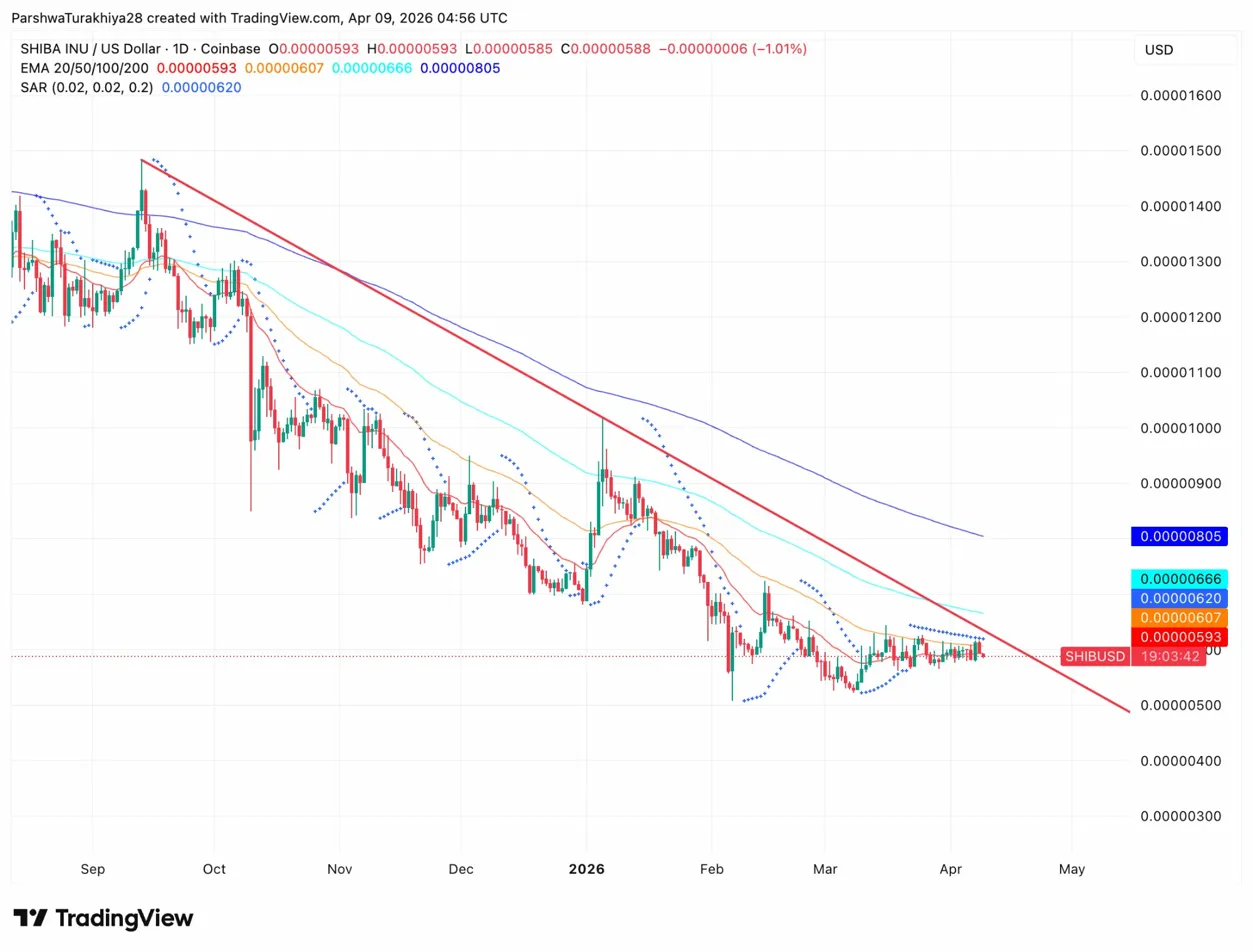
Shiba Inu Price Prediction: Burn Rate Up 102% But SHIB Cannot Clear A Single EMA
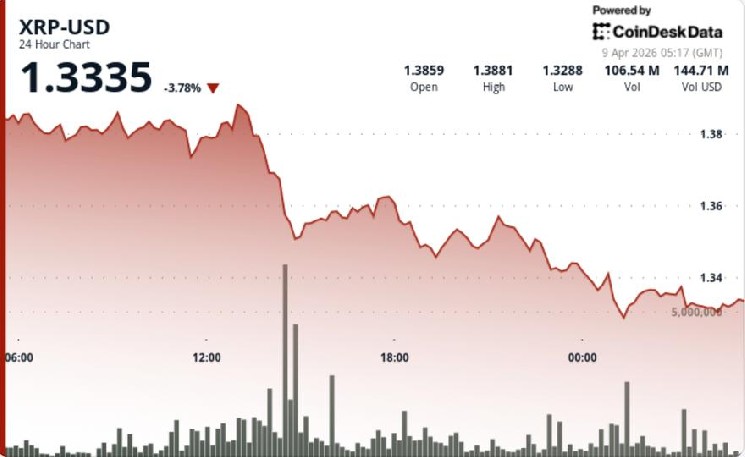
XRP slips 4% as selling pressure builds despite ETF inflows
Massive News: Cathie Wood Just Unloaded This Huge AI Semiconductor Stock
Trending news
MoreCrypto prices
More





