
IMF Spring Meetings 2026: Financial Leaders Confront 2022 Parallels as Global Divisions Challenge Multilateral Cooperation

2026 IMF-World Bank Spring Meetings: Navigating a New Era of Economic Strain
This year's IMF-World Bank Spring Meetings in Washington echo the challenges of the pandemic era, with finance leaders confronting inflation fueled by conflict, sluggish growth, and fractured global cooperation. However, today's circumstances are more precarious—policy reserves are depleted and debt burdens are heavier than before.
Looking back, the similarities are clear. In April 2022, the IMF lowered its global growth outlook to 3.6 percent as the Ukraine war reshaped economies. Now, the forecast for 2026 stands at 2.6 percent, a full point lower. Inflation remains a pressing concern, with US rates at 3.2 percent—mirroring the spike that previously prompted aggressive central bank action. Oil prices are expected to hover near $80 per barrel, close to the highs seen during the 2022 conflict.
What sets this period apart is the diminished capacity for error. In 2022, economies emerged from pandemic stimulus with relatively healthy balance sheets. Now, deficits are stubbornly high—at -7% of GDP in the US and -3% in Europe—and rising debt servicing costs have reduced the ability to provide support. The IMF's warnings about record debt and escalating borrowing costs have become reality, leaving central banks with fewer tools to counter stagflationary pressures.
Geopolitical fragmentation remains a persistent threat. In 2022, IMF chief economist Pierre-Olivier Gourinchas cautioned about a world split into rival blocs with separate currencies and payment systems. That risk has not faded; it has become more entrenched. Meanwhile, the mechanisms for institutional response are under strain. The consensus seen at the 2022 IMFC meeting will be challenged by deeper polarization and worsening debt issues in emerging markets.
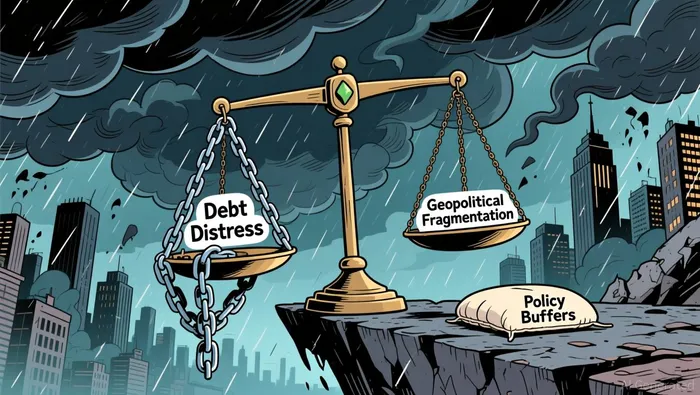
Ultimately, the crisis framework remains, but the ability to respond is far more limited.
Key Changes: Reduced Buffers and Increased Vulnerabilities
The 2026 crisis is driven by similar geopolitical factors as in 2022, but the economic foundation is notably weaker. Three major shifts have intensified risks: persistent deficits in advanced economies, a fractured global trade system, and a development finance structure that leaves the poorest nations exposed.
Absolute Momentum Long-Only Strategy Overview
- Entry Criteria: Buy SPY when the 252-day rate of change is positive and the closing price is above the 200-day simple moving average.
- Exit Criteria: Sell when the price drops below the 200-day SMA, after holding for 20 trading days, or if take-profit (+8%) or stop-loss (−4%) levels are reached.
- Risk Controls: Take-profit at 8%, stop-loss at 4%, maximum holding period of 20 days.
Backtest Results
- Strategy Return: 2.86%
- Annualized Return: 1.46%
- Maximum Drawdown: 2.65%
- Profit-Loss Ratio: 1.89
- Total Trades: 185
- Winning Trades: 2
- Losing Trades: 1
- Win Rate: 1.08%
- Average Holding Days: 0.16
- Max Consecutive Losses: 1
- Average Win Return: 1.93%
- Average Loss Return: 0.99%
- Max Single Return: 2.47%
- Max Single Loss Return: 0.99%
Advanced economies are entering this period with little fiscal flexibility. The US deficit is at -7% of GDP, and Europe's is at -3%. These figures highlight the limited resources available to central banks and treasuries when new shocks arise. While balance sheets were relatively strong after the pandemic, rising debt servicing costs have eroded the ability to shield households and businesses from inflation and weak growth.
Global trade growth has slowed to just 1.5% in 2026, with the IMF lowering its projection by 0.5 percentage points. This decline underscores how quickly the trading system has lost momentum since 2022, especially for emerging markets reliant on exports. Sluggish trade amplifies the challenges posed by higher financing costs and capital outflows.
Development finance reveals further weaknesses. The IMF's historic $650 billion SDR allocation provided vital liquidity, but distribution was uneven. Low-income nations received only about $21 billion, and many are now using up to 40% of their SDRs for essential needs, leaving little protection against future shocks. The Resilience and Sustainability Trust, designed to channel $45 billion in SDRs for climate and resilience, offers only a partial remedy.
Remittance costs remain a significant issue. Migrant workers send crucial funds home, but fees often exceed 50% in some corridors, far above the G20's 3% target for 2030. This inefficiency drains resources from developing economies and undermines household resilience.
Collectively, these factors mean the global system is less able to absorb shocks. The 2022 crisis tested international cooperation; the 2026 crisis will determine if such cooperation can even be mobilized given current financial constraints.
Investment Outlook: Identifying Concentrated Risks
With diminished capacity to absorb shocks, investors must focus on where stress is most acute and how to adjust their strategies. Evidence suggests a clear shift toward risk aversion, as diverging central bank policies create uneven pressures across markets and regions.
The policy divide is pronounced. The European Central Bank is expected to raise rates by +25 basis points to anchor expectations, while the US Federal Reserve is likely to hold steady, with only one rate cut anticipated in early 2027. This divergence supports the USD even as European growth slows to 0.8%. Markets have already adjusted, with overseas demand weakening as emerging market central banks use foreign reserves to stabilize currencies and finance higher oil imports.
USA Trend Snapshot
- Liberty All Star Equity Fund (NYSE): Price $5.730, Change -0.070 (-1.21%)

The risk-off environment is clear. Following the escalation in the Middle East, investors have shifted toward stagflationary assets: US stocks are down 8%, European markets by 10%, and emerging markets by 12%. The USD has strengthened by 2.5% on a trade-weighted basis, while gold has fallen 13% as countries draw down savings to cover energy costs. Yield curves have sharply bear-flattened, with short-term rates up 50–90 basis points and long-term rates up 40–70 basis points, reflecting expectations of hawkish central bank responses.
For investors, three key factors warrant attention:
- US 10-Year Yield: Expected to settle around 4.5%, but could rise further if conflict persists and inflation expectations increase.
- Currency Volatility: Emerging markets with triple deficits (fiscal, current account, energy) face heightened risk from capital outflows.
- Fed Rate Cut Timing: If the anticipated cut in early 2027 is delayed, emerging market capital flows could come under renewed pressure as growth slows.
Regional vulnerabilities are pronounced. Economies with triple deficits are at risk of recession as debt servicing costs rise and demand weakens. GCC countries, despite strong financial buffers, have seen growth forecasts cut by 2.1 percentage points due to exposure in trade, tourism, and real estate. Asia's expected growth boost for 2025 has disappeared. In contrast, Latin America is relatively shielded, with Argentina, Brazil, and Mexico benefiting from commodity exports.
Sectoral impacts are also distinct. Energy producers and defense industries gain from risk premiums and government spending, while energy-intensive sectors—such as transport, chemicals, and basic materials—face margin pressures from higher input costs and weak demand. Consumer-focused businesses struggle with reduced sentiment and purchasing power amid elevated fuel and food prices.
For investors, the market is pricing in a short-term inflation spike and hawkish central bank responses, but expects resolution within three months. This creates a window for recovery: S&P500 could rise 6%, Eurostoxx 5%. However, risks remain—prolonged closure of the Strait of Hormuz could push oil to $180 per barrel and trigger a Eurozone recession. Until the outlook clarifies, risk-off positioning is prudent, and the timing of the Fed's 2027 rate cut is a crucial turning point for emerging market capital flows.
Potential Catalysts and Scenarios: What Could Shift the Outlook?
The baseline scenario assumes the Middle East conflict stays contained, central banks treat inflation as temporary, and no major financial shocks occur. However, a few developments could dramatically alter this trajectory. Identifying which events could fundamentally change the outlook is key.
Downside risks are concentrated in three areas:
- Geopolitical Escalation: If the Middle East conflict expands and disrupts transit through the Strait of Hormuz, oil prices could soar above 80 USD/bbl, potentially exceeding $100. This would force the IMF to raise its inflation forecast and prompt central banks to respond more aggressively than the single Fed cut currently expected for early 2027.
- Financial System Stress: While regulated banks appear stable, vulnerabilities exist in private credit and related structures that have grown rapidly but remain lightly regulated. A crisis in these areas could freeze broader credit conditions, compounding the projected growth slowdown of 2.7% in 2026.
- Domestic Political Interference: In the US, election-year politics could limit the Fed's ability to manage inflation or force fiscal expansion that undermines debt sustainability. With deficits already at -7% of GDP, any loss of fiscal credibility would add a sovereign risk premium to borrowing costs.
Positive scenarios are possible but require specific developments. Rapid de-escalation in the Middle East could quickly reverse inflation trends. If supply chains normalize, trade growth could improve, and the IMF's 3.3 percent global growth forecast for 2026 might be sustained.
The IMF Spring Meetings themselves could serve as a catalyst. A new SDR allocation or targeted debt relief for vulnerable economies—especially those with triple deficits—could prevent a wave of sovereign distress. The Resilience and Sustainability Trust remains underutilized, and member states are watching for concrete commitments.
The binary nature of the outlook is critical for investors. The baseline expects resolution within three months and a broad recovery as the year progresses. However, a prolonged conflict or financial shock could upend this scenario entirely. Key indicators to monitor include oil prices, stability of emerging market capital flows, and any signs of delay in Fed rate cuts. While upside potential exists, it largely depends on the absence of escalation—a condition that is far from certain given the system's limited buffers.
Disclaimer: The content of this article solely reflects the author's opinion and does not represent the platform in any capacity. This article is not intended to serve as a reference for making investment decisions.
You may also like

Moomoo vs Robinhood 2026: You Won’t Believe the Final Outcome

History Repeating? April Setup Mirrors Last Cycle — 4 Altcoins Worth the Risk Right Now

Altcoins Eye New Highs: 5 Top Crypto Picks Riding the AI Boom Into the Next Bull Run

Trending news
MoreCrypto prices
More





