
VOO’s Affordable Advantage Encounters Pricey Valuations Amid Tech Sector Concentration and Potential Rotation Challenges

VOO: Balancing Low Costs and High Valuations
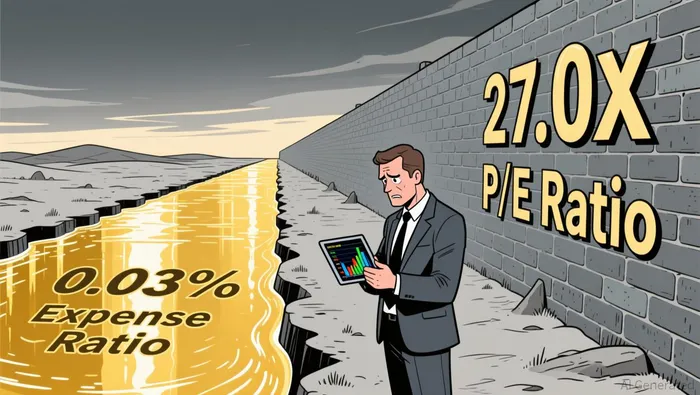
The Vanguard S&P 500 ETF (VOO) stands out for its exceptionally low expense ratio of 0.03%, giving investors a lasting advantage by minimizing fees and maximizing their share of future market returns. This approach offers a straightforward way to participate in the growth of the U.S. economy without the complexities of active management.
However, the ETF's current valuation presents a challenge. As of early April, VOO is priced at a trailing P/E ratio of 27.0x, which is elevated compared to historical norms. This leaves little room for mistakes, posing a dilemma for those who prioritize value. While the fund's low cost is a significant advantage, its high price creates a barrier for value-focused investors.
Rather than focusing on individual stock selection, investing in VOO means accepting the market's collective earnings at today's prices. The low expense ratio guarantees efficiency, but the current valuation reflects optimism about ongoing growth, especially from major technology companies. With Nvidia, Apple, and Microsoft representing nearly a fifth of the fund's assets, VOO's performance is closely tied to the trajectory of the AI sector.
For those investing with a long-term perspective, using a low-cost ETF to capture market returns is a proven method. However, this is not a classic value investment. Paying a premium for anticipated growth eliminates the margin of safety. While the low fees protect against excessive costs, they do not shield investors from paying too much for the underlying companies. The outcome now depends on whether the market can deliver on its lofty expectations.
Evaluating Owner Earnings and Portfolio Quality
For value-oriented investors, the focus shifts from yield to the strength and growth of the earnings generated by the ETF's holdings. VOO offers a market-weighted claim on the future profits of American businesses, relying on the collective performance of the S&P 500 rather than individual stock-picking.
This passive structure acts as a powerful engine for compounding returns. Historical data shows that index funds benefit from the overall upward trend in stock market values. VOO's dividend yield of 1.14% is modest, emphasizing capital growth over income. Quarterly dividends have increased steadily, but the main driver of returns is the reinvestment of earnings and the expansion of the businesses within the index.
The key question for disciplined investors is whether the quality of VOO's concentrated portfolio provides enough margin of safety to justify its higher valuation. While both VOO and VTI offer efficient, low-cost structures, VTI's lower P/E ratio comes with broader diversification and potentially slower growth.
Ultimately, the choice is not about which ETF is superior, but about which aligns with your outlook for the market. If you believe that the current growth story will persist and that the leading tech companies deserve their premium, VOO may be the right fit. If you are concerned about high valuations and concentrated risk, VTI's wider exposure and lower price may offer more protection. The value investor must honestly assess which approach matches their convictions.
Key Drivers, Risks, and What to Watch
For investors willing to wait, VOO offers a simple proposition: a cost-effective way to benefit from the long-term growth of U.S. businesses and profits. The main catalyst is time itself. As history shows, index funds capture the upward movement of the stock market. The fund's structural advantage—a minimal expense ratio of 0.03%—means investors retain more of their gains. Over decades, the compounding effect of the S&P 500's growth has rewarded those who remain invested.
The primary risk is a significant shift away from the growth and technology stocks that dominate VOO. This is a real concern, as the top 10 holdings in the S&P 500 now account for about 40% of the index, with tech making up nearly 35%. When a single sector drives performance, the ETF becomes vulnerable to changes in sentiment or economic conditions affecting those companies. A downturn or rotation could impact VOO's concentrated portfolio and its high valuation, currently at a trailing P/E of 27.0x.
- Monitor valuation: Keep an eye on VOO's P/E ratio and overall market valuations. A sustained rise toward or above 31 could signal excessive optimism and increase the risk of a correction.
- Watch economic cycles: Changes in economic growth could affect earnings, and a slowdown may shift performance from growth stocks to value stocks.
- Track sector rotation: Look for signs of investors moving away from mega-cap tech stocks, which would directly impact VOO's concentrated holdings.
In summary, value investors must weigh the benefits of low costs against the risks of high valuations. The margin of safety lies not in the price paid, but in the patience to withstand volatility in a concentrated portfolio. While VOO's structure ensures efficiency, staying invested through changing market narratives requires discipline. The long-term trend remains the catalyst, but the risk is the possibility of paying too much for future growth.
Disclaimer: The content of this article solely reflects the author's opinion and does not represent the platform in any capacity. This article is not intended to serve as a reference for making investment decisions.
You may also like
IVF Hartmann's 2.7% Yield: Real Income or Dividend Trap Before the Ex-Date?

Ensurge Micropower’s Going-Concern Warning Ignites Binary Event-Driven Setup
Top Meme Coin to Explode in 2026: APEMARS Surges To Stage 16 as MemeCore and FLOKI Trends Grow

ENAU's Sudden Drop Lacks Follow-Through Volume

Trending news
MoreCrypto prices
More





