
Carl's Jr. Franchisee Files for Bankruptcy Amid Squeezed Margins, Rising Costs, and Sector-Wide Strain

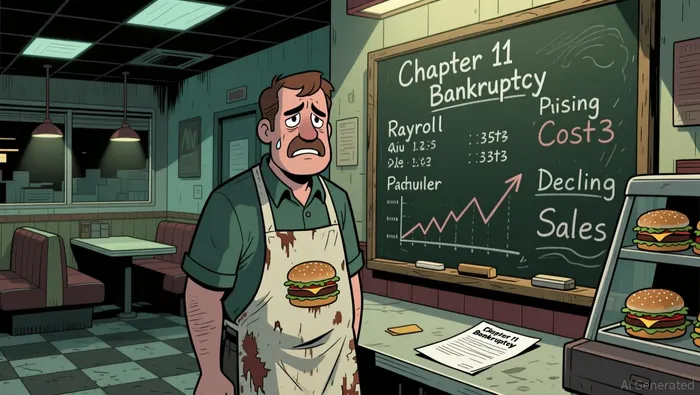
The headline is clear: a major Carl's Jr. franchisee with 59 locations filed for Chapter 11 bankruptcy, blaming California's $20 minimum wage. That's the official story. But the real world often tells a different one. Let's kick the tires.
First, the numbers on the bankruptcy filings themselves raise a red flag. The court papers list assets and liabilities for each of the involved entities as less than $50,000. For a business that operates nearly 60 restaurants, that's a very small amount. It suggests the bankruptcy is more about the legal structure and liabilities tied to those stores, not a sudden, massive collapse of a multi-million-dollar operation. The scale of the problem appears more contained than the headline implies.
Then there's the franchisee's own history. The company's website claims it once drove profits and sales "far above the brand average." That's a strong statement. It points to a past that was clearly profitable, not a business that was always struggling. The bankruptcy filing itself notes the operator generated "substantial revenue" and had $19.9 million in net sales in the first quarter of this year. Yet, even with that revenue, it posted a $2 million net loss for the same period. That's the core tension: high sales but thin margins.
So, is the $20 wage the sole culprit? The franchisee's CEO cites it as a key driver, along with "reduced marketing effectiveness" and "lack of innovation at the franchisor level." That's a broader list of problems. The franchisor, CKE Restaurants, has been clear that this is an "individual's financial and business circumstances" with no impact on other locations. That's likely true, but it doesn't mean the franchisee's story is simple.
The bottom line is that this bankruptcy is a red flag for the franchisee's specific model. It shows how thin margins can be when a business faces rising costs, even if it once outperformed the brand. The $20 wage is a headline-grabbing pressure point, but the real story is one of a franchisee whose past strength couldn't withstand a combination of persistent cost pressures and operational challenges. It's a reminder that in fast food, even a large operator can be vulnerable when the math gets tight.
The Pressure Cooker: Labor, Sales, and Competition
The franchisee's story isn't just about one law. It's about a pressure cooker where multiple forces converged to squeeze margins thin. The $20 minimum wage, implemented in April 2024, is a direct and significant cost increase. For a large operator with 59 locations, that's a massive payroll hit. The CEO points to it as a key driver, and the evidence shows it "materially increased operating expenses." That's a common-sense cost shock that any business must absorb.
But labor costs are only one side of the equation. On the revenue side, the sector is facing headwinds. Total consumer spending at Carl's Jr. declined 4% in 2025. That's a sector-wide challenge of price-sensitive customers. When people are tightening belts, they're less likely to spend on a premium burger, especially if they can get a similar meal cheaper elsewhere. This drop in sales volume makes it harder to cover fixed costs, including that new, higher wage bill.
The pressure isn't isolated to Carl's Jr. The fast-food sector has seen multiple franchisees for chains like Applebee's, Subway, and Popeyes Louisiana Kitchen file for bankruptcy recently. This isn't a fluke; it's a sign of broader industry strain. Increased competition, as the franchisee noted, means more choices for consumers and more pressure on pricing. At the same time, the franchisee cited "reduced marketing effectiveness" and "lack of innovation at the franchisor level" as contributing factors. If the brand isn't pushing new products or effective campaigns, it's harder to drive traffic and sales, especially against rivals.
Put it all together: rising costs, slowing sales, and a crowded field. For a business already operating on thin margins, this is a classic recipe for trouble. The $2 million net loss in the first quarter of this year, despite $19.9 million in net sales, shows the math got tight fast. The bankruptcy filing itself notes the company is now in default on rent and royalty payments, a direct result of this compounding strain. It's a reminder that in the real world of fast food, even a large operator can be vulnerable when the pressure cooker gets too hot.
The Real-World Smell Test: What the Numbers and the Ground Tell Us
Let's apply the common-sense smell test. The official claim is that California's $20 minimum wage is the primary cause. That's a big cost increase, and it's real. But is it the whole story? The numbers and the ground suggest a more complex picture.
First, consider the hidden costs. An independent study from UC Santa Cruz found that the wage hike may have led to reduced hours and fewer employees qualifying for benefits. That sounds like a potential savings for the franchisee, right? Not necessarily. If the law forced a shift from full-time to part-time workers, it could create operational instability, increase training costs, and make scheduling harder. That's a hidden friction that eats into efficiency and service quality, which matters at a burger chain.
Then there's the franchisor's take. CKE Restaurants, the parent company, stated it is aware of the filing but doesn't expect a broader impact on operations. That's a key point. The brand is treating this as an isolated case, not a systemic failure. Their own sales data shows a 4% decline in consumer spending at Carl's Jr. in 2025, which points to a broader industry headwind of price-sensitive customers. If the brand itself is struggling, it's harder to blame a single wage law for one operator's collapse.
Finally, look at the operator's own financial picture. The company's website mentions it invests in multifamily real estate. That's a significant diversification. But it also means the CEO's personal financial risk is spread across two volatile industries: restaurants and property. If the real estate market cooled or required unexpected capital, that could strain the entire operation, pulling cash away from the restaurants. The bankruptcy filing doesn't say which side failed first, but it shows the risk of a concentrated bet.
So, is the $20 wage the sole culprit? The smell test says no. It's likely a major pressure point, but not the only one. The combination of a sector-wide sales decline, potential hidden labor costs from the wage law, and the added financial strain of a real estate investment creates a perfect storm. The franchisee's past strength-driving profits "far above the brand average"-shows the model can work. But when multiple forces hit at once, even a strong operator can falter. The bankruptcy is a warning about the fragility of thin margins when a business is stretched across too many fronts.
Catalysts and What to Watch
The bankruptcy filing is a warning shot, but the real test is what happens next. The key catalysts will tell us if this is an isolated case or a sign of deeper strain for the chain.
First, watch for any closures of the 59 Carl's Jr. locations operated by this franchisee. The company says it has "no impact on the operations of any other Carl's Jr. locations", but that promise hinges on the franchisee's ability to restructure without shuttering stores. If locations close, it signals a direct operational impact and a loss of brand presence in those markets. For now, the operator hasn't stated whether any will close, leaving that as a major open question.
Second, monitor the broader fast-food sector for more franchisee bankruptcies. The recent wave of filings for chains like Applebee's, Subway, and Popeyes Louisiana Kitchen suggests the pressure is not unique to Carl's Jr. If more franchisees join this list, it points to a systemic industry headwind-likely a mix of high costs, competitive pressure, and consumer spending shifts-that the $20 wage law may be amplifying, not creating alone.
| Total Trade | 12 |
| Winning Trades | 7 |
| Losing Trades | 5 |
| Win Rate | 58.33% |
| Average Hold Days | 16.92 |
| Max Consecutive Losses | 3 |
| Profit Loss Ratio | 0.92 |
| Avg Win Return | 2.59% |
| Avg Loss Return | 2.68% |
| Max Single Return | 3.91% |
| Max Single Loss Return | 4.46% |
Finally, watch for the upcoming report from the California Fast-Food Council, established by the $20 wage law. This body is meant to provide data on the law's real-world effects. Its findings could either validate the industry's warnings of job losses and automation or support the unions' claims of minimal harm. Either way, it's a crucial data point for understanding the full impact of this policy on restaurant economics.
Connect these catalysts to the earlier smell test. The evidence points to a perfect storm: a sector-wide sales decline, a major cost shock, and a franchisee already stretched across multiple investments. If more franchisees follow, it confirms the storm is real. If only this one operator fails, it may have been a case of bad timing and bad luck, not a broken model. The coming months will tell us which story is true.
Disclaimer: The content of this article solely reflects the author's opinion and does not represent the platform in any capacity. This article is not intended to serve as a reference for making investment decisions.
You may also like
Japanese Yen strengthens as declining oil prices help alleviate stagflation worries in Japan
CHF: Safe-haven puzzle and SNB signals – Commerzbank
InterContinental Hotels Group PLC Announces Transaction in Own Shares - April 14
USDT and USDC Activity Hits 2026 Low on Ethereum
Trending news
MoreCrypto prices
More





