
3 Companies With Large Cash Reserves Where the Security May Be Misleading

Rethinking the Value of Holding Cash
At first glance, maintaining a net cash position may seem like a prudent safeguard. However, in today’s economic landscape, it can just as easily indicate that a company lacks productive opportunities for its capital, leaving funds unused.
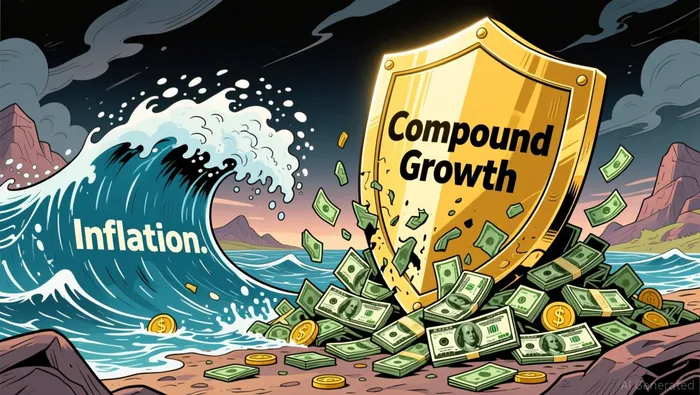
Since 2021, the dollar has lost 20% of its purchasing power, steadily diminishing the real worth of cash reserves. Companies that accumulate cash aren’t necessarily demonstrating strength—they’re often accepting a steady erosion of their financial power.
The market has also evolved. From 2020 to 2024, risk-taking was widely rewarded. But with about 40% of S&P 500 companies projected to post losses in 2025, the environment has shifted. In this context, holding cash is less a sign of caution and more a reflection of a lack of proactive strategy.
Case Studies: When Cash Becomes a Liability
- Calavo Growers (CVGW-0.18%) has $19.66 million in net cash, yet has seen annual sales drop by 14.7% for three consecutive years.
- DistributionNOW holds $227 million in net cash, but its revenue has declined by 4.3% annually over the past five years.
- Moderna boasts a $5.23 billion cash reserve, while its sales have plummeted 54.1% over two years.
These examples aren’t of robust companies waiting for the right moment—they’re businesses struggling to grow, generate profits, or find meaningful uses for their capital. Instead of serving as a protective moat, their cash reserves highlight a lack of strategic direction.
Calavo Growers (CVGW): Cash-Rich but Lacking Momentum
Calavo Growers’ $19.66 million net cash—about 4.1% of its market value—may appear reassuring, but it conceals deeper issues. The company’s annual sales have consistently fallen by 14.7% over the past three years, indicating ongoing challenges in connecting with customers. With revenues at $688.3 million, Calavo lags behind larger rivals that benefit from scale.
A gross margin of just 10.6% points to commoditized products, unfavorable unit economics, and intense competition. Such slim margins mean that any disruption—whether from weather, logistics, or retailer demands—can quickly erase profits.
Despite these headwinds, Calavo’s stock trades at $27.25 with a forward P/E of 15.9x, a valuation that doesn’t fully reflect its structural challenges. The share price has climbed 27.03% year-to-date and delivered a 19.2% annualized return, but this rally isn’t supported by improved fundamentals. Investors may be pricing in a turnaround that has yet to materialize.
For value seekers, this is a classic pitfall. The cash position and a 2.9% dividend yield may look appealing, but without revenue growth and with razor-thin margins, the cash is simply idle capital as the company loses ground to competitors. The market’s optimism isn’t backed by the underlying numbers.
Bruker (BRKR): The Illusion of Cash Flow
Bruker’s situation is even more subtle than Calavo’s. While Calavo’s cash sits unused, Bruker does generate cash—but at a minimal rate. Its trailing twelve-month free cash flow margin is just 1.4%, meaning only $1.40 of every $100 in revenue translates to free cash. This is hardly a sign of financial strength.
Bruker’s core business has underperformed for the past two years, with organic revenue growth stalling. For a company with a long history, this signals a fundamental shift for the worse. The market now expects acquisitions to drive growth—a costly and risky strategy.
Even more troubling, Bruker’s free cash flow margin has contracted by 12.4 percentage points over five years, indicating a structural decline. The company must now spend much more just to maintain its position, undermining the cash conversion that value investors typically seek.
With a forward P/E of 16.8x, investors are paying a premium for shrinking cash flow and a stagnant core business. The appearance of strong cash generation is misleading; in reality, Bruker is burning through more capital simply to tread water.
The Power of Productive Capital: A Better Approach
Many investors turn to cash for security, but true protection comes from owning assets that grow and compound value. In today’s climate—marked by rising inflation and higher interest rates—holding cash can be especially risky. From early 2022 to now, the S&P 500 delivered a 42% total return, more than double the 18% from money market funds. Despite market swings, equities have provided real protection against inflation.
The key difference isn’t risk appetite—it’s asset quality.
Take Nvidia, for example. Between December 2019 and December 2024, its stock soared by 2,183%. Axon Enterprise achieved a 711% return over five years. These aren’t speculative bets; they’re companies with durable competitive advantages that reinvest earnings for exponential growth. Nvidia’s leadership in AI and Axon’s dominance in law enforcement technology create opportunities to reinvest capital and build lasting value.

This is the crucial distinction. Companies like Calavo, DistributionNOW, and Moderna may have large cash balances, but without a competitive edge, that capital remains underutilized or is depleted by declining operations. In contrast, businesses with real moats don’t need vast cash reserves—they generate superior returns on invested capital, far outpacing what cash can earn in a bank.
Guidewire Software, for instance, holds just $307.4 million in net cash, a mere 2.7% of its market cap. Yet its software supports hundreds of insurance companies in 42 countries, with billings growing by an average of 20.7% over the past year. Guidewire reinvests its cash flow into expansion, not just survival—demonstrating smart capital allocation.
With $8.25 trillion now parked in money market funds—a record high—many investors are mistaking liquidity for safety. But when inflation rises and interest rates climb, cash loses value in real terms. True financial security comes not from what you hold in reserve, but from owning assets that consistently earn, grow, and protect your purchasing power even in challenging times.
Disclaimer: The content of this article solely reflects the author's opinion and does not represent the platform in any capacity. This article is not intended to serve as a reference for making investment decisions.
You may also like
Post-Ceasefire Crypto Outlook: Hangover or Buying Opportunity?
Dollar’s Global Pressure Challenge: Will the Strait of Hormuz Reopening Keep the Ceasefire Rally Going?

Sam Altman's Molotov Attack Could Force a Guidance Reset in AI Infrastructure Growth Stocks

Trending news
MoreCrypto prices
More





