
Dollar’s Global Pressure Challenge: Will the Strait of Hormuz Reopening Keep the Ceasefire Rally Going?

Geopolitical Turbulence Shakes Market Sentiment
The collapse of negotiations with Iran sent a jolt through global markets, swiftly overturning the previous week’s optimistic, risk-friendly mood. After the U.S. dollar had been on track for its steepest weekly decline since January, it quickly rebounded from a one-month low, climbing back above the 99.00 mark. This abrupt reversal underscores how delicate market sentiment is—one major event can rapidly shift investors from betting on global growth to seeking the safety of the dollar.
Market reactions were mixed and revealing. The dollar’s surge reflected a renewed demand for safe assets, with its index bouncing from 98.50 and stabilizing above 99.00. This uptick was triggered by escalating tensions in the Middle East, as Iran closed the Strait of Hormuz in response to an Israeli strike, threatening a fragile ceasefire. This newfound dollar strength contrasted sharply with the previous week’s downward trend, which had been fueled by hopes of a diplomatic breakthrough. Investors found themselves torn between the immediate threat of conflict and lingering optimism for a peaceful resolution.
The Australian dollar provided a vivid illustration of this tension. As a currency closely tied to commodities and global risk appetite, it rallied on news of the ceasefire, reaching 70.40 U.S. cents. This move signaled a shift away from safe-haven assets toward those more sensitive to economic growth. The AUD’s jump highlighted how powerful the initial ceasefire announcement was in overriding risk concerns, at least temporarily. However, whether these gains can last now depends on concrete developments, such as the reopening of the Strait of Hormuz, as markets await the outcome of upcoming talks in Islamabad.
Macro Forces: Real Yields, Inflation Gaps, and the Dollar’s Long-Term Direction
While geopolitical shocks can cause short-term volatility, the dollar’s broader trajectory is being shaped by deeper economic trends. The Federal Reserve’s ongoing commitment to tight monetary policy continues to provide a structural boost for the greenback. By keeping the federal funds rate in the 3.5-3.75% range, the Fed ensures real interest rates remain high, supporting the dollar’s value. This hawkish stance is not a brief pause but the current policy framework, setting a foundation for continued dollar strength.
Adding to this, inflation trends are expected to diverge across regions. While global core inflation should stay steady, forecasts from J.P. Morgan Research suggest U.S. inflation will pick up even as European inflation cools. This widening gap typically strengthens the dollar, as it signals tighter monetary conditions in the U.S. compared to potential easing in Europe. Markets are starting to reflect this divergence, consistent with the dollar’s historical pattern of rallying when U.S. inflation outpaces that of its major trading partners.
However, this underlying strength faces technical headwinds. Recently, the U.S. Dollar Index (DXY) fell below 99.00, reaching a one-month low and breaking through a key support level. This technical weakness has shifted the short-term narrative, and the recent geopolitical-driven bounce must overcome this entrenched downtrend. The index’s inability to reclaim 99.50 and the 50-day moving average now acting as resistance point to a market lacking confidence in a sustained rally. For the dollar to build on gains from the Iran situation, it must break back above 99.50 and establish that level as a new support.
In summary, there is a push and pull between longer-term macro trends and short-term market noise. While Fed policy and inflation divergence favor a fundamentally strong dollar, recent technical breakdowns show that risk sentiment and positioning can drive significant deviations. The ceasefire news offered a brief reversal of the downtrend, but the dollar’s next direction will depend on whether this geopolitical boost can withstand technical weakness and the broader forces of real yields and inflation.
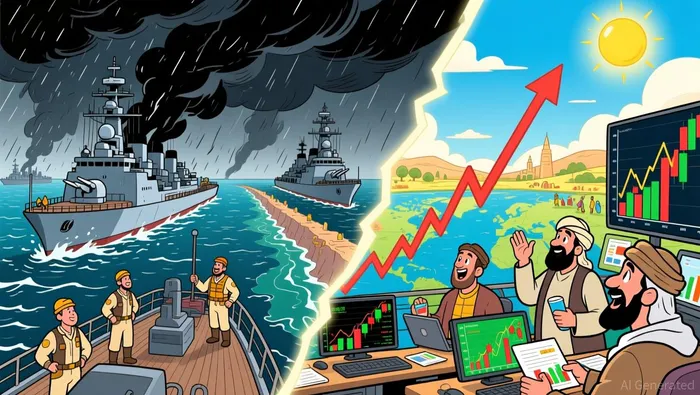
Commodities: Balancing Risk Premiums and Economic Fundamentals
Although geopolitical events can cause sharp, short-lived swings, the longer-term outlook for commodities is determined by broader economic dynamics. The market’s immediate response to the ceasefire was telling: oil prices dipped while the Australian dollar surged, reflecting a classic move from safe assets to riskier ones. This highlights how sensitive energy prices are to perceived geopolitical threats. Any lasting recovery in oil prices will likely depend on the reopening of the Strait of Hormuz. Until then, the ceasefire simply removes a key risk premium that had previously driven prices higher.
Yet, this short-term volatility is set against the backdrop of the dollar’s strength. The Fed’s policy rate of 3.5-3.75% keeps real interest rates elevated, supporting the greenback. With J.P. Morgan predicting rising U.S. inflation and easing in Europe, the dollar is likely to remain strong, which generally puts downward pressure on commodities priced in dollars. A stronger dollar makes these assets more expensive for international buyers, limiting their upside potential.
From this perspective, the main driver for commodities remains the global cycle of growth and inflation. Geopolitical events like the Iran talks can cause sharp, temporary price swings, as seen in the recent 50% spike in near-term oil futures during the initial conflict, followed by a weaker long-term outlook. Notably, longer-term inflation expectations have remained steady, suggesting that the underlying economic cycle is unchanged.
Ultimately, commodities are being shaped by a hierarchy of influences. For now, the reduction in geopolitical risk is providing a boost, but the dollar’s structural strength—anchored in U.S. monetary policy and inflation trends—sets a ceiling on prices. Sustainable moves beyond this range will require a fundamental shift in the macroeconomic environment, not just changes in headlines.
Key Factors to Watch: What Will Drive the Next Market Move?
The future direction of the dollar and commodities will depend on several critical developments. The initial boost from geopolitical events has set the stage, but lasting momentum requires concrete progress. The most immediate test is whether the Strait of Hormuz reopens. As highlighted, markets are watching closely for signs that shipping can resume; without this, recent gains in the Australian dollar and other risk assets may quickly fade, and the dollar could strengthen again as risk premiums are recalibrated.
Another crucial factor is the Federal Reserve’s policy direction. The central bank’s current target rate of 3.5-3.75% underpins the dollar’s structural advantage. Any changes in Fed communications or economic data that hint at a shift from this hawkish stance would be significant. Recent FOMC minutes noted that the conflict has pushed near-term inflation expectations higher, but longer-term inflation projections remain steady, indicating that the core economic outlook is stable. Investors should watch for any future data or statements that suggest a change in the inflation outlook or the need for continued policy restraint.
Finally, the technical picture for the dollar remains important. The index has broken below the 99.00 threshold, a key support level, and its 50-day moving average has shifted from support to resistance. For risk appetite to persist, the dollar must reclaim 99.50 and reestablish 99.00 as support. Failure to do so would confirm the bearish momentum and could further weigh on commodities. Conversely, a decisive move above 99.50 would reinforce the dollar’s structural strength and cap commodity prices.
In conclusion, the recent geopolitical developments have opened a temporary window for market movement. The dollar’s next significant trend will be determined by the interplay of three factors: the reopening of a vital shipping route, the Fed’s policy consistency, and the dollar’s technical resilience. Until these elements align, investors should expect continued caution and testing in the markets.
Disclaimer: The content of this article solely reflects the author's opinion and does not represent the platform in any capacity. This article is not intended to serve as a reference for making investment decisions.
You may also like
Infinex Market Dynamics Shift Amid Circle Expansion And Regulatory Milestones

BTC recovery fragile, Iran war fallout to 'dominate' markets in 2026: Analyst
Corporate Bitcoin Flows: Record Buying vs. The Middleman Premium

Sable Offshore Resumes Santa Ynez Production Exceeding 50,000 bpd—A Closer Look at the Real Supply Effects

Trending news
MoreCrypto prices
More





