
Zeta Global, National Bank Holdings, and Ferroglobe Are Trading at Over 48% Below Their True Worth—Does This Offer a Sufficient Margin of Safety?

Understanding Value Investing: Principles and Approach
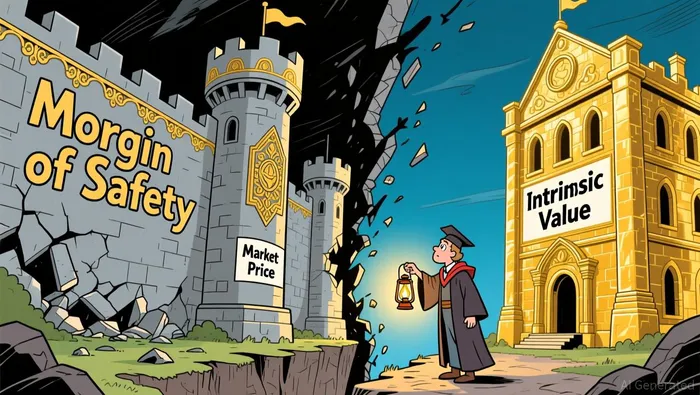
Value investing is fundamentally about exercising patience and maintaining discipline. Rather than being swayed by daily market fluctuations, this strategy centers on a single, crucial question: what is the genuine value of a business, regardless of current market sentiment? This true value, known as intrinsic value, represents the present worth of all the future cash flows a company is projected to produce. The objective is to spot a significant difference between this intrinsic value and the stock’s current market price. This difference, referred to as the margin of safety, acts as a protective cushion for investors in case their value estimates are overly optimistic or unexpected challenges arise.
Unlike approaches that focus on technical analysis or assume markets are always rational, value investing is built on the belief that human emotions—such as fear and greed—can push prices away from underlying fundamentals. By calculating intrinsic value, value investors look to buy when pessimism dominates and sell when optimism prevails, a philosophy that has guided many successful investors over time.
Spotlight on Discounted Stocks: Identifying Opportunities
Recent stock screeners have highlighted several companies trading well below their estimated fair values. Among them are Zeta Global Holdings (ZETA), National Bank Holdings (NBHC), and Ferroglobe (GSM), each with a discount greater than 48%. These are not minor mispricings—they represent significant potential for upside if the market eventually acknowledges the companies’ underlying strengths. However, for value investors, the appeal is not just in the size of the discount. The real attraction lies in the resilience of each company’s competitive advantages and the likelihood that specific catalysts will help close the gap between market price and intrinsic value. The margin of safety is only as strong as the business moat that supports it.
Company Deep Dive: Business Models, Competitive Advantages, and Valuation Gaps
Let’s take a closer look at three companies identified for their substantial discounts, focusing on the strength of their business models and the breadth of their competitive moats.
Lazard (LAZ): A Trusted Name in a Volatile Sector
Lazard is a global leader in financial advisory and asset management, generating steady fee income from both lines of business. With about $226 billion in assets under management, Lazard’s scale is impressive. Its competitive edge comes from long-standing client relationships and a unique “glocal” approach—combining global research with local expertise to navigate complex regulatory environments. This relationship-driven model is not easily replicated by newcomers.
However, Lazard’s valuation faces pressure due to the cyclical nature of its investment banking segment. When deal activity slows, revenues and profits can drop sharply. This creates a contrast between the stable, long-term value of its asset management business and the volatility of its advisory arm. The current discount may reflect the market’s focus on short-term headwinds, potentially underestimating the enduring value of Lazard’s brand and global network.
Afya (AFYA): Building a Lasting Moat in Brazil’s Healthcare Education
Afya stands out for its essential role in Brazil’s healthcare sector. As the country’s largest medical education provider, Afya operates both physical campuses and a digital platform, addressing a critical national need. The company trains a significant portion of Brazil’s doctors, with 70% of graduates remaining in underserved areas. Its digital platform, used by 350,000 physicians, offers AI-driven tools and real-time disease monitoring, further strengthening its position.
This integrated, mission-driven approach has created a robust and defensible moat. Afya has quadrupled in size since 2016 through strategic acquisitions and quality improvements. However, recent analyst concerns—such as BofA’s cautious outlook and UBS’s warnings about increased spending—highlight the risks of scaling this impactful model, including significant near-term investment and execution challenges.
National Bank Holdings (NBHC): Leveraging Local Strengths
National Bank Holdings, trading at a 48.7% discount to estimated fair value, is a regional bank with a strong local presence and a stable deposit base. Regional banks like NBHC benefit from deep relationships with local businesses and consumers, providing a reliable, low-cost funding source for lending and other services.
The main challenge for such banks is their sensitivity to interest rate changes and credit risk. Rising rates can squeeze profit margins, while economic downturns can increase loan defaults. The steep discount may reflect concerns about the bank’s ability to grow profitably in a shifting rate environment or its exposure to local economic cycles. For value investors, the key question is whether the current price sufficiently accounts for these risks, or if it presents an attractive entry point into a stable franchise.
Comparing Risks and Catalysts: What Could Narrow the Discount?
For these undervalued stocks to realize their potential, specific catalysts must emerge, while significant risks could keep the gap wide. Achieving intrinsic value is not guaranteed—it depends on both execution and external factors.
- Lazard: The main driver is continued growth in its asset management division, supported by $226 billion in assets under management. Key indicators include net inflows and total AUM growth. Recent figures show positive momentum, with $4.2 billion in net inflows in February. However, the risk remains that prolonged sector-wide valuation compression could keep the stock price low, regardless of business performance.
- Afya: The catalyst is successful execution of its expansion plans and the scaling of its integrated model. The company’s digital platform, now used by 350,000 doctors, is a key milestone. Risks include cautious analyst sentiment and the challenges of operating in regulated sectors, which could delay growth and impact profitability.
- National Bank Holdings: The focus is on maintaining stable net interest margins and growing the loan portfolio profitably. The main risks are tied to the broader economic cycle and regulatory changes, which could affect credit quality and capital requirements. The current discount may already reflect these vulnerabilities, but the bank must avoid significant deterioration in its core business.
Ultimately, closing the valuation gap requires patience and attention to each company’s unique drivers. For Lazard, it’s about asset management momentum; for Afya, it’s about executing expansion; and for NBHC, it’s about economic resilience and credit quality. The margin of safety is substantial, but the catalysts are long-term and require disciplined execution.
Key Takeaways for Value Investors
Examining these deeply discounted stocks offers clear lessons for patient value investors. The central tenet remains: intrinsic value defines a business’s true worth, and the margin of safety is the gap between that value and the market price. While each company presents a notable discount, the journey to closing that gap varies. The strength of the competitive moat and the clarity of the path to value realization are critical factors.
- Lazard: Its moat is built on trust and a global-local strategy, but faces cyclical headwinds. Investors should monitor asset management inflows and AUM growth as leading indicators, even if sector sentiment remains weak.
- Afya: The company’s wide moat is rooted in social necessity, but success depends on executing its ambitious expansion. Investors should track progress on digital platform adoption and expansion milestones, while being mindful of ongoing investment and analyst skepticism.
- National Bank Holdings: The bank’s advantage lies in its deposit franchise. The main focus should be on trends in loan growth and net interest margins, ensuring the bank weathers economic cycles without significant credit deterioration.
Ultimately, the true test of any value investment is whether the company’s intrinsic value grows enough to justify its current price. This requires a long-term outlook and a focus on the fundamental drivers of cash flow, rather than short-term market noise. For disciplined investors, these discounted stocks offer potential opportunities, but they require careful monitoring of business-specific indicators and the patience to wait for the market to recognize the value being created over time.


Disclaimer: The content of this article solely reflects the author's opinion and does not represent the platform in any capacity. This article is not intended to serve as a reference for making investment decisions.
You may also like
PENGU Token Maintains $417.8M Market Cap Amid Brand Expansion and Structural Revenue Disconnect

Trump Moves to Choke Iran’s Ports Without Closing the World’s Oil Lifeline, CENTCOM Confirms
Ethereum drops 3.2% as $2,300 resistance stalls recovery, key support at $2,110 tested
Top Altcoin to Watch in 2026: BlockDAG, Avalanche, Litecoin, & Toncoin Lead the Market

Trending news
MoreCrypto prices
More





