
Walmart’s #1 Retail Ranking Hides a High-Pressure Test of Cost Control and Consumer Loyalty

The National Retail Federation's 2026 list is a snapshot of scale, not a verdict on current health. It ranks retailers solely on retail-specific revenues, excluding corporate income from non-retail operations. To qualify, a company must have a direct investment in at least three countries. This methodology focuses on the core business of selling goods to consumers, globally.
Walmart kept its #1 spot based on its 2025 retail revenue performance. The top tier of the list remained largely unchanged from last year, with AmazonAMZN+2.02%, Schwarz Group, Aldi, CostcoCOST-3.25%, Ahold Delhaize, and Carrefour all retaining their positions. This stability shows the list measures established scale and geographic reach, not recent operational momentum.
In other words, this ranking is a backward-looking audit of a company's size and international footprint. It tells you WalmartWMT-1.83% is still the biggest retailer by the narrowest definition of its core business. It does not tell you if Walmart's stores are more profitable this quarter, if its online sales are accelerating, or if its recent investments are paying off. For that, you need to kick the tires on the actual business.
Why Walmart Wins: The Operational Engine
The #1 ranking isn't a fluke. It's the result of a business built to win on scale, sourcing, and brand loyalty. Walmart's engine runs on three tangible strengths that keep it ahead.
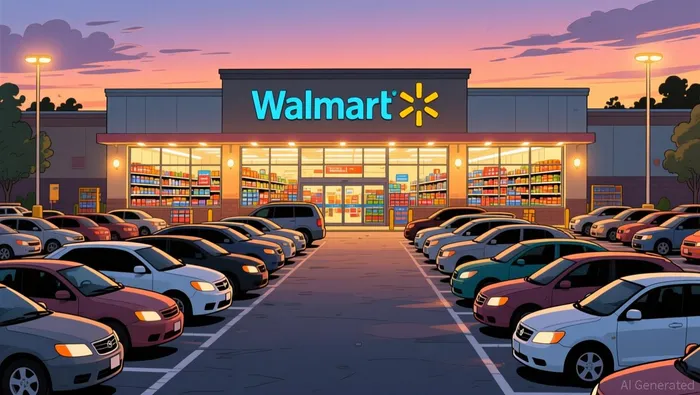
First, its sheer size is a weapon. The company's massive distribution network allows it to source goods directly from manufacturers in huge volumes. This gives it unmatched power to negotiate low prices, which it passes to consumers. In a world of rapidly changing tariffs and commodity costs, this scale is a buffer. It can absorb some pressure and still offer the low prices that draw millions in. You can see this in action at any Walmart store-shelves are full, prices are low, and the parking lot is often packed.
Second, Walmart has built a fortress of trust with its private label brands. These aren't afterthoughts; they are staples. The company's private label brands are becoming trusted staples, with nearly every household buying them. This builds fierce brand loyalty and protects profit margins. When a customer buys a Walmart brand, they're not just getting a cheaper alternative; they're getting something they've come to rely on. This loyalty is harder for competitors to crack than a single discount promotion.
| Total Trade | 15 |
| Winning Trades | 9 |
| Losing Trades | 6 |
| Win Rate | 60% |
| Average Hold Days | 15.07 |
| Max Consecutive Losses | 2 |
| Profit Loss Ratio | 1.41 |
| Avg Win Return | 5.91% |
| Avg Loss Return | 3.9% |
| Max Single Return | 9.28% |
| Max Single Loss Return | 5.4% |
Put simply, Walmart wins because its operational engine is built for efficiency, trust, and scale. It's a simple setup: low prices from massive buying power, reinforced by loyal private brands, all powered by a global network. When the real-world test is a full parking lot and a shopping cart full of trusted staples, Walmart's model still passes the smell test.
The Real-World Smell Test: Trade, Costs, and Consumer Demand
The #1 ranking is a testament to Walmart's scale, but that scale is being tested by a storm of external pressures. The real-world business is happening in a landscape of rapidly changing tariffs and supply chain pandemonium, while consumers are making unexpected trade-offs that challenge old retail rules.
The U.S. tariff regime has been the biggest disruptor. Under the current administration, tariff and trade policies could change any minute, forcing retailers to redesign sourcing networks on the fly. This wasn't just about China; it sparked a rush to import inventory ahead of planned levies, clogging ports and creating volatility in product availability. The chaos extended beyond tariffs, with a surge in cybercrime targeting logistics systems, leading to cargo thefts that required sophisticated digital fraud. For a retailer built on predictable, low-cost supply chains, this is a constant headache. Walmart's massive buying power is a buffer, but it can't eliminate the cost and uncertainty of these sudden shifts.
At the same time, consumer demand remains surprisingly resilient, yet it's been reshaped by lingering pandemic-era habits. Despite persistent uncertainty and concerns about rising prices, people keep spending. The old link between sentiment and spending has broken. Consumers are making complex trade-offs: they might trade down on groceries while splurging on a new appliance or a weekend getaway. This isn't irrational; it's a new normal where value and convenience are weighed differently across categories. For a retailer like Walmart, this means the parking lot may stay full, but the basket contents are harder to predict.
Adding another layer of uncertainty is a new regulatory threat on the horizon. The U.S. government has issued a new proclamation under Section 232 introducing tariffs on patented pharmaceuticals, set to take effect in late July and September of this year. This expansion into the life sciences sector introduces a fresh wave of cost and compliance risk for any retailer that sells prescription drugs or related products. It's a stark reminder that the rules of the game can change overnight, adding to the pressure on margins and forcing yet another strategic pivot.
The bottom line is that Walmart's operational engine is being pushed to its limits. Its scale helps it absorb some shocks, but the relentless churn of trade policy, the volatility in supply chains, and the unpredictable nature of consumer spending create a high-pressure environment. The real-world test now isn't just about having a full parking lot; it's about navigating a complex, shifting landscape where costs are rising, sources are unstable, and customer behavior is harder to read.
What the Ranking Doesn't Tell You: What Investors Should Actually Watch
The #1 ranking is a solid snapshot of Walmart's size, but it's a backward-looking scorecard. It uses reported consolidated revenues, which can dilute the true health of its core operations. For instance, the ranking includes sales from joint ventures and franchises, which may not reflect the same level of control or profitability as company-owned stores. More importantly, it doesn't show where the money is actually being made. The vast majority of Walmart's sales still come from its domestic operations, meaning its global footprint is impressive but its financial engine is still heavily fueled by the U.S. market.


So what should investors actually kick the tires on instead? Forget the static list. Watch the real-world indicators that reveal how well the engine is running.
First, monitor store traffic and inventory turnover. These are the clearest signals of real consumer demand and operational efficiency. A full parking lot is a start, but you need to see if people are actually moving goods off the shelves. High inventory turnover means products are selling quickly, which is a sign of strong demand and tight control over costs. If turnover slows, it could signal that the trade-offs consumers are making are hitting Walmart's core value proposition, or that supply chain issues are causing overstocking.
Second, keep a close eye on wage pressures and supply chain execution. Walmart's cost advantage is its weapon, but that weapon is under constant fire. The KPMG survey of retail executives shows tariffs are raising import costs across the board, and retailers are feeling the squeeze on gross margins. Wage inflation is another persistent pressure. Watch how well Walmart's massive scale lets it negotiate with suppliers and manage its workforce costs without eroding those margins. Any stumble here would directly threaten the low prices that keep the parking lot full.
The bottom line is that the ranking tells you Walmart is big. It doesn't tell you if it's getting bigger efficiently, or if it can keep its prices low while costs keep rising. The real test is in the daily grind of store traffic, inventory flow, and cost control. Those are the metrics that will determine if the #1 spot is sustainable or just a monument to past scale.
Disclaimer: The content of this article solely reflects the author's opinion and does not represent the platform in any capacity. This article is not intended to serve as a reference for making investment decisions.
You may also like
XRP Bull Run Could Be Huge After ATH Break, Analyst Says
BTC, ETH, XRP: Which Crypto Assets Are Most at Risk From Quantum Computing?
Inflation, Earnings, and Airstrikes: 3 Things That Could Impact Crypto This Week
Chainwire Crowned Top Crypto Newswire at 2026 ADVFN Awards
Trending news
MoreCrypto prices
More





