

Three of Europe’s leading banks, ING, UniCredit, and BNP Paribas, are preparing to take a major step that could dramatically reshape digital finance. According to industry sources, these institutions have launched a joint initiative to create a euro-backed stablecoin using Ripple’s infrastructure. The project is targeted for official rollout in the second half of 2026.
European banks to launch euro stablecoin with Ripple in 2026
By:Cointurk
Bitget offers one-stop trading for cryptocurrencies, stocks, and gold. Trade now!
A welcome pack worth 6200 USDT for new users! Sign up now!
Traditional banks accelerate digital transformation
This development is more than just the introduction of another cryptocurrency. Major European financial institutions are significantly ramping up plans to adapt money transfers and payments for the digital era. For years, dollar-pegged stablecoins like USDT and USDC have been foundational to digital asset flows in global markets. However, the upcoming euro-backed stablecoin by Europe’s banking giants signals a pivotal change in this landscape.
Beyond serving as an alternative asset, the new stablecoin could increase the euro’s prominence in digital financial systems. It also has the potential to redefine dynamics in cross-border payments, settlement processes, and the reserve management strategies of banks.
Rise of Ripple and blockchain adoption
This initiative shows that traditional finance players are moving blockchain-based solutions from experimental projects to core parts of their infrastructure. By building on Ripple’s technology, banks such as ING, UniCredit, and BNP Paribas are not just adopting a new tool—they are demonstrating that Ripple’s XRPL products are fit for large-scale banking operations.
“This kind of partnership makes it clear how integrated traditional financial institutions have become with the blockchain ecosystem. No longer limited to startups, blockchain is now poised to become mainstream technology for global banks.”
Gradual transition from SWIFT to Ripple
Recently, approximately 60% of banks connected to SWIFT have established some ties with Ripple. This highlights the blurring boundaries between traditional payment networks and blockchain solutions. Rather than a sudden shift, the industry is witnessing a phased transition where old and new systems can operate side by side.
The Ripple network continues to expand its ecosystem. The company’s stablecoin RLUSD is already active across multiple blockchain networks. With support from the Wanchain bridge, RLUSD now offers interoperability between the XRPL network, Ethereum, and Cardano. RLUSD currently has a market capitalization of around $1.5 billion and is steadily growing. Experts point out that liquidity is becoming increasingly spread across chains in this evolving environment.
All these developments bring blockchain’s role in the financial markets increasingly into focus. The euro stablecoin project gaining attention in Europe is more than just a regional push—it is a concrete example of how banks are redefining their positions within the digital economy. If momentum continues in this direction, the debate will likely shift from whether banks should engage with blockchain to the extent that this technology should be integrated at the heart of finance.
0
0
Disclaimer: The content of this article solely reflects the author's opinion and does not represent the platform in any capacity. This article is not intended to serve as a reference for making investment decisions.
Understand the market, then trade.
Bitget offers one-stop trading for cryptocurrencies, stocks, and gold.
Trade now!
You may also like
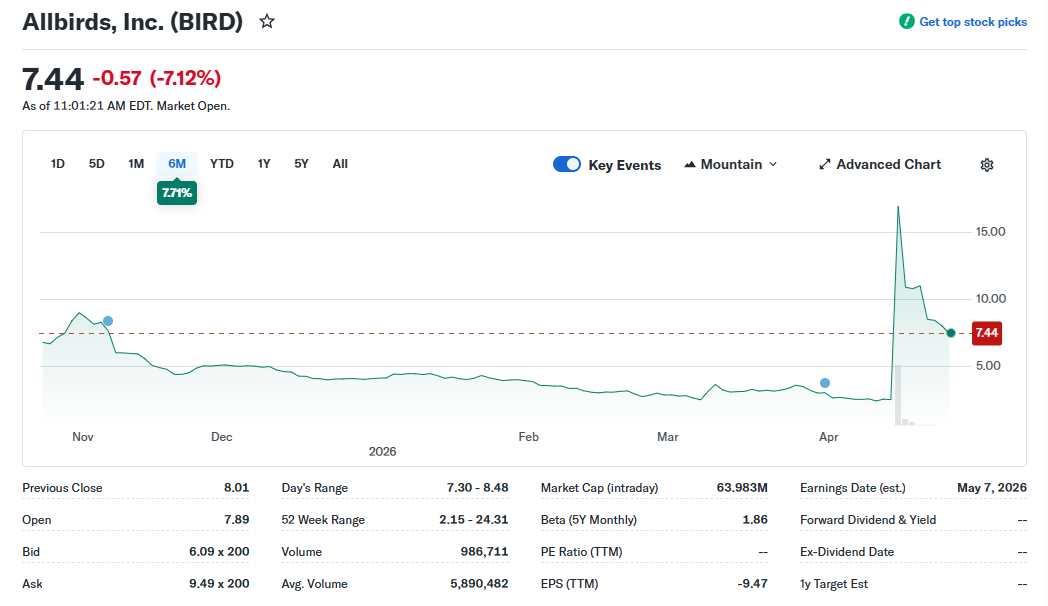
Allbirds erases over 50% as short open interest increases
Cryptopolitan•2026/04/24 19:06
Chainlink Data Services Go Live on AWS Marketplace
Coinlineup•2026/04/24 19:06

US Banks Are Calling Senators Directly to Kill the CLARITY Act’s Stablecoin Yield Rule
Crypto.News•2026/04/24 18:51
Prediction markets are having their breakout moment as new players flood the space
Cryptopolitan•2026/04/24 18:42
Trending news
MoreCrypto prices
More
Bitcoin
BTC
$77,602.97
-0.39%

Ethereum
ETH
$2,320.2
+0.34%

Tether USDt
USDT
$1
-0.00%

XRP
XRP
$1.44
+0.04%

BNB
BNB
$637.54
+0.32%

USDC
USDC
$0.9999
+0.01%

Solana
SOL
$86.4
+1.02%

TRON
TRX
$0.3243
-1.37%

Dogecoin
DOGE
$0.09826
+2.09%

Hyperliquid
HYPE
$41.26
-0.10%
How to buy BTC
Bitget lists BTC – Buy or sell BTC quickly on Bitget!
Trade now
Become a trader now?A welcome pack worth 6200 USDT for new users!
Sign up now