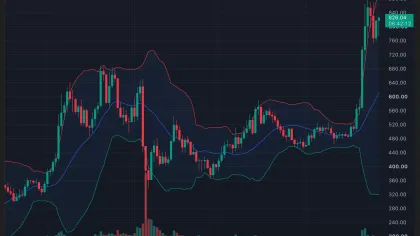
The Artificial Superintelligence Alliance (FET) token, born from the merger of Fetch.ai, SingularityNET, and Ocean Protocol, represents a significant convergence in the crypto-AI sector. As of early 2026, the project aims to build a decentralized infrastructure for autonomous AI agents. This article provides a factual overview of the token’s market position, utility, and the key factors that could shape its value through 2030, without relying on speculative price targets.
Understanding FET’s Current Market Position
The FET token serves as the native currency for transaction fees, staking, and governance within the alliance’s multi-chain ecosystem. Its value is intrinsically tied to the adoption of decentralized AI services, including data marketplaces, AI model training, and agent-based automation. As of early 2026, the project has demonstrated real-world integrations, particularly in supply chain optimization and decentralized finance (DeFi) automation, which provide a tangible basis for evaluating its long-term potential.
Key Factors Influencing Long-Term Value (2026–2030)
Several fundamental factors will determine FET’s trajectory over the next five years. First, the rate of enterprise adoption of decentralized AI solutions remains critical. The alliance’s ability to secure partnerships with non-crypto industries—such as logistics, healthcare, and energy—will directly impact network activity and token demand. Second, the broader regulatory environment for both cryptocurrencies and artificial intelligence will play a decisive role. Clear, favorable regulation could accelerate institutional investment, while restrictive policies may hinder growth. Third, technological competition from other AI-focused blockchains, as well as centralized AI providers, will influence FET’s market share.
Tokenomics and Supply Dynamics
The FET token has a fixed maximum supply, which introduces a deflationary aspect over time. However, the circulating supply is subject to scheduled unlocks from team and investor allocations. Understanding these unlock schedules is essential for assessing potential selling pressure. As of 2026, a significant portion of tokens remains in vesting contracts, meaning the fully diluted valuation (FDV) is considerably higher than the current market cap. This discrepancy is a key risk factor that investors should monitor.
Why This Matters for the Broader Crypto Market
The Artificial Superintelligence Alliance is often viewed as a bellwether for the convergence of AI and blockchain technology. Its success or failure could set a precedent for how decentralized AI networks are valued and regulated globally. For readers, the project offers a case study in how tokenized ecosystems attempt to solve real-world problems—moving beyond speculative trading into functional utility. The alliance’s ability to deliver on its roadmap, particularly in cross-chain interoperability and AI agent autonomy, will be the primary driver of its relevance through the end of the decade.
Conclusion
The FET token’s long-term outlook from 2026 to 2030 depends less on short-term price predictions and more on fundamental adoption, regulatory clarity, and technological execution. While the project occupies a unique niche at the intersection of two high-growth sectors, it faces significant competition and execution risks. Investors and enthusiasts should focus on verifiable metrics such as network usage, developer activity, and partnership announcements rather than speculative price targets. As always, cryptocurrency investments carry substantial risk, and readers are encouraged to conduct their own thorough research.
FAQs
Q1: What is the Artificial Superintelligence Alliance (FET)?
The Artificial Superintelligence Alliance is a merger of three major AI-focused blockchain projects—Fetch.ai, SingularityNET, and Ocean Protocol. The FET token is used for transactions, staking, and governance within this unified ecosystem, which aims to create a decentralized platform for autonomous AI agents.
Q2: Is FET a good long-term investment for 2030?
Whether FET is a suitable long-term investment depends on individual risk tolerance and investment goals. The project has strong fundamentals in a growing niche, but it faces risks from regulatory changes, competition, and technological hurdles. It is essential to assess the project’s development milestones and market conditions rather than relying on price predictions.
Q3: What are the main risks associated with the FET token?
Key risks include the large fully diluted valuation due to future token unlocks, competition from other AI blockchains and centralized AI providers, and the uncertain regulatory landscape for both AI and cryptocurrencies. Additionally, the success of the alliance depends on achieving widespread real-world adoption, which is not guaranteed.