
Trump's Kharg Gambit at Odds With Global Oil Resilience and Softening Market Outlook

President Trump's stated goal is clear: to achieve energy dominance and lower costs for American families. His administration's actions, from opening federal lands to rolling back regulations, are aimed at boosting U.S. production and exports. Yet the recent targeting of Kharg Island reveals a stark disconnect between this domestic-focused strategy and the complex, resilient reality of global oil markets.
Kharg Island is the linchpin for Iran's oil exports, handling 90% of shipments. It is the critical hub through which Iran's crude flows to key buyers like China. The U.S. has long viewed it as a key vulnerability that could be used to pressure Tehran. The logic is straightforward: disrupt Kharg, and you disrupt Iran's oil sales, which should tighten global supply and drive prices higher-potentially benefiting U.S. producers.
But the operational impact has been limited. Despite strikes on the island, Iran has continued to ship oil at a rate of 1.1 million to 1.5 million barrels per day. This resilience shows the system's ability to absorb shocks. The island's infrastructure, rebuilt after years of conflict, has proven difficult to disable permanently. More broadly, Iran has already shut shipping through the Strait of Hormuz, a move that further complicates any attempt to use Kharg as a chokepoint.
| Total Trade | 11 |
| Winning Trades | 7 |
| Losing Trades | 4 |
| Win Rate | 63.64% |
| Average Hold Days | 17.36 |
| Max Consecutive Losses | 2 |
| Profit Loss Ratio | 1.25 |
| Avg Win Return | 2.59% |
| Avg Loss Return | 1.94% |
| Max Single Return | 3.91% |
| Max Single Loss Return | 4.46% |
The Supply Shock Calculus: How a Kharg Attack Would Backfire
The calculus of a Kharg strike is a high-wire act. The intended outcome is a supply shock that tightens global markets and drives prices higher. The reality is a system built to absorb and redirect pressure, with vulnerabilities that could easily backfire.
The immediate supply impact of damaging Kharg's oil infrastructure would be significant but temporary. Iran has around 31 million barrels of storage capacity on the island, with nearly 18 million barrels already in inventory as of early March. This buffer provides a critical operational cushion, allowing exports to continue at a steady pace-around 1.1 to 1.5 million barrels per day-while repairs are made. In other words, a strike would disrupt operations, but it wouldn't instantly remove 90% of Iran's export capacity from the market. The global system has time to adjust.
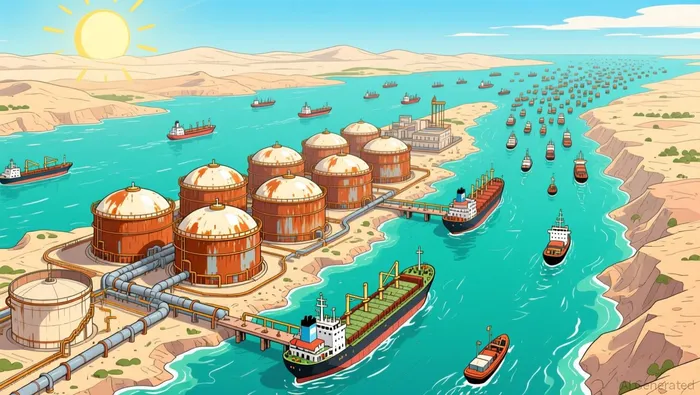
Yet the retaliation risk is immediate and severe. Iran has made its threshold clear: it will destroy the oil and gas infrastructure of companies cooperating with the US if its sites are targeted. This isn't a vague threat. It signals a direct attack on the commercial and financial interests of Western firms, potentially triggering a cascade of supply chain disruptions far beyond the Persian Gulf. The vulnerability here is not just Kharg's physical assets, but the entire network of international partners that rely on Iran's oil for revenue and trade.
This is where the market's forward view becomes crucial. J.P. Morgan's forecast points to a fundamentally soft oil market, with Brent crude averaging around $60 per barrel in 2026. The bank sees a likely surplus, driven by supply growth outpacing demand. In this context, a targeted Kharg strike would be a costly, short-term gamble against a bearish structural trend. It might cause a spike in prices, as seen earlier this month, but it would not create the sustained, global supply shortage needed to shift the long-term price trajectory. The market's baseline expectation is for stability, not a geopolitical-driven rally.
The bottom line is that the supply shock from a Kharg attack would be contained, while the political and commercial fallout would be broad and damaging. It risks escalating a conflict without delivering the market-moving supply disruption that could benefit U.S. producers. In a market already forecasting a surplus, the calculus favors restraint.
The Myth of Domestic Insulation: Why U.S. Production Can't Shield Prices
The promise of "Energy Dominance" is built on the idea that massive domestic output insulates the U.S. from global shocks. The current war in the Middle East is proving that theory wrong. The conflict has created the largest supply disruption in the history of the global oil market, with crude and product flows through the Strait of Hormuz plunging from around 20 million barrels per day before the war to a trickle. In response, Gulf countries have cut total oil production by at least 10 million barrels per day.
This isn't a distant problem. Global oil supply is projected to plunge by 8 million barrels per day in March alone, a staggering drop that would normally send prices soaring. The market's immediate reaction was a surge of $20/bbl to $92/bbl for Brent crude. Yet the U.S. is feeling that pain directly. Despite being the world's top producer, increased domestic fuel production has done nothing to shield us from price spikes. National average gasoline prices have jumped from $2.94 to $3.50 in just weeks, and natural gas prices have spiked similarly.
The reason is simple: the global oil market is a single, integrated system. The U.S. is not just a producer; it is a major exporter of refined products and a key participant in global trade. When the Strait of Hormuz closes, it disrupts the entire supply chain, from feedstock for U.S. refineries to the final fuel at the pump. While higher output from non-OPEC+ producers like Kazakhstan and Russia provides some offset, it is not enough to fully absorb the massive loss of Middle Eastern supply. The market's baseline expectation for 2026 is for a global oil supply to rise by 1.1 mb/d on average, but that growth is entirely from non-OPEC+ sources, meaning the Middle East disruption is a net negative.
The bottom line is that energy independence, as defined by fossil fuel self-sufficiency, is a myth. The U.S. economy remains deeply tied to global oil prices. When a major supply hub like the Strait of Hormuz is shut down, the shock travels instantly to American consumers. This conflict has exposed the vulnerability of a strategy that relies on domestic production to insulate the nation. The only path to true price stability, as the evidence suggests, lies elsewhere.
Catalysts and What to Watch
The immediate catalyst for a major market shift is a U.S. decision to target the oil infrastructure on Kharg Island. President Trump has already stated he chose not to "wipe out" that infrastructure, but he has also threatened that this could change. The key trigger is a U.S. action that damages the island's terminals and pipelines, which would directly violate Iran's vow to destroy the oil and gas infrastructure of companies cooperating with the US if its sites are targeted. This would move the conflict from a military strike to a direct assault on the commercial interests of Western firms, likely triggering swift and severe retaliation.
The primary metric to watch is the flow of Iranian oil from the Gulf system. Iran has maintained exports at 1.1 to 1.5 million barrels per day despite strikes, demonstrating remarkable resilience. Any sustained curtailment from Kharg would be the clearest signal that the island's operational buffer-its nearly 18 million barrels of inventory-is being depleted. Monitoring tanker traffic data from sources like Kpler is essential to gauge whether exports are holding steady or beginning to falter.
At the same time, watch for the divergence between the market's baseline forecast and its volatile reaction to geopolitical risk. J.P. Morgan's research sees a fundamentally soft market, with Brent crude averaging around $60 per barrel in 2026 due to supply outpacing demand. This forecast is underpinned by a projected global oil supply rise of 1.1 million barrels per day, entirely from non-OPEC+ sources. Yet the market's recent surge of $20/bbl to $92/bbl shows how quickly geopolitical shocks can override these fundamentals. The tension to monitor is whether a Kharg strike can create a sustained supply disruption large enough to break through this bearish structural trend, or if the market's volatility will simply spike and fade as the conflict's immediate impact is absorbed.
Disclaimer: The content of this article solely reflects the author's opinion and does not represent the platform in any capacity. This article is not intended to serve as a reference for making investment decisions.
You may also like

Whale Accumulation Spikes as XRP Gains Momentum Amidst Regulatory Optimism
4 ETFs With Yields Above 7% That Income-Focused Investors Are Discreetly Accumulating

Big Tech’s Reason for Optimism: The Connection Between the Magnificent 7 and the S&P 500 Has Been Disrupted

Trending news
MoreCrypto prices
More





