
CLARITY Act's Lingering Regulatory Impact: Insights from a Flow Analyst

Overview of the CLARITY Act: Security by Default
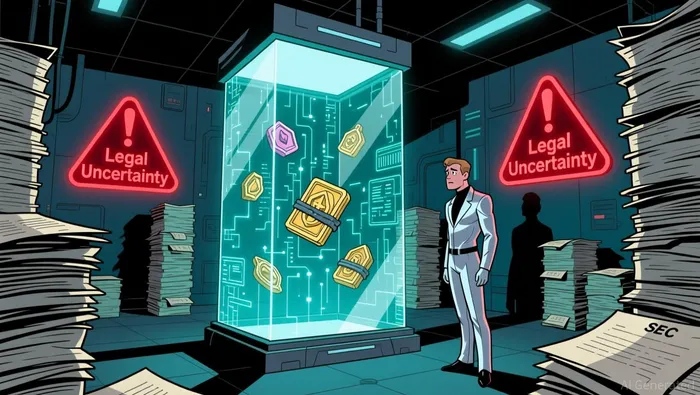
At the heart of the CLARITY Act lies a "security by default" provision, which would categorize almost all new digital assets as securities from the outset. This approach imposes a clear and measurable regulatory barrier for any crypto project aiming to raise funds within the United States. According to Cardano founder Charles Hoskinson, this creates a regulatory paradox, enabling the SEC to keep emerging projects in a state of uncertainty through intricate rulemaking.
This regulatory structure has already discouraged new ventures and shifted investment elsewhere. Although the bill passed the House in July 2025, it has remained stalled in the Senate since September, prolonging market ambiguity. Prominent industry figures have withdrawn their backing, and the Senate Banking Committee postponed a crucial markup in January 2026. This legislative deadlock has resulted in a significant liquidity overhang, as both issuers and investors hesitate to commit capital without regulatory clarity.
The immediate effect on the market has been a halt in innovation. The current framework essentially compels future American crypto projects to launch abroad, stifling domestic capital creation. As a result, liquidity is moving away from U.S.-based exchanges and venture funds, creating a persistent challenge for the American crypto landscape.
Industry Divisions and the Exodus of Capital
The perception that the bill favors established companies has led to divisions within the crypto sector. Ripple's endorsement of the legislation has been particularly controversial, with Cardano's Charles Hoskinson accusing Ripple of supporting a framework that would solidify the position of incumbents and undermine DeFi protections. Hoskinson contends that such legislation would effectively block new entrants while granting larger firms advantageous exemptions, thereby suppressing competition through regulation.
This criticism has been reinforced by the public withdrawal of support from major industry players. Coinbase CEO Brian Armstrong’s opposition to the Senate version of the bill was pivotal, as he specifically objected to measures that would limit tokenized equities, expand government access to user financial data, and eliminate stablecoin rewards. Armstrong’s stance, echoed by other leaders, signaled that the revised bill was unacceptable, prompting the Senate Banking Committee to delay further action in January.
This legislative impasse has had a direct impact on capital flows. With the bill in limbo and no resolution in sight, investors are diverting funds away from U.S. exchanges and venture capital. Political maneuvering, including President Trump’s SAVE Act ultimatum, has further stalled Senate proceedings. The resulting uncertainty continues to weigh on the market, as potential issuers await a decision that now seems unlikely before 2026.
Key Developments, Risks, and Market Watchpoints
The next major event is the anticipated Senate Banking Committee markup, scheduled for late April. The bill currently includes a stablecoin yield provision that both Coinbase and Stripe have criticized. A revised draft is expected during the upcoming recess, but the initial language—banning passive yield on stablecoin holdings—poses a direct threat to Coinbase’s $1.35 billion in annual stablecoin revenue.
The primary risk is that the bill may not pass the Senate. Legislative analysts foresee significant obstacles that could push any decision beyond the 2026 midterm elections. Achieving the 60 votes required to overcome a filibuster appears highly unlikely in the current divided political climate, leaving the market in a prolonged state of regulatory uncertainty and hindering domestic capital formation.
Market participants should monitor any changes in industry alliances and the final language of the stablecoin yield provisions. The White House’s advisory team now includes advocates of the yield compromise, while Coinbase’s CEO remains outside this group. For now, the market continues to await clarity, with a resolution unlikely before 2026.
Disclaimer: The content of this article solely reflects the author's opinion and does not represent the platform in any capacity. This article is not intended to serve as a reference for making investment decisions.
You may also like
NextNRG’s $0.55 Debt-to-Equity Exchange Reflects Urgent Fundraising and Increased Dilution Threat

AQR Anticipates Quetta’s Recovery While Mizuho Silently Leaves the Delisting Dilemma

Pirelli Faces Critical Juncture: Board Resists Imposed Cyber Tyre Separation as Geopolitical Deadline Approaches
Trending news
MoreCrypto prices
More





