
News
Stay up to date on the latest crypto trends with our expert, in-depth coverage.

1Bitget UEX Daily | Hopes for Middle East Peace Rise; Nasdaq Sets Record 12-Day Winning Streak; Anthropic Releases New AI Model (April 17, 2026)2TSMC 2026 Q1 Earnings Highlights: Record Net Profit Soars 58%, AI-Driven Revenue Jumps 35%, Strong Q2 Guidance3Netflix Q1 2026 Earnings Highlights: 16% Revenue Growth Beats Expectations, EPS Surges 86%, But Soft Q2 Guidance Triggers ~10% After-Hours Drop
POWER (POWER) Fluctuates 45.8% in 24 Hours: Trading Volume Soars 294% Driven by Retail Speculation
Bitget Pulse·2026/04/18 02:13
Kusama (KSM) fluctuates 50.9% within 24 hours: trading volume surges over 500%, causing sharp price volatility
Bitget Pulse·2026/04/18 01:48
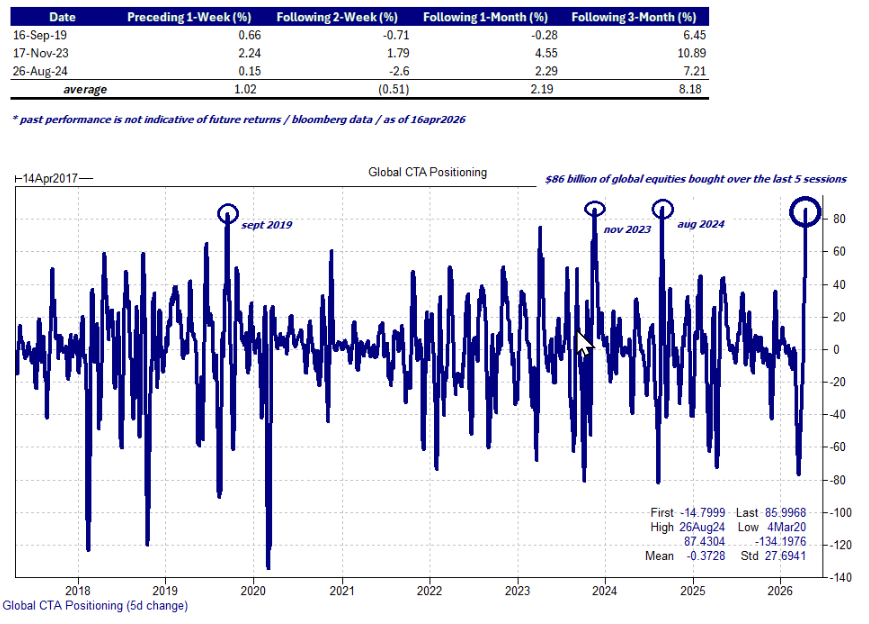
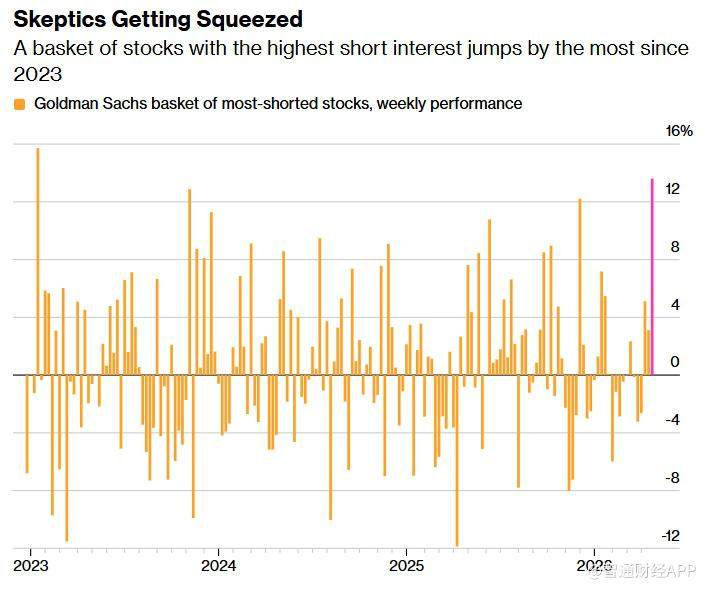
$86 billion buy orders! US stocks will continue to soar next week!
美股投资网·2026/04/18 01:39
METIS fluctuated 96.4% in 24 hours: Trading volume surged over 2000% triggering a post-pump pullback
Bitget Pulse·2026/04/18 01:34
ENA (Ethena) fluctuates 25.6% in 24 hours: USDe reserve proposal and technological breakthroughs drive rebound
Bitget Pulse·2026/04/18 01:19
M (MemeCore) fluctuated 30.5% in 24 hours: meme coin sector rotation and surge in trading volume drive movement
Bitget Pulse·2026/04/18 01:01
APR (aPriori) sees a 40.1% amplitude in 24 hours: trading volume surges and buying influx drive rebound
Bitget Pulse·2026/04/18 00:49
BIO (BioProtocol) 24-hour volatility at 40.4%: Downward wedge breakout and volume surge drive movement
Bitget Pulse·2026/04/18 00:33
BAND (BandProtocol) sees 55.6% volatility in 24 hours: AllorNetwork partnership announcement drives short-term surge
Bitget Pulse·2026/04/17 23:56
Flash
02:34
"The Life of a Certain Exchange" accelerates and briefly surpasses $0.48, as the market-controlling cluster has been "inactive" for two days.BlockBeats news, on April 18, according to GMGN market data, the Chinese meme coin "某交易所人生" surged rapidly in the past hour, briefly surpassing $0.48, and is currently priced at $0.4781. According to Arkham data, the previously exposed "某交易所人生" controlling cluster has remained inactive since the 15th, with no further token transfers in or out.
02:33
「An exchange Coin's Rally」 Accelerates, Surges Above $0.48 in Short Time, Whale Cluster Dormant for Two DaysBlockBeats News, April 18, according to GMGN market data, the Chinese meme coin "某交易所 Life" saw a rapid surge in the past hour, briefly exceeding $0.48 and is now trading at $0.4781.
Further data from Arkham revealed that the previously exposed "某交易所 Life" whale cluster has remained dormant since the 15th, with no further token inflows or outflows.
02:32
Satellite glimpses reveal lingering refinery flames as million-barrel-level leak injures the supply chain⑴ Sentinel-2 satellite imagery shows that at least two refineries within Iran continue to burn with open flames after several days of damaged storage tanks. Footage taken on Wednesday captured massive black smoke plumes rising above the damaged crude oil tanks, indicating the fire remains uncontrolled.⑵ According to maritime research institute Tanker Trackers, the capacity of just one burning storage tank is estimated at around 1 million barrels of crude oil. This volume is equivalent to the total fuel consumption of all American motor vehicles driving for nearly four hours, and the destruction at a single facility has already imposed a significant impact on regional refining capacity.⑶ Satellite imagery of the Lavan refinery, located about 95 miles northwest of Siri Island, further captured severe secondary environmental disasters. Several tanks have leaked crude oil, which has spread into the Persian Gulf waters, where clear floating oil pollution bands can be seen on the sea surface.⑷ Shana, a news agency under Iran’s Ministry of Petroleum, previously disclosed that the Lavan facility was hit by an “enemy” airstrike on April 8. By April 10, space observation confirmed a major crude oil leakage event, revealing a clear timeline between the attack and the pollution spread.⑸ Although Iran’s semi-official Mehr News Agency characterized the explosion at the facility eight days ago as “cause unknown,” continuous satellite monitoring and corroborating military sources indicate that the scope of attacks on energy infrastructure has spilled over from military targets to critical refining nodes.⑹ Due to recent cloud cover, the latest overhead imaging is unable to determine whether open flames at the Lavan facility have been extinguished. However, the ongoing burning tanks toward Siri Island suggest significant technical obstacles to firefighting efforts, potentially related to airstrike damage to the fire suppression network and foam reserves.⑺ The destruction of million-barrel level storage tanks, combined with crude oil pollution entering the sea, will intensify short-term pressure on Iran’s refined oil export commitments. The uncertain timeline for refinery capacity restoration is further tightening expectations of spot price premiums along the Persian Gulf coast.
News