
The other critical trade route threatened by the conflict with Iran

Escalating Tensions Disrupt Oil Shipping in the Middle East
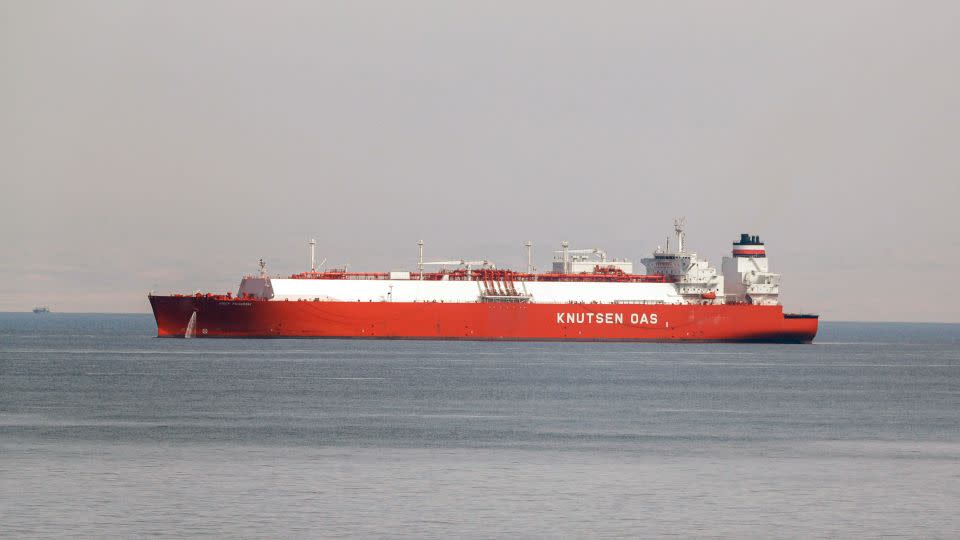
A petroleum tanker navigates the Red Sea near the Suez Canal entrance, March 11, 2026. (Ahmed Gomaa/Xinhua/Getty Images)
Recent assaults on merchant vessels in the Middle East have nearly halted tanker movement through the crucial Strait of Hormuz, causing turmoil in global oil markets and prompting exporters to seek alternative shipping routes.
One of the main detours now runs through the Red Sea. Saudi Aramco, the world’s largest oil company, announced it would redirect millions of barrels of crude—normally shipped via the Persian Gulf and the Strait of Hormuz—through a pipeline leading to the western port of Yanbu on the Red Sea.
According to Kpler, a trade analytics firm, daily oil shipments from Yanbu have already more than doubled this month compared to last year’s average.
However, this alternative is also under threat.
Mounting Threats in the Red Sea
This Monday, Iran declared that US naval bases in the Red Sea could be considered “potential targets.”
Iran’s joint military command, as reported by the semi-official Fars news agency, stated: “The presence of the US aircraft carrier Gerald R. Ford in the Red Sea is seen as a threat to Iran. As a result, logistical and support centers assisting this naval group in the Red Sea will be viewed as possible targets by Iranian forces.”
Even before the latest conflict erupted on February 28, the Red Sea was already a hotspot for instability. David Oxley, chief economist for climate and commodities at Capital Economics, described the region as far from stable.
Back in late 2023, Houthi militants supported by Iran began targeting ships in the Red Sea in response to Israel’s conflict with Hamas. These attacks forced shipping companies to reroute vessels around Africa’s southern tip, significantly extending travel times and increasing expenses for fuel, insurance, and crew wages.
The United Kingdom Maritime Trade Operations Centre warned in a recent advisory that the ongoing regional conflict and persistent Houthi hostility toward commercial shipping have made the Red Sea a highly dangerous area.
“The group maintains both the means and the proven willingness to launch maritime attacks in the area,” the advisory cautioned.
Last week, an Israeli official told CNN there were signs that militants could target Israel directly, which would be unprecedented since the conflict began.
Limited Options for Oil Transport
At maximum output, Saudi Arabia’s east-to-west pipeline can move up to 7 million barrels of crude daily, partially offsetting the roughly 15 million barrels per day that typically pass through the Strait of Hormuz.
Rising Fears Over Oil Supply and Prices
Should violence flare up again in the Red Sea, even these rerouted oil shipments could be blocked, heightening concerns about global supply and driving oil prices higher, according to analysts.
Naveen Das, senior oil analyst at Kpler, warned that if Saudi oil tankers are attacked in the Red Sea, “we could see a significant surge in oil prices. It would signal to the market that all available escape routes for oil are under threat—there’s no way out.”
Fires blaze on an oil tanker targeted by Houthi militants in the Red Sea, August 2024. (European Union's Operation Aspides/AP)
David Oxley of Capital Economics suggested that if renewed violence completely blocks crude exports from the region, Brent crude prices could soar to $130–$150 per barrel, up from the current $100.
Prolonged high oil prices are also likely to impact the broader global economy, pushing up costs for everything from airline tickets to groceries.
Container Shipping Faces Less Impact
In contrast, the effect of Red Sea attacks on container shipping is expected to be minimal, as most container vessels have avoided the area since late 2023.
Peter Sand, chief analyst at Xeneta, estimates that about 90% of container shipping capacity that once used the Red Sea now detours around the Cape of Good Hope.
In January, Danish shipping giant Maersk announced a partial return to the Red Sea, calling it the fastest and most efficient route between Asia and Europe. However, by March, the company suspended this service again due to security concerns.
Judah Levine, head of research at Freightos, told CNN that the current instability has delayed any full-scale resumption of shipping through the Red Sea.
Sand also noted that many shipping firms are likely to avoid the Red Sea for the rest of the year, as insurance premiums for vessels on this route have risen sharply since the conflict began.
“Even though there haven’t been direct attacks on container ships by Houthi rebels since the strikes began, the threat alone is enough to keep carriers away,” he explained.
Reporting contributed by Tim Lister, Tal Shalev, and Jeremy Diamond for CNN.
Disclaimer: The content of this article solely reflects the author's opinion and does not represent the platform in any capacity. This article is not intended to serve as a reference for making investment decisions.
You may also like
Stocks Log More Wins as Investors Eye FOMC Meeting
Zumiez (ZUMZ) Q4 2025 Financial Results Conference Call Transcript

ChargePoint (CHPT): Should You Buy, Sell, or Hold After Q4 Results?
Trending news
MoreCrypto prices
More





